Episodes Irish Mythology Season 3 — The Mythology
The Fines That Made Brehon Law Tick
Transcript
Welcome to the History of Ireland Last episode we introduced the children of Tiorin And watched as they beat poor Lug’s father to death with stones Today we’re going to find out how that decision works out for them But before we do, the story and this incident Gives us a nice excuse to dive deeper into early medieval Irish law Generally known as Breton law Or as it was actually known at the time, Fenicus Which translates to laws of the free man
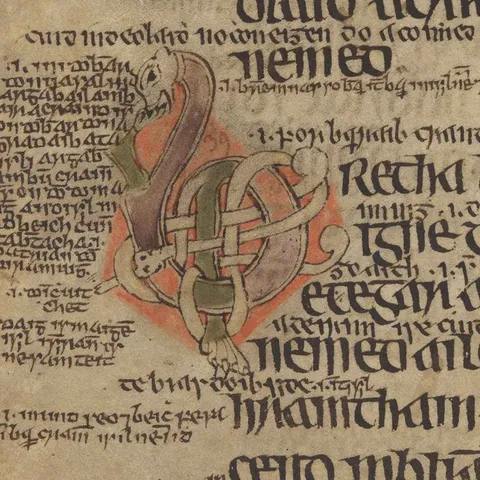
Breton law is one of those things that everyone likes speaking about in Ireland Whenever you think of ancient Ireland, people love to bring up the Breton laws And anyone with a passing interest in old Irish history will probably have heard of it What we know of these laws comes from documents written in between the 14th and 16th century Around the same time that the fate of the children of Tiorin was written as well
But, like the children of Tiorin, these laws would have been much older Probably initially written down in the 7th and 8th century And based off an oral tradition older than that again To understand Breton law, it’s good to think back to our episode on Tuas And how Ireland was split into a wide array of different Tuas With no real centralised power
On top of this, there was nothing resembling a police force Or any kind of centralised judicial system Unlike in England or Europe, which had built its system off a Roman model Instead, this was, as barrister and historian John Biggins describes A quote, somewhat pluralistic tradition with regional and doctrinal variations across the sources Things varied depending on which Tua you were in And as you moved around the country, different areas would have had slightly different laws
But it wasn’t a free-for-all And this system was enforced via Brythem, or judges The Anglicised version of Brythem being where we get the term Breton These Brythem were similar to Philly People who studied for years, travelled the country And were held in very high esteem
They would have adjudicated on disputes And made rulings based on the huge amount of laws that had been developed Like the Philly, and well nearly everything else in medieval Ireland Brythem were organised by grade Biggins argues that the highest of these may have been the Brythem Trí Bealla Or judge of the three languages Who understood Breton law, Christian law and poetry
In the story we’ll tell today, you’ll see Lug gather his men And put forward a fine that the brothers will have to pay Slight spoiler This is probably close to what an Irish court case In quote marks, would have looked like A large gathering of people Watching as a Brythem assigned a fine to the accused Based on what had occurred
Though, it should be noted Lug plays both victim and Brythem in this telling And I’m not saying that he is described as a Brythem Or this is described as a court case Just that it is analogous And readers at the time would have seen the similarities
And fines were everything in Breton law We’ve discussed honour price And how that assigned value to people in this very stratified society But Breton law went further With very precise fines for certain acts Here are a few of the fun fines we knew existed from the recorded law tracts
A husband who through quote listlessness does not go to his wife in bed Must pay a fine If a pregnant woman craves a morsel of food And her husband withholds it through stinginess or neglect He must pay a fine If a doctor wounds you while trying to cure you He’s going to have to pay a fine
An interesting one is that a creditor could hold your brooch or necklace As a pledge against a loan But they must return them to you for social events Otherwise they’d be fined for your humiliation
And then there were a whole bunch of fines around physical violence If someone hits you and leaves no mark They would pay a fine worth your honour price divided by 21 While what was called a lump blow A blow that leaves a bruise That would be a seventh of your honour price A blow that leaves you confined to your bed Is half your honour price And finally a mortal wound is of course your full honour price
So it was very litigious in its own way And society relied a lot on honour and fines to keep the peace And in fact the whole story of the fate of the children of Turin Is built around a fine So let’s dive in and see what this impossible fine ends up being
After butchering Lug’s father The children of Turin, as brave as anything Returned and joined forces, the two of they As if nothing had happened Soon the second battle of Moitur started And the brothers fought Gods how they fought They were a whirlwind of bronze and fury against the Fomorians But this story isn’t about that battle This story is focused on what comes next
After defeating the Fomorians Lug met two of his men And asked if they’d seen his father in the fight We did not, they said Lug frowned His father would never have missed a fight such as this Not unless something terrible had happened
I am sure he is not living, Lug said And I give my word There will be no food or drink going into my mouth Until I get knowledge by what death my father died And then he set out The riders of the sea with him To the last spot that anyone had seen his father
And from there he tracked his father Until he came to the place where Cian had turned into a pig Lug climbed off his horse Examining the open plains of Louth Maybe he even studied the herd of pigs But there was no sign of his father No sign of the man at all
Lug was all but ready to give up and leave Dejected and grief stricken When the very earth decided to break its silence The stones spoke to him The stones that had killed his father spoke to Lug Just as Cian had said they would
They said It is in great danger your father was here, Lug When he saw the sons of Turin before him And it is into the shape of a pig he had to go But in his own shape they killed him
Shock gave way to cold purpose Search the area, Lug commanded his men Find my father’s body And find it they soon did Lug’s men came across a fresh grave And from it they raised Cian’s body out of the ground And to look at it, it was all one bed of wounds
Lug lifted up his father’s body and cried out to the sky It was the death of an enemy the sons of Turin gave my dear father He then kissed the body three times and lamented It is bad the way I am myself after this death For I can hear nothing with my ears I can see nothing with my eyes And there is not a living pulse in my heart With grief after my father
And you gods I worship, Lug continued It is a pity I have not come here at the time that this thing was done And it is a great thing that has been done here That to a day to have done treachery on one another And it is long they will be under the loss by it And be weakened by it And Ireland will never be free from trouble from this day out East and West
Just as a side note here It’s interesting to see the kind of Ireland that has been painted That to a day are fallen, they are treacherous They are turning against each other Very different from the older stories How the Tuath Tadh were treated there But it’s a fine example of how the Christian worldview Seeps in to these later stories
Lug and his men buried Cian again Properly this time They raised a standing stone over his grave Carved his name in sharp lines of oam And keened until the sky grew dark
Lug then returned to Tara and took his seat The High King’s seat And said nothing of what he had found He simply sent for his chieftains He sent for everyone And come they did That to a day were still riding high From the success over the Fomorians
Laughter echoed off the carved rafters Men played fickle The firelight dancing on the intricate game boards Drinks were served And everything was well
And into this celebration Bold as you pleased Walked the three sons of Turin They nodded to friends Patted the backs of men they had fought with Made jokes with others The three had fought well in the battle against the Fomorians And were very well respected Some even said they were beyond all others For quickness and skill For a good hand in battle For beauty and an honorable name
But as they entered Lug told his steward To shake the chain of silence And as the rattling rang through the air The crowd quietened to a hush Lug smiled and said Quite calmly to the room What are your minds thinking of at this time?
Of yourself indeed Brian, one of the children of Turin, replied Lug ignored the flattery I have a question to ask of you He said A quiet, white-hot rage Slipping into his voice What is the vengeance Each one of you would take On the man who has killed your father?
A collective gasp went through the hall Someone had the courage to ask Tell us, was it your father who was killed? It was indeed, Lug replied And I see now in this house, he said The men that killed him And they know themselves what they did
It is not a death of one day only I would give the man that killed my father But instead I would cut off one of his limbs From day to day Till I would make an end of him Don’t you all agree? The chieftains of the Tuidae roared their approval And the sons of Turin Their faces suddenly pale Roared right along with them Their voices maybe just a little too loud
As Lug and the rest of the men Discussed the ways in which one Could be compensated for the death of a father The three brothers Whispered fiercely in the corner Lug is saying all of this at us Ichor said Let us acknowledge we killed his father, Ichorbar The other brother replied
I am in dread, said Brian The ringleader of the brothers He wants us to admit it And he will not let us off with a fine afterwards It’s best we admit, the young brothers said And typical of younger brothers, they added You’re the eldest, Brian, you speak
Brian sighed And he shouted up at Lug from the crowd You’re speaking to us, Lug, aren’t you? You were thinking we went against Cian But we did not kill your father So we will pay the fine for him The same as if we did
Lug’s smile was now a terrible thing to behold Oh, I will take a fine from you, he said softly I will take a fine, and I will name it now And if you feel it is too much I may even be persuaded to reduce it Tell us what it is, Brian said
Here it is, Lug replied, smiling grimly The fine is this Three apples, the skin of a pig A spear, two horses and a chariot Seven pigs, a puppy, a cooking spit And finally, three shouts on a hill That is the price Pay it, and we are done
Brian’s mind raced It sounded small Almost nothing A fine not worthy of a father of a king It had to be a trick That is not too much, he said slowly But we suspect, given its smallness That there is some treachery behind it
I do not think it is too little of a fine, said Lug And I give you the guarantee of the third day I will ask no other thing And I will be faithful to you And let you give the same pledge to me So, then the sons of Turin bound themselves By the king of Ireland And by the Baal-Darug, son of the Dagda And by the chiefs of the men of the Tuath Dé That they would pay the fine to Lug
I suppose it would be well for me now, said Lug To give you better knowledge of the fine It would be well indeed, said the brothers Unsurprised and resigned
This is the way of it, then, said Lug The three apples, I ask of you Are the three apples from the garden in the east of the world And no other apples will do but these For they are the most beautiful And have the most virtue in them Of the apples of the whole world
And the skin, I ask of you Is the pigskin of Tuath, king of Greece And it heals all wounds and all the sickness of the world And whatever danger a man may be in If it can but overtake the life in him It will cure him If it can but overtake the life in him It will cure him
And do you know what spear I am asking of you, he said We do not, said the brothers It is a very deadly spear Belonging to the king of Persia The Luan it is called And every choice thing is done by it And its head is kept steeped in a vessel of water The way it will not burn down the place where it is And it will be hard to get it
And do you know what two horses And what chariot I am asking of you They are the chariot And the two wonderful horses of Dobar King of Siogar And the sea is the same as the land to them And there are no faster horses than themselves
And do you know what the seven pigs I ask of you They are the pigs of Essel King of the golden pillars And though they are killed every night They are found alive the next day And there will be no disease or no sickness on any person That will eat a share of them
And the pup I ask of you Is Fáil Innes The pup belonging to the king of Urod The cold country And all the wild beasts of the world Would fall down at the sight of her And she is more beautiful than the sun In his fiery wheels And it will be hard to get her
And the cooking spit I ask of you Is a spit of the women of Inishcainfean The island of Caer of the fair hair And the three shouts you are to give on a hill Must be given on the hill of Meocon In the north of Loughlin And Meocon and his son are under bonds Not to allow any shouts to be given on that hill And it was with them my father got his learning And even if I were to forgive you for killing my father They would never
And that is the fine I have asked of you Said Lugh There was silence and darkness on the sons of Turin When they heard this It was a heavy, suffocating silence Filled with a dawning, horrific understanding That Lugh had not given them a fine He had given them a death sentence Gift-wrapped in a series of impossible labours He was sending them to the ends of the earth To be battered, broken and killed All in the name of Cian his father
And that’s where we’ll leave our story for today It’s such a cool dramatization of Breton Law Albeit in a very mythical, exaggerated setting And if you want me to focus on any specific areas of Breton Law Do let me know, we can definitely dive deeper into any of it Next week we’ll see as Brian and his brothers leave Ireland And go out into the world To pay their seemingly impossible fine
Or visit our website, thehistoryofireland.com You can also get in touch through the website Or on Facebook and Twitter Always great hearing from you guys And if I’ve made a mistake, please do let me know
The History of Ireland was written and produced by me, Kevin Dolan With music by Liam Doyle And additional help from assistant producer Aoife Murphy This podcast was recorded in the lands of the Wurundjeri people of the Kulin Nation Sovereignty was never ceded