Episodes Irish Revolution Season 2 — The Civil War
Sister Against Sister
Transcript
Welcome to the History of Ireland Last episode we discussed how the pro-treaty side Began slowly taking control of the new country that was the Irish Free State Today we’re going to look at those who still opposed the idea In fact we’re going to look at one of the very first organisations To officially come out against the treaty Which was Cumann na mBan We already know that the female TDs in Sinn Féin All vehemently opposed the treaty And as Mary McSweeney proved again and again Were not shy of making this clear But just because these prominent women were anti-treaty Doesn’t necessarily mean that Cumann na mBan Would have been against it as an organisation
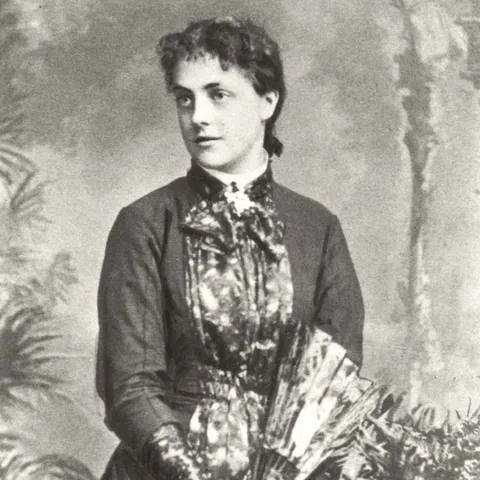
So on Saturday the 5th of February Cumann na mBan held a special convention in the Mansion House To discuss the treaty and to decide where they landed on it Though the majority of the executive committee of Cumann na mBan Were against the treaty There was still a strong pro-treaty contingency Led by a founding member and the very first president of the group Jenny Wise Power From Wicklow
Wise Power had begun her political career With the Ladies Land League Which was set up by Anna Parnell in 1881 That’s the sister of Charles Parnell just in case you were wondering A fierce Parnellite Wise Power supported Home Rule Worked with the Gaelic League Led various nationalist groups Had been a member of Sinn Féin as far back as 1906 Well before it was cool And was actively involved in the 1916 Rising From there she helped found Cumann na mBan And was one of its most senior leaders All through the War of Independence She was, excuse the pun, a powerful woman And I highly recommend you go read about her amazing life
Now Wise Power was annoyed That Cumann na mBan was being sold as anti-treaty Before the members had voted And on the 5th of February There was quote much tension Between Markievicz and Wise Power On the day Mary McSweeney put forward a resolution That stated The Executive of Cumann na mBan Reaffirms its allegiance to the Republic of Ireland And therefore cannot support the Articles of Agreement Signed in London December 6th 1921
Wise Power tried to make a compromise Amending the resolution to say Cumann na mBan reaffirms its allegiance to the Republic But realising that the treaty will If accepted by the Irish people Be a big step along the road to that end We declare that we will not work obstructively Against those who support the treaty Basically what she’s saying here is Even if Cumann na mBan is against the treaty in theory Well let’s all just promise Not to work against the pro-treaty side
This kinda didn’t go anywhere though As one person described it Speaker after speaker’s uncompromising hostility to the treaty Combined with passionate allusions to the principles And to the Irish Republic In the end 419 delegates voted against Wise Power’s resolution And only 63 voted in favour So that basically means Cumann na mBan voted against the treaty It’s pretty simple yeah
Cumann na mBan and the Irish women they represented Were staunchly against the treaty That’s what the numbers would suggest But you know these things are never straightforward The question becomes Did Cumann na mBan the leading feminist Irish organisation Accurately represent the women of Ireland? The answer is probably not And there’s a strong argument to be made That they didn’t even really accurately represent their own members
You see Cumann na mBan had about 900 branches Around the country at this time But only 600 sent delegates to the meeting on the 5th Why so few? Well there was a train strike that got in the way But also a lot of the pro-treaty delegates Believed it was kind of a waste of time And that the executive leadership of Cumann na mBan Had already made up their mind And would steer the organisation against the treaty
A few days previously The executive committee had voted against the treaty By a number of 22 to 2 Wise Power and her daughter kind of being the only ones Who stayed pro-treaty This was further proven by the fact that The leadership was already spitting out anti-treaty propaganda Much to the chagrin of Wise Power And so people just kind of figured This special convention was pretty much a waste of time And they’d already made up their mind
This means that really Only 35% of Cumann na mBan voted against the treaty And as one female writer at the time puts it Cumann na mBan is not very representative of Irish women in general But regardless The organisation had officially denounced the treaty And this would have big ramifications
The question then became Who was going to represent the pro-treaty women In this new Irish state Well Wise Power quickly stepped up To ensure there was a pro-treaty version of Cumann na mBan And on March 12th She came together with 700 women To form Cumann na saoirse Which translates to League of Freedom It would be An independent body of Irish women Pledged to work for the securing and maintaining Of Ireland’s right as an autonomous and sovereign state To determine freely her form of government
Newspapers described it as a Remarkable gathering of women And it does show that there was quite a lot of support For the treaty among the female Irish population Unfortunately Cumann na mBan versus Cumann na saoirse Was just another painful split In a period full of them
The historian Mary McAleith Writes that it’s important to remember That the civil war Was more than just the fighting of brother against brother As is so often mentioned But also a fight between sister and sister Mary McSweeney and the other female Sinn Féin TDs Wrote to Cumann na saoirse saying It would be better to face Lloyd George together Than face a war with each other
While people lamented the split As one Cumann na mBan member wrote The organisation lost some fine women Foundation members Others executive members Who had helped guide them through the war years All had proved themselves Now they had left the organisation Started their own one And the two groups did not see eye to eye
The split in the Irish feminist movement Could not have come at a worse time As we discussed last episode The Irish Free State was THE chance To rethink how Ireland could be run And Cumann na mBan Though not strictly a suffragette movement Or anything like that Was the best means by which women Could advocate for their rights It was now splintered
One example where this very quickly became an issue Was the topic of disenfranchisement To get slightly ahead of ourselves An election would be held in June 1922 That would basically allow the people of Ireland To vote on the treaty But the rules stuck to the British system Stating that only women over 30 could vote
Kate O’Callaghan who was an anti-treaty TD Demanded that women be given the same voting rights as men As soon as possible And definitely before this vote And there had been a lot of assurances That women would gain the same rights as men In the new free state constitution But wise power A long time and adamant suffragette Actually shot her down Stating that a Cumann na mBan Was against the new state Well they couldn’t have a say in voting rights
In the end it was decided That lowering women’s voting age Was simply too complicated To organise by June Who cares if we didn’t give a vote To the generation of women who had Helped bring about this new Irish free state It was just a bit complicated And to be honest There was a bit of a political ploy here As pro-treaty leaders Were worried that that generation of young women Would be more inclined to be anti-treaty But it’s also kind of a self-fulfilling prophecy Of course they’re going to be anti-treaty If your new free state denies them the vote You can see why Cumann na mBan Were so extreme, can’t you?
The split in the women’s movement Was further deepened by propaganda Put out at the time by both sides As McAloof puts it Cumann na saoirse members Were described as women of low character While Cumann na saoirse Called the Cumann na mBan anti-treatyites Wild women
In the last episode It was argued that the civil service Was just one of the casualties Of the Irish Civil War A much greater and much deeper And much sadder casualty It could be argued was that of women’s rights Feminists in Ireland at the time Were fighting an uphill battle Against centuries of misogyny And a fervently religious worldview That had deeply rooted ideas Of how women should behave in society
Now I’m not for a second suggesting That Cumann na mBan’s stance on the treaty Or the split in the group is to blame But it is a shame That just when women needed to be strongest The approaching civil war Tore the movement apart This just made it easier For the new Irish government And with the help of the Catholic Church To become a state with a ridiculously backwards And dangerous approach to women’s rights That lasted late into the modern era
As historian Marie Coleman writes The predominance of women on the Republican side Resulted in fewer women TDs in the Dáil In its early years Because of the refusal of Republicans To take their seats And a misogynistic backlash From the treaty commentators Who dismissed the women TDs Who voted against the treaty This negative attitude towards women Infused the restrictive role envisaged For women in public life In the new state after 1922
To say it’s a shame Is simply an understatement And regardless of what side Cumann na mBan or Cumann na Saoirse were on With the treaty The fact that this new government Which had been helped so much By a generation of revolutionary women Just kind of then Tossed them aside in this new free state Is abhorrent
Cumann na mBan Would go on to become vital To the anti-treaty side of the civil war And in fact Became much more militaristic In this new evolving conflict But we’ll explore that At a later date Next episode We’re going to look at the beginnings Of the civil war And the taking of the four courts
Thanks for listening Subscribe wherever you get your podcasts And if you’re enjoying it You can also support the show By merch And get in touch All through our website Thehistoryofireland.com Or you can follow us on facebook or twitter It’s always great hearing from you guys And if I’ve made a mistake Please do let me know The History of Ireland was written and produced By me, Kevin Doe Additional research and fact checking By Robert Babington Music by Liam Doyle The History of Ireland The History of Ireland