Episodes Irish Revolution Season 2 — The Civil War
How The Free State Failed Women
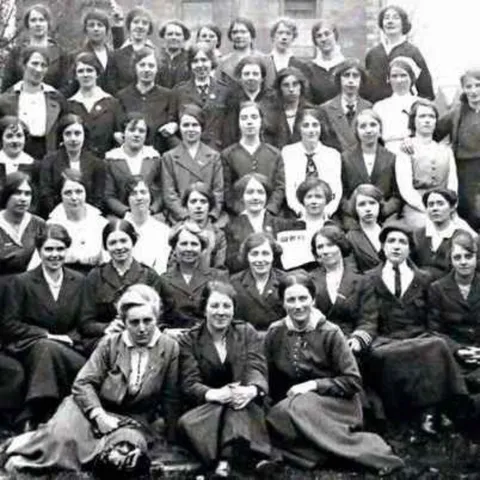
In this episode, we look at how Maggie Doherty and the McCarthy sisters were totally and utterly failed by the Free State and how their stories highlight how women suffered due to the conflict.
Content Warning: This episode does discuss sexual assault.
Transcript
Welcome to the History of Ireland. I had planned and told you that this would be the last episode in our series on the Irish Civil War. But it’s not. You see, in that last episode I was going to touch on how women lost out in the new Irish Free State. But in my research, well, I stumbled across the vitally important work of Linda Connolly. And will have decided to dedicate a whole episode to the violence against women in the Civil War.
The fact that I hadn’t planned to include this is already a pretty good indication of how secondary women’s experiences can be and how easy it is to overlook them. It’s difficult to find reliable sources on what occurred throughout this period. It’s very easy for historians and podcasters to gloss over the struggle of women. Just as we risk glossing over the huge contributions they made to the republican movement. So I apologise that I nearly fell into that trap.
And so today we’re going to discuss two incidents that occurred in and around the end of the Civil War. Then our next episode, which will come out hot on the heels of this one, will cover the aftermath of the war and the future plans for the show. One last bit of housekeeping though before we get into this episode, in the form of a content warning. This episode will discuss sexual assault. If that might cause you some distress, well please skip on to the next episode. If you do so, I’d ask you just to remember the names of Maggie Daugherty, Flossie McCarthy and Jessie McCarthy. Three women whose country failed them in the most despicable fashion.
It’s safe to say that women lost out hugely from the Civil War. With Cumann na mBan taking an anti-treaty position, women in Ireland all but lost one of their most powerful political tools. And the church’s power in the new state, as well as just general political conservatism, hindered women’s ability to shape this new country. A new country they had done a huge amount to fight for.
So many women had been at the forefront of the republican movement. If you’ve listened to this show hopefully you know that. And the country would not have gained independence without women on both sides of the treaty divide. The likes of Countess Markievicz, Kathleen Clarke, Jenny White Power and so many more. But as we touched on in previous episodes, Cumann na mBan was sometimes blamed for the treaty split. It was women described as harpies.
And the Irish Free State led into the sexism that was ingrained in Irish culture. And women were treated as second class citizens for decades. A far cry from the republican movement that relied so heavily on female politicians, IRA court judges, spies, medics and more. Nowhere is this more obvious than in the ways in which the Free State approached sexual assault perpetrated by its soldiers during the civil war. Two stories in particular highlight how much the new Free State failed the women of the country. And I’m going to keep saying it because it’s true and it can’t be stressed enough.
We’ll start with Maggie Dougherty. Maggie was born in 1896 in County Mayo. She had seven brothers but was the only daughter in the family. By all accounts she was heavily involved in Cumann na mBan throughout the revolutionary period. And though we can’t say for certain it’s safe to assume she was probably anti-treaty. Aged 27 she lived with her parents and acted as a carer for her mother who was paralysed on one side of her body.
It was less than a week after De Valera’s message to Dumb Arms. What many would call the end of the civil war. But the country was still chaotic. And in the early morning of the 27th of May three men dressed in trenchcoats and masks broke into Maggie’s home. And to quote her mother, Maggie was dragged from her bed and stripped naked and raped. Linda Connelly describes the assault in unflinching terms. Her hands were tied, she was held at gunpoint and then outraged by three men in succession. Outraged being the specific language Maggie’s mother would later use.
The men were soldiers in the Free State Army. Maybe they attacked the 27 year old Maggie because she was anti-treaty. Maybe they did it simply because they could. To me it’s unclear why and I almost don’t know if it matters. What matters is that they did it. But did these soldiers get arrested, reprimanded or disgraced for this barbaric act? No, no, far from it.
You see the Free State Army was doing it’s utmost to create a sense of stability in the country. A sense of law and order. The idea that it’s own men were attacking women so brutally was unconscionable. As Connelly puts it, It is apparent that the rape and assault of women was a core concern within the army leadership and executive led by W.T. Cosgrave. But more from a PR perspective than from a concern for the women themselves.
A trial was held so that the government could be seen to be doing something. But all three men were found to be not guilty and honourably acquitted despite a plethora of evidence. As well as testimonials from the local priest and doctor that are frankly too graphic to share here. And poor Maggie was never the same afterwards. Suffering from both insomnia and depression for years after the attack.
As one doctor wrote, I certify that the late Margaret Doherty Curnow Foxford came under my care in 1923. Her whole nervous system seemed to be very upset. She was depressed and suffered from loss of appetite and insomnia. I kept her under observation and treatment for a considerable time but she seemed to make no progress and her wasting became very marked. I came to the conclusion that her condition was mental due in my opinion to the terrible ordeal which she had undergone.
In the end she was institutionalised and died in care aged 32 on December 28th 1928, five years after her assault. She is one of those people I think we should never forget.
What’s worse is this was not an isolated incident of sexual assault, either ignored or covered up by the Free State. Only a few days after Maggie was attacked on June 2nd in Kenmare County Kerry, Three more off-duty Free State soldiers, Major General Paddy O’Dailey, Captain Edward Flood and Captain Jim Clark donned masks and broke into the home of pro-treaty doctor Randall McCarthy. The men then dragged the doctors two daughters Flossie and Jessie McCarthy outside and proceeded to flog them with belts, sexually assault them and then dose them in motor oil so that their hair would fall out.
Again, why these men did this is a little unclear. They argued it was because the women had been involved with British soldiers before the truce, but that was nearly two years ago at this point. It could also have been that the women were anti-treaty or common among despite what their father’s political leanings might have been. Or as one report stated, the women simply quote jilted the men.
Investigations were held and it became fairly obvious the men were guilty. For example, Paddy O’Dailey’s revolver was found in the McCarthy’s garden. And keen-eared listeners will recognise that name, Paddy O’Dailey. He was the same man who had been in charge of tying a number of men to a mine in Valley Seedy. To say he was out of control at this point is frankly an understatement. But nothing was ever done.
The whole situation, along with the situation with Maggie Doherty, was seen as very embarrassing for the Free State Army. And even worse because O’Dailey had been a member of the squad and a close connection of Michael Collins. Remember the country was now only just getting back under some kind of control with the dumping of arms. And Cosgrave and his government were determined to create stability. If he was to recognise these events or widely publish them, then well it showed anything but stability.
Richard Mulcahy in charge of the army was in a kind of similar situation. He was trying desperately to enforce discipline amongst his men. At the same time he wanted to protect the image of this new Free State Army. Not everyone in the government agreed though. Kevin O’Higgins wrote to Cosgrave saying, I cannot accept the position that any political exigencies could excuse us in condoning an outrage of that kind. But O’Higgins didn’t push hard enough.
And in the end, as with Maggie Doherty, no one was ever charged for the attack on the McCarthy sisters. And the whole thing was buried. The most that was done was Cosgrave suggested to their father they take private legal action rather than try and go down the route of court martial. But nothing came of that either.
Now I like Cosgrave, I think he was a good leader working in very difficult times and I generally like Mulcahy as well. But this is just unforgivable. The fact they didn’t act just shows how poorly some women were viewed in this new Free Irish State. To be honest, if it wasn’t for the stellar work of Linda Connolly, we may never have known of any of this. As she puts it,
And I should say, as Connolly mentioned, acts like this were carried out by both sides of the treaty. Her article, Sexual Violence in the Irish Civil War, A Forgotten War Crime, covers another attack on a Protestant woman in 1922 by anti-treaty forces that we just don’t have time to go into.
Generally, it is agreed that the Irish War of Independence and the Irish Civil War did not see a use of gendered violence as heavily as other similar conflicts. As far as my understanding goes, rape was not used extensively as a weapon of war. But that is hard to say definitively as there was so much stigma and silence around the issue at the time. Regardless, the Irish cannot let ourselves off the hook either. It did occur, it was brutal and as we have seen, the government failed to do anything about it. It’s shocking, it’s shameful and sadly, it’s indicative of how women would be treated for decades to come.
www.thehistoryofireland.com You can also get in touch through the website or on Facebook and Twitter. It’s always great hearing from you guys. And if I’ve made a mistake, please do let me know. The History of Ireland was written and produced by me, Kevin Doyle, with music by Liam Doyle and additional help from assistant producer Aoife Murphy. This podcast was recorded in the lands of the Wurundjeri people of the Kulin Nation. Sovereignty was never ceded.