Episodes Irish Revolution Season 1 — The Revolution
We Did Not & Do Not Know How To Act
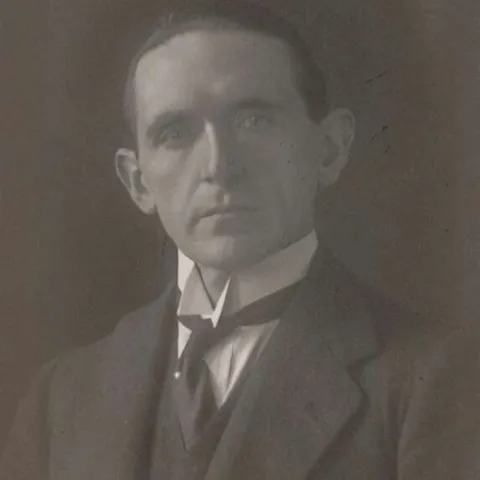
In this episode we explore the British confused Irish policy throughout 1919 and explore what finally convinced them to ban the Dáil.
Support The History of Ireland by donating to their Tip Jar: https://tips.pinecast.com/jar/historyofireland
Transcript
Welcome to the History of Ireland On January 20th, Ian McPherson arrived in Kingstown, now Dun Laoghaire, to begin his new job in Ireland McPherson had spent the last few years as Under-Secretary of War But was now being given the dubious promotion to Chief Secretary of Ireland And look, it’s no spoiler if I tell you he was going to have a tough time ahead of him
For the last few episodes, we’ve been following what Sinn Féin and the IRA had been up to in 1919 The First Dáil, Solihead Beg, a loan, a secret service, assassinations The Irish had been busy This week though, we’re going to explore McPherson’s response on behalf of the British over the course of 1919 And to be honest, for much of the year, it was pretty lacklustre and kind of confused in comparison to Sinn Féin
So McPherson’s first meeting was with Lord French We were introduced to French way back in episode 4, when he sought to bring in conscription He was basically in charge of the military side of the Irish problem French and McPherson would butt heads throughout much of 1919 They had very different views on how best to handle the Irish
McPherson’s first week would have been a fairly stressful one The Dáil literally met for the first time on his second day in office And he had no real idea how to act They were elected officials, but maybe the way they were meeting was illegal? And was it connected to the violence in Solihead Beg? What the hell was he meant to do? You can’t help but imagine him sitting in his office saying to himself Come on, it’s my first day
The fact that the British government was a coalition of liberals and conservatives didn’t really help with the confusion The liberals were completely against the idea of making a rightfully elected political party illegal The conservatives were a little less worried, but they still didn’t think it was the right move right then They believed that McPherson and Dublin Castle wouldn’t be able to make a ban effective And that it would hurt the government’s credibility And so really, they didn’t do anything and the Dáil was allowed to keep meeting
This meant that McPherson spent months in a state of confusion about the whole thing Writing to the Prime Minister Lloyd George in May, he stated that We did not and do not know how to act
But to put it mildly, Lloyd George had bigger fish to fry He was busy spending the year in Paris, figuring out the shape of the post-war world He also, according to some historians, was enjoying one of the happiest years of his life Living in Paris and having an affair with a woman named Frances Stevenson Basically, the Great Welsh Wizard’s mind was not really focused on the Irish problem The Deputy Prime Minister Andrew Bonar-Law, who was a fierce unionist Told McPherson to, quote, do whatever he liked Which just seemed to confuse McPherson even more
Lord French, on the other hand, was a lot clearer in his beliefs He wanted full military powers brought in across the country So that he could suppress Sinn Féin, the Dáil and the IRA Quote, every day that has passed since I became Viceroy of Ireland Has proved more clearly the unfitness of Ireland to any form of home rule Home rule? Man, that ship sailed yonks ago But the government refused to give him these military powers Instead telling him to work with the RIC
This is all a bit of a mess As one army commander put it The situation would be perfectly simple to deal with If the government only had a policy How’s that for a hundred year old quote that could easily be from 2019, eh?
Anywho, meanwhile, the IRA, as we know, were pretty bloody busy There was a plethora of jailbreaks As well as the assassinations we discussed last episode All this was bubbling up throughout the summer of 1919 But it was an IRA attack in Formoy, County Cork That ended up being the straw that broke the camel’s back And forced the British to take a stance against Sinn Féin and the IRA
It was 10.30 Sunday morning on September 7th 1919 14 British soldiers were on the way to Sunday service with rifles in hand Same as every other Sunday The barracks was nearby And on a nice September morning it would have made for a pretty easy march Around the church were some men Pretty innocuously gathered in groups of two or three Just hanging out, nothing to see here Except these lads, 25 in all, were IRA Six armed with revolvers, the rest with clubs They were waiting for Liam Lynch
From Limerick, Lynch had joined the Irish Volunteers After seeing how the British treated those involved in 1916 He was instrumental in reorganising the IRA’s Cork division And by 1919 was leader of one of the brigades in the area The Cork brigade, like the rest of the IRA Was in desperate need of proper weapons And Lynch figured the best place to get them from Would be the soldiers stationed in the Formoy barracks So he concocted a plan to rob them as they went to mass Obviously It was a fairly solid plan, if not a bit simple And so he got the go ahead from Mulcahy and the GHQ
Hence, we find ourselves outside mass on a sunny September morning Lynch timed it so that when the British soldiers reached the church He arrived in a car He jumped out, blew a whistle And the IRA lads surrounded the soldiers The soldiers, taken off guard, retaliated And tried to fight their way free One private, William Jones, even swung his rifle at Lynch But was very quickly shot down
After the scuffle, the soldiers were disarmed And the weapons were thrown in a car Then Lynch and the IRA rushed to drive off As a bugle raised the alarm in the barracks Two lorries full of soldiers followed the IRA in hot pursuit Lynch, being pretty switched on, had anticipated this And had two trees along the escape route, partly sawn through Held in position with ropes The IRA cars, laden with weapons, flew past the trees And then Lynch went all Ewok Cutting the ropes and letting the trees crash down to block the road The IRA escaped, they got their weapons And left the British Army feeling pretty stupid and very angry
The Irish Times, which would have been very pro-British Described the raid as The most daring and deliberate planned outrage Which has yet marked the new campaign of political crime in Ireland I.e. it was a huge success for the IRA
The British soldiers responded the next night Rampaging through the town And causing thousands of pounds worth of damage This would become more and more the norm And turn many who’d been on the fence about the IRA Firmly onto their side In fact, it’s said that later in the week When the soldiers came out again to attack the town They were driven back to their barracks by the locals How this worked when the locals were armed with a few sticks And maybe a rifle or two between them is beyond me But it did, and the soldiers were confined to their barracks
While the soldiers were rampaging, against orders it should be said The British establishment finally decided it was time to act In the eyes of the British The Formoy attack, coupled with the assassinations Turned Sinn Féin and the Dáil from mere theatrics Into quote, an organised murder club
So three days after the Formoy attack On September 10th, they launched a blanket ban Against all republican groups across Ireland This included Sinn Féin, Cumann na mBan, the Dáil And even the Gaelic League The fact that they also banned the Gaelic League Was a bit of a blunder It was primarily seen as nothing more than a group Abdicating the Irish language And though yes, it did make for a remarkably useful Recruitment aid for Sinn Féin And could arguably be described as a bit of a front It technically wasn’t a political group This meant that Sinn Féin were able to spin the ban As a cultural attack Therefore convincing even more moderates That they and the IRA had the right idea
Now that Sinn Féin and the Dáil were a banned entity Macpherson had a bit of a clearer idea of what to do On September 12th Sinn Féin’s headquarters on 6th Harcourt Street Were raided by the G Division A whole heap of Sinn Féin officials were arrested But Collins, who was in the building at the time Managed to bluff his way out As they broke through the doors downstairs Collins, who was likely the only one who was armed Threw his revolver to Evelyn Lawless, a secretary She promptly stuck it down her stockings
What happened next is a prime example Of how cleverly Collins used the information Gathered by his spies to his advantage Detective Inspector Ned McFeely Was sent up to search the offices And stumbled on Collins, surrounded by secretaries Ned Roy, Collins’ informant in the G Division Had told him all about McFeely McFeely was a home ruler Who had no real love for the British But was still against Sinn Féin and the IRA
Collins used the fact that McFeely was a home ruler And therefore somewhat nationalistic to his advantage When McFeely asked for Collins To hand over the documents he was working on Documents that would have been hecka incriminating Collins proceeded to berate the man With a torrent of angry abuse Apparently something along the lines of You’re bringing shame on yourself and your family By spying on your countrymen Etc, etc, etc McFeely was so taken back by the barrage of abuse That he retreated and left Collins alone
If McFeely had known who Collins was There’s no way he would have backed down so easily But how was he to know this angry rambling lad Hanging out with the secretaries Was the famed Michael Collins Leader of the Irish Resistance He left the angry young man and went downstairs Oops, I guess
But the raids were not a complete waste And they would continue for the rest of the war The Dáil was forced to meet secretly And therefore met less and less Between January and August 1919 There were 13 sittings of the Dáil But after the group was banned They met only another 8 times Between September 1919 and the end of the war in July 1921 So you could argue that the British were kinda right When they were saying it was mere theatrics The real decisions generally weren’t getting made in the Dáil Not the day to day runnings of things anyway
But the ban did work to invigorate the movement It was proof that the British took them seriously And it was used to say that the British were now at war With Sinn Féin and the IRA As Richard Mulcahy put it Quote What turned passive resistance and defensive tactics Into an offensive war Was the suppression of the Dáil It seemed Lord French agreed He simply said We really are at war now
So things were kicking off Let’s explore all that next time In the lands of the Wurundjeri people of the Kulin Nation Sovereignty was never ceded