Episodes Irish Revolution Season 1 — The Revolution
An Ambush at Ashtown
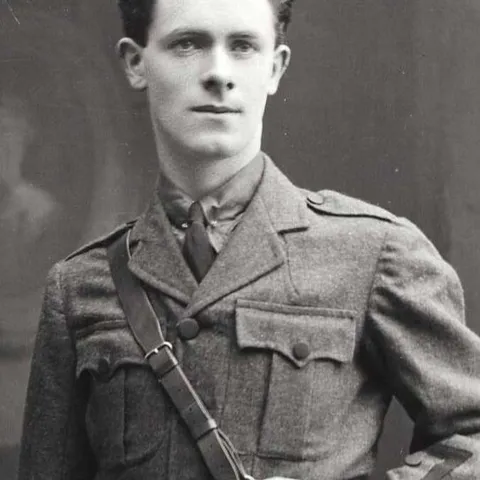
In this episode we explore the ambush of Lord French in December 1919. It shook the country and set the scene for the escalation in the conflict in 1920.
Support The History of Ireland by donating to their Tip Jar: https://tips.pinecast.com/jar/historyofireland
Transcript
Welcome to the History of Ireland. We’re at the very end of 1919, and there’s just one last event I want to explore. An event that all starts with a packed lunch.
One night, on December 18th, 1919, a group of IRA men were hanging out, having a few drinks around the fire. One of them, Paddy Sharkey, announced that he had to leave early. When questioned why, he explained he had to get lunch ready for his father, who had an early start in the morning. You see, his dad was a guard on the trains, and had been told he’d have to head down to Roscommon to escort Lord French back to Dublin.
As we know, Lord French was the Lord Lieutenant of Ireland. He’d been brought in to quash the troublesome Republicans, and was hated by the IRA. There’d been a number of discussions over whether to target French previously, but each plan had been abandoned. People like Carl Brewer believed it was just too dangerous to be aiming for such a high-profile target. Plus, French was very well-guarded, and his movements were a tightly held secret.
So, when young Paddy Sharkey’s dad was able to pass on his whereabouts, the squad got pretty excited. As Mick Macdonald, the man leading them at the time, said, quote, that’s the best bit of news I’ve heard for a long time. So a plan was put forward, and this time they got approval from Collins and the GHQ.
A team of 11 men were chosen, and sent off the next morning to apprehend French. Amongst them were Dan Breen, Seamus Robinson, Sean Tracy, and Sean Hogan. Remember those lads? They were the Tipperary guys who had led the Solohead Beg attacks, and here they were, again in amongst the thick of it. They’d been working with Collins and the squad throughout the year. Though, it should be said that Robinson didn’t particularly like Collins, describing him as a bit of an artful dodger. In fact, he was pretty disdainful of a lot of the Dublin leaders, as well as the upper echelons of Sinn Féin, arguing that, quote, not a single member of the GHQ ever came down to the country to see things for himself. Now, I don’t know, this seems a little unfair, but it is important to note that there were tensions and a split among the movement, even as the fighting began to ramp up.
Anyway, it was decided to ambush Lord French at Crossroads in Ashtown, which, in 1919, would have been on the very fringes of Dublin. The source stated that French was set to arrive at Ashtown train station, and that his motor pool would drive him to his home in Phoenix Park, now Orrison-Richteron. So the lads got up on the morning of the 19th of December and cycled down to Ashtown. They planned to take a few taxis, but unfortunately the drivers were on strike. Don’t you hate when you have a fun day planned and you just can’t get a lift?
At the Crossroads, there was a pub known as Kelly’s. Once they arrived, six men headed in for a drink while they waited for French. The rest did some reconnaissance of the area. Who decided this division of labour? I don’t know. Anyway, the non-drinkers found a cart around the back of the pub and attempted to use it to block off the road. But as they were putting into position, an RIC constable on duty noticed and tried to stop them. They, I shit you not, whacked him over the head with a grenade and left him unconscious. Better than getting blown up with it, I suppose.
At around lunchtime, Lord French and his entourage arrived at Ashtown station. They hopped into two cars and drove towards Phoenix Park. The IRA lads were hiding in the bushes by the Crossroads, and as the motorcade drove past, the squad threw their grenades. Chaos ensued. Sergeant Halley of the G Division began shouting over the sound of the explosions. Drive like the devil, he said.
The IRA fired a series of shots at the first car but it sped off. They weren’t too phased though. All their intel indicated that French would be driving in the second car, so that’s where they focused their firepower. A grenade was thrown straight at it but it bounced off the roof and exploded uselessly on the road. The bullets continued to fly. One RIC man was shot through the hand, Dan Breen took a bullet to the leg, and one unlucky IRA soldier, a young man named Martin Savage, was shot through the jaw.
In the chaos, one of the men actually dropped a grenade and everyone had to die for cover. But this mess up actually proved to be a bit of a lucky break. Literally just after the grenade had exploded, two RIC patrolled cars drove by and would have shot the men to pieces had they not been under cover. Ominously though, the RIC trucks did not stop at the crossroads and instead followed after the first car.
The mortally wounded Savage was carried to the door of the pub by some of the lads, but the owner locked them out and refused to help, presumably simply not looking to get involved in the mess. Savage died there and then, his body abandoned once everyone fled the scene. Dan Breen had this to say about the poor kid. Quote, How lightheartedly Martin had been singing and reciting poems about Ireland and the glory of dying for one’s country as we rode out to Ashtown only one hour ago. Now he was breathing his last, meeting his death as he would have wished, from a British bullet. Breen has a bit of a habit of really romanticising the violence of the period, that doesn’t totally sit well with me, but first hand accounts are always fascinating, even if they’re biased as all hell.
Meanwhile, as Savage was being turned away from the pub, the other men held up the car, and what they found was a real kick in the teeth. Instead of opening the doors to find a vanquished Lord Lieutenant, they found a bunch of luggage. French had escaped in the first car. The ambush had been a total failure.
Now all that was left was to get the hell out of there. Cut to Michael Donoghue, an ex-Dublin policeman who was riding his bike down the road. As he was cycling he heard explosions in the distance. A few minutes later, 7 or 8 men pedaling like blazes past him. Following along behind the first group were two more men sharing a bike. This was Seamus Robinson and Sean Tracy. Robinson’s bike had been wrecked in the ambush, and so now he was getting a lift from Tracy. They proceeded to rob poor Michael Donoghue’s bike, saying they’d return it for him to Gresham’s Hotel in the city, which, so the story goes, is exactly what they did.
And that was that. The men all managed to escape, and the RIC failed to ever identify any of them. No one was arrested, and Martin Savage was the only casualty. So, though it was a total failure on behalf of the IRA, the ambush also highlighted how weak the police forces were by the end of 1919.
Reactions across the country were mixed. The church condemned the ambush, and refused to allow Martin Savage’s body to lie in state in a church. Though generally, and on an individual basis, the church and priests were pro-Republican, at this point in the war the church as an organisation could not get behind the increase in violence. Poor Savage’s body was left in a boxcar at the train station, until it was returned to his home parish in Sligo, pretty grim and far removed from Dan Breen’s romanticism.
Then, the newspapers, Irish Bulletin accepted, pretty much all came out against the ambush, and in favour of Lord French. The Freeman’s Journal stated, The Irish public will congratulate the Lord Lieutenant upon his escape, and the country will congratulate itself that it too has escaped an irredeemable misfortune. While the Irish Times said, The first thought of all decent Irishmen must be for their great compatriot, whom God’s mercy has saved from the assassin’s hand. I find both of these pretty funny. They almost read like Get Well Soon cards for French. You can see why the Irish Bulletin was needed to combat such pro-British views.
But even generally pro-Republican papers like the Irish Independent condemned the attacks, stating that they were a criminal folly and declaring Martin Savage a murderer. Whether he had actually killed anyone, I’m not so sure. But that’s what they dubbed him. The IRA retaliated against the newspaper, using sledgehammers and crowbars to smash up the printing press. In fact, they did such a number on the Irish Independent’s equipment, that the Irish Times actually stepped in to help them release their next issue. From then on, the Irish Independent made sure its writings led to more in favour of the Republicans. So in fairness, the British were the only people suppressing the news.
And kind of shockingly, the IRA didn’t stop there. Though most of the public were on board with Sinn Féin at this point, not everyone was. And there’s a story of one old man who went around bad-mouthing the dead Martin Savage. So Mick McDonald led the squad to the old man’s house, broke in and cut off the guy’s beard, telling him quote, to watch his mouth in future. Yikes. These are the kind of stories you don’t really hear about the squad. But it is important to note that they weren’t scared of using coercion to keep anyone from helping British forces. Or in this case, simply insulting dead comrades.
As for the British themselves, the ambush did not go down well. It left the RIC pretty bloody embarrassed and rocked the British establishment in Ireland. It proved the IRA were no longer content with simply attacking policemen. They were now trying to come after the very top dogs of British control in Ireland. Macpherson, the Chief Secretary of Ireland, was shocked. Though David Lloyd George, the British PM, kind of laughed it off. Which seemed to annoy Macpherson, who stated, There was no expression of regret for my friend, nor was there an expression of sympathy for both of us in our difficult task. Aw, poor Macpherson. Apparently all Lloyd George said was, Ha, they are bad shots. Gotta say, I love how the Welsh wizard throws shade.
And amazingly, Lloyd George was so unfazed, or tone deaf to what was going on in Ireland, you choose, that the following week he introduced a Home Rule Bill in Parliament. Yep, he was still raveling on about Home Rule. He proposed two Home Rule Parliaments, one for the south of Ireland and one for the north, with a council of Ireland composed of members from both assemblies. He apparently stated that if the Irish wanted unity, the British government would not stand in the way. How this border was drawn, and which counties were considered south and which north, is fascinating, and like super relevant to the current nonsense occurring in Britain at the moment. But I’m not going to get into it right now, and instead I’ll dedicate a full episode to it later when we get to the truce.
For now, it’s what Lloyd George said next that I want to focus on. In a fairly unsubtle condemnation of Sinn Féin, he announced to the MPs in Westminster that any attempt at secession will be fought with the same determination, with the same resources, with the same resolve as the northern states of America put into the fight against the southern states. It’s important that that should be known, not merely throughout the world, but in Ireland itself.
And guess what? Sinn Féin were not happy with two Home Rule parliaments. They continued to attempt to secede, and British fought with a hell of a lot of determination. Which all means that 1920 was one hell of a year. But hey, we’ll get into all that next time.
If I made a mistake, let me know. The History of Ireland was written and produced by me, Kevin Dolan. Additional research and fact checking by Robert Bavington, music by Liam Doyle, and production help from Aoife Murphy. This podcast was recorded on the lands of the Wurundjeri people of the Kulin Nation. Sovereignty was never ceded.