Episodes Irish Revolution Season 1 — The Revolution
The Kidnapped General
Transcript
Welcome to the History of Ireland. It was on Saturday, June 26th, 1920, that Brigadier General Cuthbert Lucas decided to head off to Kilbarry, about seven miles from Fremoy, for a fishing trip with two of his subordinates, a Colonel Tyrrell and a Lieutenant Colonel Danford.
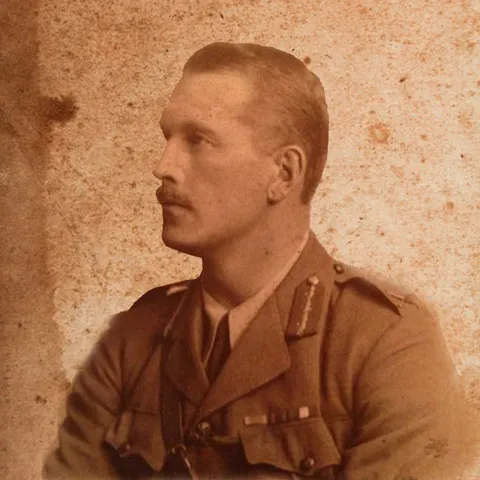
Now Lucas was a veteran military officer with a pretty distinguished career. Born in Hertfordshire, he fought in the Second Boer War and in Gallipoli in World War I. A tall, long, handsome-looking fellow, he sported a neat moustache and wrote to his mother every Sunday. He was one of the only officers to last the entire nine-month campaign in Gallipoli, and by the end of the war he was promoted to Brigadier General of the 17th Infantry Brigade.
This would have put him in charge of around 4,000 men who in 1920 were stationed in the south of Ireland, which is why he was spending a Saturday fishing in Fremoy with Tyrrell and Danford. Why we care about this guy, or about his fishing trip, is a whole other story. Lucas was about to have his Saturday ruined in what became one of the Flying Column’s first major successes. Enter Liam Lynch.
Lynch is a fascinating man. Born on the border of Cork and Limerick in 1892, he joined the Volunteers after the 1916 Rising, and by 1920 was in charge of the Cork Second Brigade of the IRA. It’s said of Lynch that he quote, made himself a leader out of the force of his own convictions, and was possessed by a sense of mission of a revolutionary ardour. Whilst in Dublin he had impressed Collins enough to be offered the job of Deputy IRA Chief of Staff, though Lynch turned it down so he could stay in the field.
Lynch was a smart, organised operator who would go on to be a major player in the Civil War, which, no spoilers. For now, we find Lynch hiding on the banks of the River Blackwater on Saturday June 26th, waiting for none other than Brigadier General Lucas to come in from his fishing trip.
As Lucas, Tyrrell and Danford came in off the water, Lynch and his Flying Column stormed the fishing hut. Lynch’s plan seemed to be to capture the Brigadier General and use him to trade for IRA captives. Though one of his Column members later said their motives were simply to harass the officers a touch and quote, pull them down and see what makes them tick.
The three British men were thrown in a car and driven off. While sitting in the back, Lucas, Tyrrell and Danford began planning their escape in Urdu, which they most likely would have learned while fighting in Gallipoli. Now it’s safe to say the men of the IRA 2nd Corps Brigade did not speak Urdu and were not ready when the three officers made a run for it.
They scrambled away once the car reached its destination. The Flying Column chased after them, shots were fired and Danford was hit. In the ensuing scuffle Lucas was recaptured and it was decided to leave Tyrrell with Danford, who helped his fellow officer back to Fremont. Lucas was the main prize and so Lynch didn’t particularly care if Tyrrell or Danford escaped.
Lynch’s goal was to disappear with Lucas, which was frankly easier said than done. The alarm was very quickly sounded and hundreds of British soldiers as well as numerous aircraft were sent out to scour the area for the stolen General.
And the next night hundreds of British soldiers, who had spent the weekend drinking, took to the streets of Fremont singing and chanting, they shit you not, we want our General, we want our General. They trashed the town as a form of revenge. They burned houses and shops, wrecked the Sinn Féin Hall and did several thousand pounds worth of damage. As the local newspaper reported, Another paper reported, These kind of reprisals were becoming more and more common.
And in fact, Fremont wasn’t the only place targeted because of Lucas’s kidnapping. The homes of prominent Republicans were also bombed in Limerick and Newcastle West. It’s a prime example of the British reprisal policy in action.
The rank and file soldiers weren’t the only ones crying we want our General. General MacReady wanted to immediately arrest the six leading members of the Cork IRA and lock them up until Lucas was returned. But he was unable to, due to two factors. First, the simple legal argument that the British had no evidence of anyone’s personal involvement in the kidnapping. Lame.
And secondly, and much more worrying to the British, it was argued that, Hunger strikes were always a PR nightmare for the British and a real thorn in their side. And Churchill was by all accounts fairly annoyed with Lucas for having let himself get captured in the first place. Suggesting that Lucas had only himself to blame for his carelessness.
The whole thing was incredibly embarrassing to the British and the New York Times dubbed it a sensation. While the Irish Bulletin was able to spin a ridiculous amount of propaganda from the IRA’s success. But capturing the General was one thing, figuring out what to actually do with him was a whole different mission entirely. First he was held in Cork. But eventually it was carried over the Shannon and handed off to Michael Brennan of the East Clare Brigade.
We know quite a bit about his capture because the IRA allowed him to write home to his wife Poppy Lucas, who was pregnant at the time. Their grandchild, a Mrs Wheeler, tells it like this. One morning Poppy was feeling sick, so she called for the nurse who came with a bowl. And underneath the bowl was a newspaper with the headline General Lucas Kidnapped. She then went into premature labour and a baby was born.
So Poppy Lucas then wrote a letter to her husband with the news, simply addressing it to the IRA. The Irish postal system got the letter and managed to get the letter down to the safe house Lucas was staying in, which is just fantastic. Lucas then received the letter and was allowed to respond to his wife.
By Lucas’s account he in fact became quite friendly with the IRA men who were keeping him captured. In the letter he describes being quote, well looked after and well treated, but very bored. The IRA, ever determined to act and be treated like a legitimate army, treated their captive as a proper prisoner of war. So when he demanded his daily officer’s allowance of a bottle of whisky, they of course indulged him.
But in fairness, it’s said Lucas did in fact share his whisky with his captors. There are stories of one IRA member, Ernest Corbett, staying up late into the night drinking whisky and playing bridge with a captured general. Can you imagine it? Corbett and Cuthbert, one a country farmer, the other a decorated British general, both on opposite sides of an ever escalating conflict, sitting down to play bridge and drink whisky.
And that’s not even the weirdest bit. On top of the night time card games, he was also allowed to exercise daily. Apparently he spent most of his capture playing tennis and croquet. Sounds like he was at a bloody summer camp. Lucas even writes about going salmon poaching and quote, helping save the hay. Well I guess at least he was making himself useful.
But it wasn’t all fun and games around the country. The capture of the general was a striking and very palpable example of how, by the summer of 1920, the British were losing their grip on the Irish countryside. Lucas’s kidnapping was a symptom of a wider problem for the British.
As one Mayo judge put it at the time, quote, Everybody is yielding to Sinn Féin, whether they prove it or not. They say they can do nothing else, and that the government, i.e. the British, cannot or will not protect them, and the police can barely protect themselves.
While, Republican police patrolled the town wearing the badge inscribed Irish Republican Army on their sleeves. They had been regulating the supply of flour, questioning people about their movements, and regulating the control of licensed premises. While in Roscommon Sinn Féin the IRA in the courts had quote, The fact the Irish had successfully captured and kept Lucas backed all of this up. It was an amazing piece of PR.
Now this is not to say the British weren’t trying to grasp control back. But many of their soldiers argued that their equipment was letting them down. The lorries they had were worn out by war service. Tanks had been found to be useless in the Irish countryside. And when some snazzy armoured cars were sent over in July, they were just too heavy for any of the Irish country roads.
General MacReady wanted to bring in planes to help search for Lucas, and regain some control of the countryside. He said, Initially the cabinet were very much on board. With Churchill arguing that some planes would provide great protection to armoured car work on the road, and a great deterrent to illegal drilling and rebel gatherings. In fact he was pretty quick to order a tripling of the aircraft in Ireland.
However, there was a slight snag. The head of the air force basically shut down the whole idea, saying it would be both ineffective and highly dangerous. He was worried for the reputation of his pilots, and believed that if they were to accidentally shoot civilians, which would be highly likely he reckoned, that it would lead to a quote great popular outcry against the unfortunate violence. I love that it was more the old chops from the air forces reputation, rather than the civilian casualties that he seemed to be worried about.
In the end, planes were never really used across the war, and effective armoured cars would not arrive until the beginning of 1921. So for the summer of 1920, the British were stuck with up-armouring their normal trucks. This was one of the reasons they totally and utterly failed to find Lucas.
And as it happens, he ended up escaping on his own anyway. Kind of. You see, it quickly became clear that the British government would not negotiate for his release. Therefore, Lucas was nothing but a liability to the IRA. A whole brigade was tied up in keeping him locked up, and if the British would negotiate, well he was of no use.
And on top of this, he was an expensive prisoner. As Jack Hogan, a son of Thomas Hogan, one of Lucas’ guides describes it, quote, the trouble was that they couldn’t keep him. He used to drink a bottle of whiskey every day, and he used to beat them at poker. He cleaned them out at poker.
Now, really if the British refused to negotiate, the usual tactics would have been to shoot poor Lucas. But as Hogan puts it, quote, he was a very affable sort of man, who was easy to get on with. And because of this, it seems his murder was just never really on the cards. So, one day, when he managed to make a run for it, the guards just decided not to chase him.
Historian Thomas Toomey theorises that Lucas and the East Clare Brigade struck a deal. As Toomey puts it, The odd thing about it is that General Lucas knew every house he stayed in, but none of the homes were ever raided. I believe there was a pact. They got to like him, and over my 20 years of researching him, I never heard one bad word said against him.
So he escaped. The guys let him go, he ran away. Whatever happened, he made it back to England. And once there, he was hounded by the British press, who were looking for stories of torture at the hands of the brutal IRA. But Lucas never gave it to them, and instead was quoted in the papers as saying, he was treated as a gentleman by gentlemen.
Lucas went on to serve elsewhere in the British Army until 1932. He then enjoyed a quiet retirement, during which he took up, I swear to God, embroidery of all things. He just couldn’t make the stuff up.
So that’s the story of the kidnapped general. One of the rare, actually kind of nice moments from 1920, I guess. But as well as being just sort of a crazy story, it does show how much control the IRA had over certain aspects of the countryside, and how ineffective the British were at this point. But it also proves the IRA had limitations. Besides for a great bit of PR, there was never really any benefits to Lucas’s capture. It just ended up stretching the IRA’s limited resources further than was feasible, hence his, you know, escape.
Next episode, we’ll explore a few other bits and pieces we’ve skipped over from the first half of 1920, before carrying on with the arrival of the Auxies, and the introduction of the Defence of Ireland Act.
Thanks for listening. Subscribe wherever you get your podcasts, and if you’re enjoying it, tell your friends. It’ll really help. You can also get in touch with us through thehistoryofireland.com, or follow us on Facebook. If I made a mistake, let me know.
History of Ireland was written and produced by me, Kevin Dolan. Additional research and fact-checking by Robert Bavington, music by Liam Doyle, and production help from Aoife Murphy. This podcast was recorded on the lands of the Wurundjeri people of the Kulin Nation. Sovereignty was never ceded.