Episodes Irish Revolution Season 1 — The Revolution
The Ballad of Kevin Barry
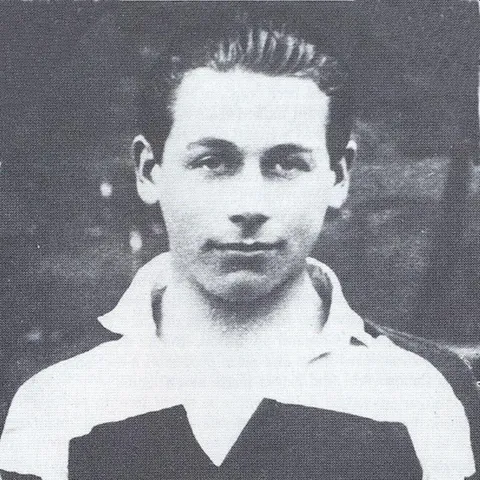
In the last episode we look at the Irish approach to the war in quite broad strokes. Today we dive into the specifics, detailing a raid on a group of RIC men guarding a bread lorry and then looking at the propaganda battle that followed. A propaganda battle focused on one 18 year old medical student — Kevin Barry.
If you're interested in the version of the Ballad of Kevin Barry that was performed at the end of the episode you can check out more of Ciaran Boyle's music here: https://open.spotify.com/artist/49k7nWdOivgaMRjygriPZ8?si=rsNb9fI4Qdihh6c5sSxP4g or follow him on Facebook: https://www.facebook.com/ciaranboylemuso
Transcript
Welcome to the History of Ireland. On Monday the 20th of September, Kevin Barry was up in Dublin to repeat one of his exams. Unfortunately for Barry, he never got around to sitting that exam though. Today, we’re going to find out why. Last week, we discussed in pretty broad terms how the Irish forces in the War of Independence operated. Today, we’re diving into the specifics.
Born in 1902, Barry was raised on a Carlow dairy farm and was granted a scholarship to study medicine in Dublin. As well as being an aspiring doctor, Barry was also a die-hard Republican. He joined the Volunteers in 1917, aged 15, and became a member of the IRB in 1918. When he arrived up in Dublin for his exam, he heard about a plan to raid some RIC men at around 11 o’clock. He figured his exam wasn’t until 2, so he’d have loads of time to sneak in a quick little arms raid beforehand. You know, as you do. Raid some soldiers and steal their guns in the morning, then sit your biochemistry exam in the afternoon. Easy.
So Barry met with a group of IRA men and was given a .38 Mauser automatic pistol. This was not a gun Barry was used to. Like most of the Irish, he had limited weapons training across the board. But sure, a pistol is a pistol. Be grand. Or so he thought.
Around 11.30 on Monday morning, he found himself with 25 other IRA men at Monk’s Bakery on Church Street. You see, three times a week, a lorry would come by to collect bread. Bread? Why were they holding up a bread lorry? Well, the lorry was also always accompanied by half a dozen RIC men, all of whom carried arms. Arms that, as we know, the Irish desperately needed.
So the lorry arrived at the bakery, and the RIC sergeant and two men hopped out and headed towards the bakery courtyard. Suddenly, out of a crowd of civilians, the IRA appeared and surrounded the lorry. Barry, along with two other IRA men, approached from the rear. They shouted, hands up, hand over your arms, and the RIC men quickly did what they were told. Well, all except for one.
You see, one of the lads realised there was no gun pointing at him, and so, instead of dropping his weapon, he fired. The shot rang out and pandemonium ensued. If this was an Irish junior sergeant essay, you’d say there was re-raw agus rule of bulla. You’d probably throw in a ketubban for good measure.
Barry fired his first shot, but his pistol jammed. He quickly managed to clear the jam and fired two more shots at the British. A private Harold Washington was killed instantly. Then, disastrously for Barry, the pistol jammed again. With bullets flying everywhere, Barry knelt behind the lorry for shelter.
Breathing heavily, heart pumping, adrenaline coursing through his body, Barry fumbled with the gun trying to unjam it. Time would have felt like it slowed to a crawl, and all of Barry’s focus was on the pistol. Then, suddenly, he noticed something strange. Suddenly, he noticed total silence. The rest of the IRA had legged it.
As we discussed last week, the IRA’s modus operandi was to abandon any raid at the slightest bit of trouble. So, immediately, they scattered off into the back streets. Usually, they would have whistled to signal the retreat, but either they forgot or Barry never heard it. Now, left alone, surrounded by British soldiers, Barry had to think fast.
His only hope was to dive onto the lorry. His plan was that he’d, quote, have a chance of getting clear when he drove away. And it nearly worked. The British hopped in the lorry, revved up the engine, and were about to drive off when a woman shouted, There’s a man under the lorry! Barry was immediately arrested.
All in all, three British soldiers died. As previously mentioned, there was Private Harold Washington, he was killed in the scene. While Private Marshall Whitehead and Thomas Humphreys died later of their wounds. The Irish took no casualties. Though a Bobble Flanagan took what was described as, quote, a deep bullet wound to the scalp.
The arrested Barry was taken to North Dublin police station, where he was interrogated in a detention room. The soldiers, quote, resorted to twisting his right arm vigorously for several minutes and inflicting severe pain on the prisoner. And ended up spraining his wrist. In fairness, it’s not the worst kind of interrogation seen during the war. In fact, he was kind of lucky considering he had clearly shot an RIC man. And despite the spraining of wrists, Barry refused to give them any information. Simply saying that he and the other men were, quote, after the rifles.
It’s at this point we mention the ROIA again. This allowed the British to bring men like Barry in front of a military court, rather than a civilian one. It seemed like the perfect opportunity to make a statement. They caught, red-handed, an IRA murderer. So a month later, on the 20th of October, Barry was tried by a general court-martial at a barracks in Dublin. He was charged with murdering three soldiers. And when asked to plead, all Barry said was, I refuse to recognise the court.
An investigation proved that the bullet that had killed Marshall Whitehead matched Barry’s automatic revolver. The investigation also showed that the remaining bullets in Barry’s gun were what are known as flat-nosed bullets. These cause bigger wounds, more bloodshed and tear through the victim. They’re gruesome. In fact, their use is basically a war crime and breaches the Hague Convention. As General McReady put it, they are barred by all civilised nations.
And so it was pretty easy then for the British to declare Barry guilty. And following from that, they sentenced him to death by hanging, to be carried out a week later on the 27th of October. Before the sentencing, no one had really paid much attention to Kevin Barry’s story. The news and public consciousness were mostly preoccupied with Terence McSweeney’s hunger strike. Remember, McSweeney died on the 25th of October. But with McSweeney’s hunger strike coming to an end, Barry’s sentencing came at the perfect time to tap into an angry and indignant population.
The Sinn Féin propagandists began to work overtime. First off, Arthur Griffith delivered a message to the civilised world, declaring that The English government now proposes to set aside the high standard maintained by the Irish volunteers and execute prisoners of war, previously attempting to brand them before the world as criminals. As such an outrage upon the law and customs of nations cannot be permitted to pass in silence by civilisation. It may be in the power of England to hang an Irish boy of 18 under such circumstances, but it is not in her power to prevent the conscience of mankind reprobating with horror such an action. That conscience Ireland invokes against this intended outrage upon God and man.
As a quick aside, Griffith’s approach here is pretty interesting. He hated violence and brutality by anyone, including the IRA. But as acting president of the Dáil he had to back the Irish forces. So as his biographer puts it, Griffith developed something of quote A split personality, privately condemning certain Irish acts of violence, while publicly denouncing British aggression. At the same time trying to put some of his original passive-resistant policies into practice. Historian John Ainsworth argues that this split personality may have been the perfect spokesperson for Ireland at the time. Able to ignore the Irish violence while condemning the British.
Anyway, Erskine Childers, another expert propagandist and a popular author joined in with Griffith. He wrote a piece for the Westminster Gazette stating This lad Barry was doing precisely what Englishmen would be doing under the same circumstances. And with the same bitter and intolerable provocation. The suppression by military forces of their country’s liberty. To hang him for murder is an insulting outrage. And it is more, it is an abuse of power. An unworthy act of vengeance contrasting ill with the forbearance and humanity invariably shown by the Irish volunteers towards the prisoners captured by them.
It’s fascinating to see that Sinn Féin really had their talking points down. Both Griffith and Childers make sure to draw attention both to Barry’s age and to the IRA’s treatment of its captors. The story of Brigadier General Lucas’s capture by the IRA and how well he was treated was brought up quite a bit when discussing Barry. While Barry was continually referred to as Master Barry by pro-Irish papers. So as to reiterate his young age.
Barry didn’t really want to join in with the propaganda initially. Saying he was quote reluctant to make a fuss. But after being ordered by his commander he released an affidavit outlining his torture at the hands of the RIC. Now as we’ve said he wasn’t actually treated all that poorly. But if the Irish never let the truth get in the way of a good story. Well imagine what an Irish propagandist is like. It’s no surprise that General McReady believed that quote this propaganda business is the strongest weapon SF has.
And the propaganda was extremely effective. The public outcry was huge and there were a range of calls to stop Barry’s execution. Dublin’s Archbishop, the Mayor and Joseph Devlin of the IPP all made a case for a stay of execution. The Tuesday before Barry was scheduled to be hanged. A cabinet meeting was held to discuss the quote case of a young man aged 18 years and 9 months. Who had been sentenced to death by a court martial.
The cabinet was made aware of the appeals from Devlin and the others. Who argued that Barry should be spared on account of his youth. But they pointed out that he was older than some of the soldiers. The term army age was thrown around. Teenagers would often lie about their age to join up. And so you could generally subtract a year or two from a soldier’s official age. So though Barry was only 18 the lads killed may have been as young as 15 or 16.
The cabinet also pointed out that quote it was precisely young and irresponsible men of this type. Who were the main cause of the present disturbances in Ireland. Basically it was important on a number of levels for the cabinet to be seen to act. They saw it as vitally important to dissuade others from acting in the same way Barry had. Internment was clearly not enough of a deterrent. And so they had only one choice.
As Churchill put it. It is monstrous that we have some 200 murders and no one hung. And similarly with Terence McSweeney. They believed that to not kill Barry would lose them all credibility among their own forces. MacReady argued that Barry had to be hanged to ensure any kind of dissonance among British forces. As he put it. It’s a clear case of the sort of which the soldiers and police rightly expect us to exact the full penalty.
There was a fairly patronising argument made against this. Saying that quote the emotional people of Ireland would look very favourably on clemency for Barry. And that it might help turn them against the increased violence from the IRA. However in the end the hawks won. And Gladstone agreed with Churchill. Stating that the boy must hang.
Weirdly Barry and his family were not looking for any kind of clemency. In fact when one of the joint undersecretaries at Dublin Castle. A James McMahon. Suggested that Barry’s mother appeal directly to the king. She got kind of angry. Barry at this stage anyway. Was happy to die for Ireland. His only issue was the idea that he’d hang. Rather than enjoy an honourable death by firing squad. It’s all kind of mad if you ask me. But again it played beautifully into the legend of Kevin Barry. That was very quickly developing.
All of this should have been a victory for the British. The attack itself was totally bungled. And they had a gunman ready to punish. Like it’s not like Barry was innocent. He and the other IRA men had killed three young men of a similar age. With internationally banned and horribly brutal ammunition. But the news at the time barely mentioned this. Or the British soldiers.
Now the British had set up the Public Information Bureau or PIB. In Dublin in August of 1920. As a propaganda unit to counteract Sinn Féin. But in the case of Kevin Barry. They seemed to do nothing to counteract the sympathetic picture. Being created of the boy. MacReady begged that quote. Some person in authority in England respond. By linking Barry publicly to the use of flat nosed ammunition. But weirdly it was never discussed.
As MacReady continued. This case of Kevin Barry. Will be published throughout the country. As the murder of a patriotic boy by the government. And nothing will be said or known about the fact. That he murdered two young soldiers. About the same age as himself.
In the end. Barry was portrayed by everyone. From pro Irish papers to pro British. As a handsome friendly young medical student. Who was willing to die for the love of his country. And in fairness. I’m not sure if this is totally down to spin. From what I’ve read. But Barry really did seem like a nice guy. And he was fighting for his country. In the end he went to his death proudly. As historian M.A. Daugherty puts it. His undeniable dignity in the face of death. Deprived the government propagandists of a better story.
It happened on November 1st. 100 years ago last Sunday. We were so close to being bang on the centenary. But a schedule is a schedule. And Melbourne got out of lockdown this week. And I was not sitting in recording at the weekend. Sorry. Anyway. We get a fairly detailed account of his last few hours. From a letter written by none other than Basil Clarke. The head of the British propaganda unit PIB.
The night before his death. Barry quote. Sent a message to his class fellows. The second medicals in the national university. Fight on. For the ideal for which I am about to die. He spent much of the next morning. Brightly chatting away to one of his guides. About football and hurling. Clarke mentions that he quote. Had never been out of Ireland. And had very strange ideas about England. He appeared to think of it as all one vast industrial area. With no country village or open spaces of countryside.
Apparently as the hour came nearer. Barry became a little more dejected. In the end he had kind of been hoping for a reprieve. The Manchester Guardian tells the quote. When the final news that no reprieve could be given came through. He said with a smile. These things only happen on the cinema. This is a fact backed up by Clarke.
The Guardian describes his last moments like this. They say. Barry died with prayers on his lips. For his friends and his enemies. While Clarke puts it a little more bluntly. He simply said. Barry went to the drop with cow’s composure.
And so that was that. The British hanged Kevin Barry. As the historian Ainsworth puts it. In death Barry became a positive and enduring symbol of Irish republicanism. Soon after his death a song was written by someone in Glasgow. The Ballad of Kevin Barry as it’s known became a quintessential Irish rebel song. Performed by everyone from the Clancy brothers to kind of weirdly Leonard Cohen.
And in fact a friend of mine did a version for me especially for this episode. It’s not quite your usual traditional arrangement. But I hope you enjoy it. I find it fascinating to listen to the lyrics and see how history literally became a legend. There’s a link to Ciaran Boyle’s music in the show notes. If you like your acoustic Irish singer songwriters with great lyrics. You’re going to really like Ciaran. Check him out.
And now here’s Ciaran Boyle singing his version of the Ballad of Kevin Barry in it’s entirety.
Kevin Barry gave his young life For the cause of liberty Just a lad of 18 summers Stellars no one can deny As he walked to death that morning Proudly held his head up high Shoot me like an Irish soldier Do not hang me like a dog For I fought to free old Ireland On that dark September morn All around the little bakery Sure I fought them hand to hand Shoot me like an Irish soldier For I fought to free this land
Just before he faced the hangman In his dreary prison cell British soldiers tortured Barry Just because he would not tell The names of his brave comrades Other things they wished to know Turn informer or we’ll kill you Kevin Barry answered no Shoot me like an Irish soldier Do not hang me like a dog For I fought to free old Ireland On that dark September morn All around the little bakery Sure I fought them hand to hand Shoot me like an Irish soldier For I fought to free this land
Proudly standing to attention While he bid his last farewell To his broken hearted mother Whose grief no one can tell For the cause he proudly cherished This sad parting had to be Then to death walked softly smiling That old Ireland might be free Shoot me like an Irish soldier Do not hang me like a dog For I fought to free old Ireland On that dark September morn All around the little bakery Sure I fought them hand to hand Shoot me like an Irish soldier For I fought to free this land
Another murder for old Ireland Another murder for the crown Whose brutal laws may kill the Irish But they can’t keep our spirit down Do not hang me like a dog For I fought to free this land Shoot me like an Irish soldier Do not hang me like a dog For I fought to free this land
Thanks for listening. Subscribe wherever you get your podcasts and if you’re enjoying it, give us a review on Apple Podcasts or tell your friends. It really helps. You can also support the show, buy merch and get in touch all through our website thehistoryofireland.com Or you can follow us on Facebook or Twitter. It’s always great hearing from you guys. And if I’ve made a mistake, please do let me know.
The History of Ireland was written and produced by me, Kevin Dole. Additional research and fact checking by Robert Babington, music by Liam Doyle, and additional help from assistant producer Aoife Murphy. This podcast was recorded in the lands of the Wurundjeri people of the Kulin Nation. Sovereignty was never ceded.