Episodes Irish Revolution Season 2 — The Civil War
The Assassination of Sir Henry Wilson
The death of Sir Henry Wilson is a complicated affair that gives us a fascinating insight into the intersectional nature of the Ireland at the time. Whether figuring out who ordered the hit or examining those involved — nothing is simple or straightforward.
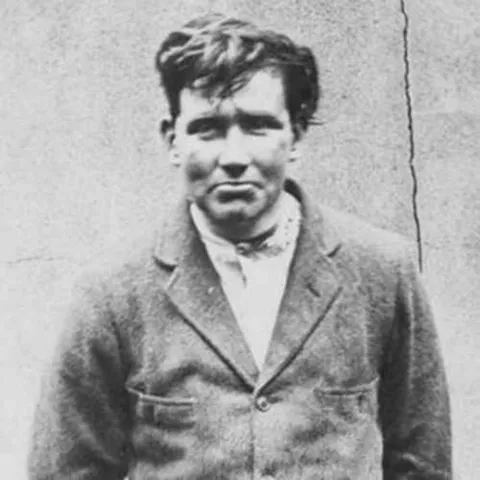
The photo is of Reginald Dunne.
Transcript
Welcome to the history of Ireland. Sir Henry Wilson was an Irish patriot. Or, to put that more accurately, he saw himself as an Irish patriot. The problem, though, was his Ireland had well and truly disappeared by 1922 and may never have existed. Described as the Franz Ferdinand of the Irish Civil War, his death was the spark that lit the fuse and provides a fascinating insight into the complexities of Irish identity at the beginning of the 20th century. That’s right, today we’re looking at the death of Sir Henry Wilson. We were first introduced to Wilson way back in episode 27. But let’s give a quick recap and go a little deeper.
Born in Longford, into the upper echelons of the Protestant landlord class, Henry Wilson was an imperialist through and through. Like many younger sons of that era, he joined the army, quickly rising through the ranks. He fought all over the empire, in India, in South Africa during the Boer War and by the time World War I came around, he was a leading figure in the British Armed Forces. A brilliant tactician, he was more of a desk jockey than an actual soldier and during World War I he was a key liaison between the British and French forces, which was a vital role in the conflict. From there he became a Unionist MP and worked hard with James Craig to advocate for Irish Unionists in Parliament. It was said he was a brilliant speaker, a fantastic lecturer and had a great sense of humour. For example, after a wound in India left him with a scar across his face, he jokingly referred to himself as the ugliest man in the British Army.
But before you start thinking maybe we should like Wilson, I don’t think he was a particularly likeable guy. He was an avowed racist and a textbook British colonialist. Wilson pretty much stood for everything we now condemn colonialism for. He believed that white people were a superior race, he believed the upper classes were superior to the working classes, he believed soldiers were superior to politicians and basically he had some fairly horrendous views. In fact, some have described him as a proto-fascist.
It’s important to place Wilson within the imperial context of the time because that imperialist worldview shaped his entire attitude to Ireland. He was proudly Irish, though his version of Irish pride was that he was proud to be of the Protestant land-owning upper class and believed that that group was above everyone else, both in Ireland and across the empire. I find it’s actually a quote from his brother that helps give an insight into Wilson’s worldview. A worldview that feels abhorrent but was quite normal in the late 1800s. His brother had this to say about Irish independence. The oasis of culture, of uprightness and of fair dealing, sustained by his landlord class, whose blood is so freely shed for the empire, who for years have done their best to discharge their onerous and often thankless duties by their humble neighbours all over Ireland, was giving way to a desert of dead uniformity where the poor will have no one to appeal to except the priest or the local shopkeeper. Now, onerous and often thankless duties, you were living in a bloody mansion, man. These guys saw themselves as superiors, whose job it was to take care of, uplift and control all the other lowly humans of the world.
So yeah, let’s say Wilson was not a nice guy by any stretch of the imagination. And as you can imagine, he was not a fan of Sinn Féin or the Irish independence movement in any way, shape or form. He saw Ireland as the linchpin of the empire and was worried that if Ireland left the empire it wouldn’t be long before everyone else followed suit. As far back as 1914 he had been involved in the Curran Mutiny, a crisis where Irish Unionist military officers stationed in County Kildare advised the British government that they’d refuse to follow any orders that asked them to take up arms against Irish Unionists. The whole thing was a huge deal and forced the British government at the time to back down, strengthening Irish Unionists’ position. It spit in the face of the political control of the army and went against the chain of command in a whopping fashion. The Curran Mutiny had been over Home Rule, which Wilson saw as a step much, much too far.
It’s no surprise then that he well hated Sinn Féin or the murder gang as he referred to them. As keen-eared listeners will remember, he was one of Lloyd George’s key military advisors throughout the War of Independence. But he had no time for how Lloyd George approached the Irish situation. Wilson argued strongly against the Black and Tans and instead wanted to bring in full military control across Ireland. He was bitterly disappointed when this never materialised and even more annoyed when a truce was signed, describing it as rank filthy cowardice. When the treaty was signed he stepped down as Chief of General Staff and became a military advisor to the new Northern Ireland government.
Now if he hated Irish Republicans, well they responded in kind. The Freeman’s Journal would often tear into him and he was blamed for much of the violence in Northern Ireland against the Catholics throughout the War of Independence and into 1922. Though it should be said he disapproved of a lot of what the Ulster Special Constabulary or the B Specials did. Again he wanted a more militaristic and controlled crackdown on Irish nationalists and Catholics, rather than the B Specials more chaotic approach. But he did take a lot of blame for their actions and Collins, maybe rightly, described him as a violent orange partisan.
So that’s the lovely Sir Henry Wilson. Next we need to introduce Joe O’Sullivan and Reginald Dunn. Both men were born in England to Irish parents. In fact Reginald Dunn’s father was a British soldier and Reggie, as he was known, was born in an English army barracks. He was a voracious reader and very interested in Catholic theology. Fun aside he actually went to college with Alfred Hitchcock of all people. Dunn fought in World War I, most likely to help further Home Rule, but after the war he became deeply involved in the IRA and the independence movement. In fact it’s kind of interesting how this happens. He was a classically trained violinist and one day he stumbled into Irish nationalism after hearing trad music in a pub. He fell in love with the music and the Irish language and joined the IRA in September 1919. By 1921 he had risen through the ranks and was leader of the London IRA. He would have spent his time in London organising weapon smuggling and building connections with Indian nationalists, Soviet Russians, British communists and really anyone who was anti-British empire. You couldn’t think of someone more opposite to Wilson.
Then you have Joe O’Sullivan. O’Sullivan came from a large working class Cork family who had moved to England. His father was a firm home ruler and trade unionist. Again like Reggie he joined the British army in 1915 and in a similar fashion most likely to help the Home Rule Bill. He survived the war but lost a leg and when he came back he joined the IRA. They were everything that Henry Wilson wasn’t. And they hated the man. Which is why they found themselves at Liverpool Street Station watching Wilson unveil a war memorial to the fallen of World War I on June 22, 1922.
So that’s where we find ourselves. An upper class Irishman from Longford who believed strongly in the empire and hated the idea of Irish nationalism. And two working class men from England who were staunch Irish Republicans and hated everything about the empire. It’s always difficult to put people in a box, ain’t it? And all three men are a great example of the complicated intersectional nature of the conflict at the time. It was a mix of nationalist vs unionist, the rights of small nations vs the power of an empire. The upper classes vs the working class.
Anyway, after the ceremony Wilson returned to his home in Belgravia. He strolled up to his door when suddenly the two lads, O’Sullivan and Dunn charged across the street towards him. Now we have two accounts of what happened next. British newspapers reported that Wilson drew his ceremonial sword and shouted, you cowardly swine! As Dunn shot him twice. The story goes that this makes Wilson the only field marshal to die in action.
However, Dunn himself described the meeting like this. Wilson made for the door as best he could and actually reached the doorstep when I encountered him at a range of 7 or 8 feet. I fired three shots rapidly, the last one from the hip as I took a step forward. Wilson was now uttering short cries and in a doubled up position staggered towards the edge of the pavement. At this point, Joe fired once again and the last I saw of him, he had collapsed. Now I’ll leave you to believe which is more likely. But I will say, Ioannis reports tend to back up Dunn’s account. Rather than, we’ll say, the more sensational version.
The murder itself seems straightforward at first. Two Republicans shoot down a leading Unionist. But why they did it, who told them to do it and what happens next, well it’s all very complicated. To this day, we have no idea who ordered the attacks. And it’s hard to even definitively place Dunn and O’Sullivan on the pro or anti-treaty side. The obvious assumption is that the anti-treaty side organised the attacks. But remember, there were kind of two anti-treaty sides at this point. One less radical and open to talks led by Liam Lynch and another of die-hard militants occupying the forecourts led by Rory O’Connor. Though the anti-treaty side were blamed for the attack, it’s pretty unlikely that it was Lynch or O’Connor who ordered it.
More likely, and many people believe this theory, is that Michael Collins ordered the attack. Two or three members of the squad backed this theory up, but even then it’s not so simple. Some historians argue that Collins probably did order the attack, but well before the treaty and that the order had just never been rescinded. But others say that Collins ordered it much more recently. Dunn and O’Sullivan had met with Collins earlier in June. And it is relatively suspicious timing. Collins had a lot going on at this point and was working all sides. We’ll come back to this. And so it’s not unfeasible to think he ordered the attack.
Now there are a few reasons put forward for why he might do this. Despite now working with the British. He might have killed Wilson to weaken the North and because Wilson was severely anti-treaty. Though this argument falls down because Wilson had lost a lot of influence by this point. Maybe he did it to force the British to force him to attack the four courts. The thinking goes that he couldn’t be seen to act against Irish forces unless provoked. And Wilson’s death was just the right amount of provocation. Though I don’t know this one’s a little bit too conspiracy theory for my liking. But it’s definitely not outside the realms of possibility.
Then finally there’s the thinking that Dunn and O’Sullivan acted on their own. And if I had a gun to my head I think this is the most likely scenario for my money. You see the London IRA were just as torn as the rest of the movement at this point. The night before Wilson’s murder Dunn, O’Sullivan, the London IRA and the London branch of Cumann na mBan had a heated meeting. Many wanted Dunn to act and demonstrate that he was on the anti-treaty side. Cumann na mBan even went as far to call him a coward and sent him white feathers to his house. Which apparently was a big deal. So when Wilson’s itinerary for the next day was released and it was made clear he would be out in the open. Well the lads thought to make their move. The theory here goes that they killed him to galvanize the London IRA. To show their strength and maybe to try and reunite the movement against the inevitable British retaliation. It’s impossible to know who ordered what or why they did it. It’s just one of those frustrating historical mysteries that seems we’ll never be able to solve.
However if Dunn and O’Sullivan’s plan was to bring the movement together against the British. Well boy did it backfire. The two men failed to get away. O’Sullivan did have a wooden leg to be fair. They were arrested and tried in court where Dunn stated that he fought in World War I for the rights of small nations to self determination. But that quote. Those principles I found as an Irishman were not applied to my own country and I have endeavoured to strike a blow for it. Collins did apparently send men from the squad to try and break them out. But never managed it and in the end the two men were hung. It’s said that Collins promised that if anything happened to them their parents would be looked after. But this never materialized and the family saw no help from the Irish Free State. And maybe rightly were quite bitter about this for a long long time.
Equally Wilson’s widow received very little help from the British government. She shared her husband’s political views and wholeheartedly blamed the British government for her husband’s death. In fact they were kind of worried about what she might do at the funeral or whether she would let any high profile British politicians attend. In the end she did and it was all fine but there was definitely tension there as well.
Reactions to Wilson’s death were mixed. The new statesman wrote. With his fanatical orangism, great military prestige and inflammatory speeches. He did more than any other man to promote that spirit of ruthless and stupid retaliation which had led to his own death. While the IRA were glad to see the backbone. While the IRA were glad to see the backbone. And Unionists proclaimed Wilson a founding martyr for the Northern Ireland state.
But regardless of who ordered his death. Whether or not he deserved it. Or what Dunne and O’Sullivan intended. Wilson’s murder was the spark that ignited the Irish Civil War. As the British pressured the Irish Free State into attacking the IRA stationed in the forecourts. And that’s when everything kicked off. But we’ll explore that next episode. Simply follow the Patreon link in the show notes or visit our website thehistoryofireland.com You can also get in touch through the website or on Facebook and Twitter. It’s always great hearing from you guys. And if I’ve made a mistake, please do let me know. The History of Ireland was written and produced by me, Kevin Doley. With music by Liam Doyle and additional help from assistant producer Aoife Murphy.