Interview – Alexander Poots On The Writing Northern Ireland
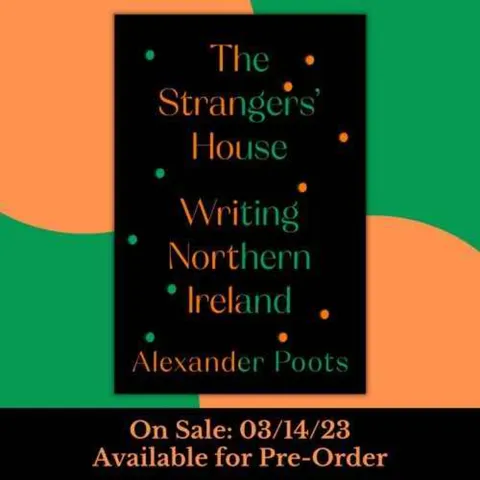
From CS Lewis's bourgeois Protestant upbringing to Seamus Heaney's beautiful attempts at understanding his home, this episode I interview Alexander Poots author of The Strangers' House: Writing Northern Ireland and ask what Northern Irish writers can teach us about the history of the area. Sign up to Patreon for the full interview.
You can read more about the book, here:
https://www.twelvebooks.com/titles/alexander-poots/the-strangers-house/9781538701584/
Transcript
Welcome to the History of Ireland. Today, I’m sharing another interview with you rather than a regular episode. This is the first half of a really interesting interview with Alexander Booths, the writer of The Stranger’s House, writing Northern Ireland. In it, we dive into what we can learn from Northern Irish writers about the area and the history. Focusing mainly on two very different writers from very different backgrounds, C.S. Lewis and Seamus Heaney. It’s a really interesting chat. And of course, you can get the full thing on Patreon. Enjoy.
Thanks so much for coming on the show. Such a pleasure, Kevin. Thank you for having me. So I guess just to jump right in there, The Stranger’s House. What an interesting and provocative title. I’d love for you to explain where you got that and how you think it relates to Northern Ireland. And even the subline, writing Northern Ireland. Interesting choices of words. I’d love to hear a little bit about that.
Yeah. Well, as I was writing the book, I had two titles in mind. One was The Stranger’s House. The other was Disappearing Ireland. And both of those titles come from poems that I discuss in the introduction anyway. I discuss both of them. One is a poem by Tom Paulin, who’s from a kind of a unionist background, but is now, I would say, probably, broadly speaking, a proponent of a united Ireland. He wrote a poem called An Ulster Unionist Walks the Streets of London. The second option was a poem by Seamus Heaney called Disappearing Ireland, The Disappearing Ireland, from his collection, The Horror Lantern. And I talk about them both in the introduction.
I plumped for Paulin’s because I feel that it encapsulates so much of what I talk about in the book, the themes that emerged as I was researching and writing it. In brief, it’s about an ulster unionist who visits London and I suppose expects to feel at home there. Because after all, today at least, unionism is associated with ideas of Britishness. That wasn’t always the case with unionism necessarily, but it is today, certainly since partition, more and more so. And this ulster unionist, who’s never named, goes to London and is shocked to find himself walking through a foreign city and has a very strange moment of realisation that the locus of his ideas of home and belonging actually isn’t where he thought it was.
And there’s a great moment in the poem where he’s walking through Camden and Kilburn, which, you know, it’s less so now, but back in the day, of course, were quintessentially Irish areas of London, big diaspora areas. And he’s shocked to discover that these Irish people who are, of course, from the south initially, seem much more at home in London than he does. He then goes to a sort of a fugue state and ends up at a place called the Stranger’s House, which Pauline leaves pretty unresolved as to what that is.
In the book, I argue that it’s probably at least in seed, based on a Victorian institution in Limehouse in London, which was called the Stranger’s Home, which was a place where much of the British Navy throughout its history was composed of people that weren’t English or British. People who initially hailed from, for example, the Far East, they might find themselves at the end of their careers sort of stuck in London, basically. And so they would stay at the Stranger’s Home before catching passage home, hopefully.
It’s quite a powerful image for an Ulster Unionist who’s meant to be in the capital city of his own country, the United Kingdom, to end up actually in this sort of boarding house for people waiting to return to their real home. That’s the reason I went for the Stranger’s House. Also, I mean, it is extraordinary how often the image of the house recurs, and it does recur consistently throughout the poets I discuss in the book. Because I do think that, after all, so much of what has happened in Northern Ireland is an argument about whose home it is, who has the right to call it home. And the irony about that argument really is that this place has resulted, you know, potentially in being no one’s home at all, because for so much of its history, it was ultimately a site of violence and trauma.
And so just to jump in there and poke at that, and I guess ask the question that maybe some of my listeners might be going is, I’m interested in history. I’m interested in Northern Irish history. Why should I be interested in these poets, this book of writing about the poets? Yeah. What does it tell us about Northern Irish history?
Yeah, I mean, it’s an interesting question, because if you’re reading newspaper articles, they, depending on the publication, they might try and be objective, but they inevitably lose something there. So you can get the bare facts if you’re lucky, but you’re never really going to get a sense of the human cost of what happened here. Now, that’s something you absolutely do get with the best poems from this period. And also with a long career like Seamus Heaney’s, you can actually really track his own different responses to what was going on for quite a specific individual, actually.
I mean, he was someone who was certainly not engagé and was criticized by many people from his own community, I suppose, especially once he started to achieve a certain degree of fame for perhaps not advancing the nationalist cause and the way that they felt he ought to be doing. But even he sometimes… So, for example, a poem was unearthed pretty recently, which was written in memory of the people murdered on Bloody Sunday, for example, which wasn’t, in some respects, a very Heaney thing to write about, arguably. He tended to prefer allegory and allusion and maintain a certain distance there. But even someone like Heaney engaging with Bloody Sunday is a sort of a remarkable coming together of culture and the political horrors that were unfolding.
So I think it’s always worthwhile. And it gives you a sense of that kind of human scale, which good poetry does anyway. And I think personally for myself, it is really interesting to think about how that area really was created. The last episode in the podcast was all about the border and how the border was drawn up. And it was an administrative thing back in 1914, 1916.
Thinking about that kind of the context of where the little show of ours is sitting, you mentioned this idea of Northern Ireland both existing and not existing at the same time. I think that’s a fascinating insight. And how do you think it shaped the writers?
I mean, I could talk about this forever, really, because it’s something I come back and forth on a lot. But I subtitled the book, Writing Northern Ireland, which some of my friends down south took me to task over and said, Oh, Alex, it should be writing the north of Ireland or whatever. I do think whatever your political persuasions are, in this case, Northern Ireland is valid, because I’m talking about people largely in the book who were responding to a situation. And that situation came about because the Boundary Commission did what they did, and the British government did what they did. And Eamon de Valera didn’t do what he didn’t do. And we’ve ended up with a partitioned Ireland.
So the result of that is a succession of events, which had to be responded to by serious poets and serious novelists, because it’s all very well fanning around being a poet. But actually, if you’re not paying attention to the really important stuff going on around you, then there’s probably not a lot of point in poetry. So I hope that sort of answers your question there.
Yeah, for sure. I think it is really interesting. And it’s fascinating to think about that balance. And that almost Northern Ireland as an idea and something that these writers are reacting to is, I think, a really interesting lens to look at it through. So I’ve jumped in and out of the book and some of the poets I know, some of the writers I didn’t. I think their reactions to Northern Ireland and everything is really interesting to see how different people responded to the situation.
And so, again, for the area I’m most interested in, really kind of in the weeds with at the moment, like that 1920s territory, C.S. Lewis is a really interesting case study, I think, for a certain kind of person living in that world and a certain reaction to it. I’d love to hear a little bit about your thoughts on C.S. Lewis and his time growing up in that very early stage of Northern Ireland and how it affected him.
Yeah, well, he’s really interesting because, of course, Northern Ireland comes into being when he’s a young man. So he’s born in that sort of vanished country, which, you know, was Ireland and yet not Ireland. And a scion of, you know, a kind of a bourgeois Protestant upper middle class, essentially, living in Belfast, very much beneficiaries of the kind of mini industrial revolution that happens in the Northeast. C.S. Lewis’s father was a lawyer who sort of worked for various, you know, big industrial clients, I suppose. So they had a very nice life living in what’s now a part of East Belfast, but actually back in the day was sort of a semi-rural area overlooking the loch. And it’s a childhood which he later places most famously into the Narnia books.
So when you read these Narnia books, and you have these incredibly almost cartoonishly English school children… That’s what I was going to say. As a kid reading C.S. Lewis and reading Narnia, I actually, I didn’t know he was Irish. I would never have thought that he was. It’s so very English. And do you think that was a… So politically, he, as that sort of upper middle class Protestant parents, I imagine, or his father, I imagine, would have been quite unionist? Or did they sit aloof from it? Do you think he retreated from it? Did he run away from it?
So Lewis, he talks about this and his brother as well talks about this in his journals from the time. His dad was, yeah, uber unionist. But, of course, the flavour would have been pretty different from unionism today. This was sort of Church of Ireland unionism, right? So it’s all quite sort of cosy and quite classy, I suppose. And, you know, but yeah, I mean, this… Lewis’s father would have grown up through the latter years of the Home Rule, the endless Home Rule debates. And for a man like Albert Lewis, C.S. Lewis’s father, he very much, his entire life was sort of lived in the shadow of what happens to people like him when Ireland achieves independence. Because they were, you know, they were aware that a new Ireland probably wasn’t going to have a place for them.
There are descriptions of life at the Lewis household where, particularly on Sunday evenings, Albert Lewis’s friends would all come over and they’d all sit and smoke their pipes and they’d dissect that sort of week’s news from Westminster and talk about what they were going to do should their entire way of life come to an end. But, you know, there’s a sense that their time is up maybe and they’re sort of worrying about what to do about it and all the rest of it. So that was the context in which Lewis grew up.
He then goes to Oxford and falls into a friendship with this guy called Theobald Butler, who was Irish, but very much a source of a kind of pretty hardcore, I suppose these days we call him a Republican. And, you know, he’d sort of introduced Lewis to the poetry of Plunkett and people like that. So there’s this brief moment where, I suppose, like a lot of young men, Lewis is captured by the sort of utopian dream of the new Ireland and everything that that promises. And then in later life, he sort of settles into a kind of a grumpy post-partition. He settles into a sort of a grumpy kind of despair, I suppose, as did many other liberal unionists of his kind of milieu and generation, Louis McNeice being another one.
You see that a lot where I think there was the more, like often the more radical Republicans were often from that sort of bourgeoisie Protestant class, the things of like the likes of Casement and those types. Yeah, well, I mean, going right back to Wolfe Tone, I mean, there’s sort of very much that theme going on there. Whereas Wolfe Tone stuck with it to the end, Lewis ultimately settled into it.
And do you think some of that was a reaction to sort of the Civil War? You could almost see an idea that Ireland had. The partition was both seen as kind of, could have been seen as a failure for someone like C.S. Lewis and the Southern Ireland that did retreat into Catholicism for want of a better way to look at it, another kind of failure for someone like C.S. Lewis. Did he ever write about that or did he just plan it and move on?
In terms of what happens later on, all we really get, and I’m going to stick my neck out here because I’m not aware of anything Lewis wrote in later life, which we would necessarily take to be a considered dissection of what was going on in Ireland post partition. But he certainly wrote later in life about what he called the demonic character of popular political causes. And of course, he was also a theological writer. And I think quite a lot of that comes through. He perhaps loses interest a little bit in the minutiae of politics because his focus is on his heavenly reward, shall we say, rather than what’s happening.
But he certainly had very, very little patience for the kind of sectarian violence that was, you know, certainly not as total as it later would be. But I mean, during the initial problems and outbreaks of violence, immediately following partition in the North, I mean, there’s this great little series of letters he exchanges with his father. Lewis, by this point, is in Oxford and his father remains in Belfast. And he sort of writes to his father saying, I do hope you remember to wear your shrapnel helmet on the tram. So there’s this sort of sense that things were not going well.
And also he talks, I talk about this in the book, something I found rather funny was all of his friends, his English friends at Oxford sort of regarded him as hard as nails because he, and fascinating precisely because he was from Belfast, which they associated with, you know, kind of violence and chaos, even back then. But what’s really funny about that is you’ve got to remember his contemporaries would have all served in the trenches in the First World War. So these are people that have potentially been through stuff like the song and Passchendaele, and they’re still sort of going like, Oh my God, you’re from Belfast.
And I think it’s interesting too, you see in C.S. Lewis’ time and his father’s time, and maybe this is just my lens, I always like putting a class lens on things, that there was a huge class difference. Like the likes of C.S. Lewis could escape to England. He could escape the difficulties that were going on at the time. A lot of unionists couldn’t. They didn’t have that opportunity. And I think there’s something to be said for that. It’s very easy to not be worried about, to be thinking about theology and not be worrying about the minutiae of politics when you can run away to Oxford.
And so to think about that and to sort of go the opposite direction, and someone I feel like who did think about the border quite a lot and came from a very different background, I feel like we can’t talk about Northern Ireland and the history around it and the writers reflecting that history without talking about the wolf in the room, the Beowulf in the room, Seamus Heaney. And like I said, that’s what we’re focused on in the podcast at the moment, is this sort of the creation of the border and how these areas like towns just got cut in two and given London Derry or Derry, whether it should have been in Northern Ireland or in the south of Ireland. And I’d love to get your insight, what you think, how that affected Seamus Heaney coming from that nationalist sort of border community.
Well, Heaney was really, really good at not giving interviewers what they wanted, right? Whether it’s a quick interview in the New Statesman or something. The question always comes up, you know, where are you sitting? Because you’re coming from a sort of a community. I mean, he himself said his background would have perhaps been more, in the language of the late 20th century, his background perhaps would have been more SDLP than Sinn Fein. But he grows up in rural Derry, and that’s something that has an enormous impact on him. And farm life, the natural world, that connection to sort of a quintessentially Irish experience of the world, I suppose, is something that kind of fuels his poetry from the very off and continues to do so right the way, right the way through to the end.
But of course, as a committed poet who begins publishing in the late 60s, so kind of just as everything’s about to kick off, as a good poet who is paying attention to the world around him in minute detail, which I think is where all good poetry has to start, I stress all good poetry, you can’t ignore then what starts to unfold around him. And I think initially there’s a kind of a shock with his generation of writers. And as I was saying earlier, there’s this sort of big problem that they have to deal with. How do you write about this stuff? How do you deal with it?
A collection of his I really, really like is The Hoar Lantern. And I talk about two poems from that in the book. One is Disappearing Island, and the other is his poem Wolf Tone. And in both of these, you kind of see a despairing attitude, I suppose, to the kind of hardline approaches that he was seeing all around him, both from Republicans and from loyalists. And of course, then you have the British and Irish states in the mix as well. So it’s at least a four-way tug of war. And even that’s kind of simplifying things, because he had the idea that there was a unified Republican movement or a unified loyalist movement, I think is for the birds, really. I mean, it’s changed all the time.
So The Disappearing Island from Seamus Heaney, I think is a really interesting example of where he got to by the 80s. So you have that initial terrible decade, the 1970s, which sort of arguably was the worst one to live through. And I think, like many writers, he spent most of the 70s trying to work out how you talk about this stuff or how you write about it. And more than that as well, of course, he wasn’t just a poet. He was also a man who was trying to figure out what Ireland meant in this particular context. I think like most intelligent people, he was perhaps looking around and wondering whether any of this stuff was worth all the dead bodies. Now, I’ll leave that there.
But if you’re interested, you can get the full interview with Alex, where we explore Seamus Heaney’s thinking even further and discuss some new modern Northern Irish writers and what they can tell us about the history of the region in a little bit more detail. It’s all up on Patreon.
Thanks for listening. Subscribe wherever you get your podcasts. And if you’re enjoying it, give us a review on Apple Podcasts or tell your friends. It really helps. If you want to go further, you can support the show, get ad-free listening and bonus content on our Patreon page. Simply follow the Patreon link in the show notes or visit our website, thehistoryofireland.com. You can also get in touch through the website or on Facebook and Twitter. It’s always great hearing from you guys. And if I’ve made a mistake, please do let me know.
The History of Ireland was written and produced by me, Kevin Dole, and additional help from assistant producer Aoife Murphy. This podcast was recorded in the lands of the Wurundjeri people of the Kugan nation. Sovereignty was never ceded.