Episodes Irish Revolution Season 1 — The Revolution
Going Solo
The War of Independence is finally kicking off. In this episode we look at the moment that's gone down (rightly or wrongly) as the first incident of the whole thing. We also investigate the difficulties in a decentralised military force like the Irish Volunteers/IRA and introduce some of the guys on the ground.
Support The History of Ireland by donating to their Tip Jar: https://tips.pinecast.com/jar/historyofireland
Transcript
Welcome to the History of Ireland. Throughout 1918, the Irish Volunteers became more and more aggressive. They worked to steal weapons, harass the RIC, and generally began the act of violently opposing the British. All in all, they were kept pretty busy. Here’s just a quick example of the kind of thing that was going on throughout 1918.
In February, the Volunteers in Ennistymon, County Clare, attacked two RIC men and stole their rifles. In March, we have the first shots fired at police. Which, quote, though it did not kill him, it put him out of action for a good while. And he gave no trouble after that. In April, Volunteers seized 250 pounds of explosives in Wexford. And in June, a policeman was wounded when an RIC patrol was attacked in Tralee, County Kerry. On top of all this, 1918 did see fatalities. With a Volunteer shot dead by police in Clare at a cattle drive. And there were two more shot in Kerry during an arms raid on a police box.
Does all this count as the start of a war? Maybe? But this is the problem with trying to pinpoint one moment. This wasn’t really two states at war with each other. Not yet anyway. This was the nation slowly but surely becoming more and more aggressive. This is reflected in Ontugluk, the GHQ journal we discussed last week. In one issue in September 1918, the message to Ontugluk’s readers was Don’t argue, but shoot. It’s also in Ontugluk we start seeing a foreshadowing of how the war would play out. In an October edition, they started to outline their approach. With articles like hedge fighting for small units. Or other sections on using hand grenades to sabotage railways.
Ontugluk’s rhetoric was designed to inspire and encourage people to fight. Though no one had officially declared a war. This was because Sinn Féin and the wider population were still pretty anti-war. The likes of Arthur Griffith was pretty much opposed to violence full stop. He was still a firm believer in passive and peaceful resistance. While Dev believed in a more uniform all-out attack. But noon now was not the time. And the general population? Well, they simply didn’t think any war could be won. This all meant that, as Mulcahy put it, that people had to be educated and led gently into open war. And that’s pretty much exactly what happened.
It’s at this point we’re going to introduce Seamus Robinson. Born in Belfast in 1888. Robinson first joined the Republican movement as part of Bulmer-Hobson and Countess Markovits Fenian Youth Organisation in 1902. He then got on to join the Gaelic League. And had actually been a monk until 1913. When he left his monastery to join both the Irish Volunteers and the IRB. From there, he fought in the Rising, rose through the ranks of the Volunteers. And by 1918 had been elected commanding officer of a brigade in Tipperary.
The fact that Robinson was actually leading a brigade puts him very much on the ground and in the thick of it. This gives him an interesting view on the state of the Volunteers in 1918. He argued that, quote, Nothing would be done by a large body of Volunteers until a lead was given by a few. And he believed that the GHQ would not give permission before the whole country was ready. Which by then he reckoned, quote, We would probably all be in jail.
And as well as this, he saw two other issues that meant time was of the essence. For one thing, as he put it, it was becoming increasingly difficult to keep proud young men merely drilling and getting jailed or interned for it. Which kind of is fair enough. These lads were eager to get stuck in. Not just get arrested for prancing around with weapons.
But there was also a more political problem. Robinson stated that we all highly desired the formation of a republican government. But he worried that, once formed, being our moral superiors, a state of stalemate would be inevitable. Unless war was begun now. Before the Dáil could take over responsibility. Basically, he knew the Dáil would be slow to act. And the Volunteers would be forced to listen to them. This meant that he had to act before the Dáil had the chance to reign the Volunteers in. This is kind of the issue with the Volunteers. They supported the Dáil and were democratic among their own ranks. But also believed that anyone not willing to use violence was not as dedicated as they were. And therefore could be ignored.
Which all leads us to Solohead Beg. So, it’s now Christmas 1918. Sinn Féin had run away with the election. And up in Dublin, preparation was underway for the first Dáil. Meanwhile, in Tipperary, Sean Tracy had discovered that Gilganite, explosives used for mining, was set to be delivered to the quarry in Solohead Beg in three weeks. Tracy met with Robinson, for tea of all things, and asked whether or not they should try and steal it. Robinson gave him the go-ahead. Tracy, he wondered whether they should seek permission from the GHQ. But no, Robinson apparently responded with nothing more than a quizzical look. When Tracy asked, who will take responsibility? Robinson replied saying, I will.
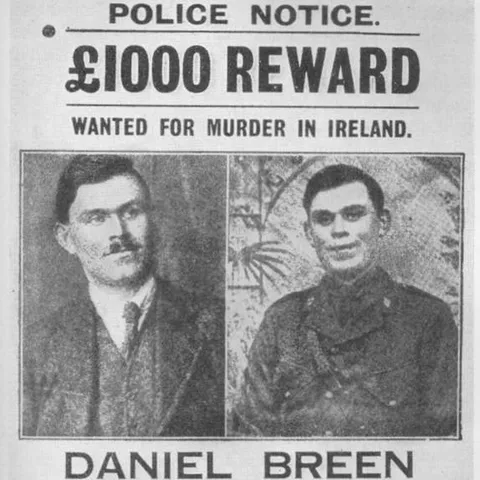
Tracy had found out about the explosives from another man in the brigade, Dan Breen. He knew thanks to his brother Lars, who worked at the quarry. Lars believed that the explosives would be delivered in and around January 16th. Cut forward three weeks. Early on the morning of January 16th, 1919, a crew of eight men, with one rifle and a few pistols between them, were hunkered down and waiting for the explosives. They knew the delivery would be guided by RIC men. But, didn’t know how many. The thinking was, that if there were two policemen, they would approach and have the men surrender. If there were six, they’d shoot first.
So the men waited. The 16th passed, and no Gilganite. Same story with the 17th, 18th and 19th. Robinson apparently began to get nervous. He knew the Dáil was meeting on the 21st. And he states, I thought long, deeply and anxiously. And I almost panicked when I saw the date of the Dáil meeting drawing near, and no sight of the Gilganite coming. But, luckily for Robinson, the Gilganite arrived just in time. On the 21st, the same day the Dáil were meeting. There were two RIC men guarding it. Both were shot and killed. And that was that, the very first British casualties. And on the same day that the Dáil was meeting.
You can kinda see why it makes for a nice, neat beginning of the War of Independence, can’t you? And you can see why the British put it forward as the start of the war. Saying the Irish struck first. There are a few issues with this. Firstly, they weren’t really British forces. They were most likely Irishmen, and they were civilian police. Secondly, as we’ve seen, a bunch of volunteers had already been killed. And on top of all this, a lot of Sinn Féin was against the ambush in Salohedbeg. Mulcahy was furious. He thought the whole thing made the IRA look undisciplined. He also worried it would undermine the popularity of the Republican movement. Other moderates, like Griffith and Dev, they were critical of the attack as well.
But the ambushers stuck to their guns. Dan Breen later had this to say about the attack. We felt there was a grave danger that the volunteer organisation would degenerate, and was degenerating, into a purely political body. Such as the Ancient Order of Hibernians, or the United Irish League. These were pre-1960 Sinn Féin groups. But we wished to get it back to its original purpose. He argued that they shot the police because we felt that such a demonstration would have the effect of bringing about similar action in other parts of the country. The only regret we had following the ambush was that there was only two policemen instead of the six we expected. Because we felt that six dead policemen would have impressed the country more than a mere two.
But this was said after the fact. And some are sceptical that it’s a bit of a post-rationalisation. Some reckoned that it was just a bungled ambush. As Todd Andrews, a young IRA member at the time put it later, I think it was just an operation that went wrong. Elsewhere, many RIC were disarmed without being killed. Robinson doubled down at the time though. And announced that any policeman in County Tipperary after February 1919 would have forfeited his life. But Mulcahy and the GHQ refused to back the proclamation. And Robinson began to regard their caution as the better part of cowardice.
Interestingly, though Mulcahy opposed the ambush, Collins was quietly in favour. Ever the backroom kind of guy, he avoided any big statements. And instead snuck the men up to Dublin where he kept them hidden. He’d even go on to use them in operations throughout the year.
So though it can’t really be said to actually have been the start of the war, it was hella symbolic. The Irish nation finally had its own elected government in the form of the Dáil. And now it had an army who had proved they could strike against the enemy. You can kinda see why it’s gone down in history as the start of the war. Even though all out fighting wouldn’t really kick off until 1920. And the Dáil wouldn’t take formal responsibility for the IRA until 1921.
So if the real fighting didn’t actually start until 1920, what happened in 1919? Well, assassinations. And a little bit of international politics. But that’s all for next time.
Thanks for listening. Thanks for listening. Subscribe wherever you get your podcasts. And if you’re enjoying it, tell your friends. It’ll really help. You can also get in touch with us through thehistoryofireland.com. Or follow us on Facebook. If I made a mistake, let me know. The History of Ireland was written and produced by me, Kevin Dolan. Additional research and fact checking by Robert Babington. Music by Liam Doyle. Thanks for listening.
Book an appointment today.