Episodes Irish Revolution Season 1 — The Revolution
Coming To America
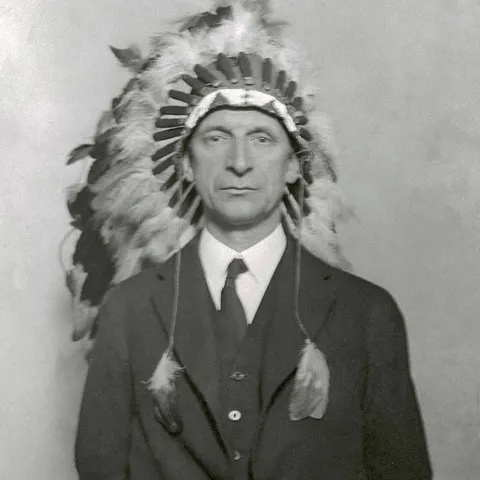
In this episode we follow Eamon De Valera after his breakout from Lincoln Gaol. What does he do now that he can return to Ireland, well he decides to head off to the United States.
Support The History of Ireland by donating to their Tip Jar: https://tips.pinecast.com/jar/historyofireland
Transcript
Welcome to the History of Ireland. Okay, so, it’s 1919 and things are getting exciting because we’re getting in amongst it now. Last week I mentioned we’d be looking at assassinations and stuff, but I reckon they’ll have to wait while we explore old Éamon de Valera’s comings and goings.
So, to catch you up to where we’re at, it’s the beginning of February 1919. The First Daul have met, the Soloheadbeg ambush has occurred and Dev’s been broken out of prison. The breakout was quite the propaganda story for Sinn Féin. In fact, Dev is quoted as saying that one of his biggest worries was that he didn’t want the British to release him before he had the chance to escape. And yeah, look, a month after Dev’s escape, the British did end up releasing a bunch of prisoners who’d been arrested along with him as part of the German plot. On the one hand, this was to try and win some goodwill, but it was also hoped it would quell the growing aggression in Ireland by releasing some of the more moderate Sinn Féiners, like Arthur Griffith. So, I guess Dev was lucky he escaped when he did. Otherwise, he simply would have been let out and that would have been kind of boring.
But no, Dev had broken out and it made for one hell of a news story. And so, what did the President of the new Irish Republic want to do now that he’d escaped? Rush back home to Ireland? Get down to the business of revolution? Lead the movement to victory? Not really. Dev decided he needed to go to America. Wait, what? Yep, that’s pretty much the response to the entire doll as well. According to Pierce Basie, everyone, except for Dev, believed that, quote, the place for an Irish leader was in Ireland.
Collins had spent ages in England trying to convince Dev that he was needed at home, but as Collins put it, you know what it’s like trying to argue with Dev. This was well known about Dev. Once he’d made a decision, he very rarely deviated from it. It’s something that pops up again and again. It’s always very much Dev’s way or the highway. But the doll did persist initially, sending Karl Brewer to try and convince Dev against the trip. Now, the two were friendly, but as we’ve seen, Brewer was a fairly straightforward bloke and not really the best of politicians. I’ve seen him described as hot-headed and naive, or even more cruelly as, quote, a man of very limited intelligence.
So who knows why he then was the one sent to try and convince Dev. It seems that he rocked up and basically said, Hey, Dev, instead of going to the States, why don’t you stay here and we can assassinate some British cabinet members instead? Come on, doesn’t that sound like more fun? No, Brewer, no it doesn’t. Dev rightly reckoned that it was both a bad idea and a completely unrealistic one. They had not the means to carry out such assassinations, and even if they did, they’d lose any kind of goodwill if they succeeded. So Dev ignored him and was determined to head to the States. Though Brewer did convince him to at least stop off in Ireland before he went.
The story of the escape had gone a bit old school viral, and Dev was now famous all over the world. Collins wanted to keep this propaganda blitz going and make a big deal of bringing Dev home to excite Irish Republicans and really stick it to the British. But as is often the case with the two men, Dev disagreed. For one thing, he didn’t want to antagonise the British any more than he already had by escaping. And he was also worried that any kind of parade would lead to violence, which I think was kind of the point. And so Collins was furious. He reckoned they were throwing away an ideal moment to further energise the movement. But as Dev stated, we who have waited, know how to wait. So no big parade. Lame.
Instead, Dev quietly hung around Dublin and spent the next few months making sure it was clear that he was still very much in charge. On April 2nd, the Dáil publicly met for the first time, and Dev remodelled the cabinet. He was officially made Priveire, or First Minister, though he’s often referred to as President. Karl O’Brua was made Minister for Defence. Though, as we’ve said, he was a bit useless, and it was Mulcahy and Collins who did most of the actual organisation of the military. Countess Markievicz, she was made Minister for Labour. Griffith was put in charge of Home Affairs, Foreign Affairs went to Count Plunkett, and the Finance Ministry went to Collins. There was a few others, but those are kind of the key positions.
The British press thought the whole thing a bit of a joke. Westminster still controlled the country, so the Dáil really could only do so much. And for the likes of Collins, who was Finance Minister, there was no treasury for the country to play around with, not yet at least. But hey, that didn’t mean they did nothing. I’m going to pack the developments with the Dáil here for now, and continue on with Dev’s movements. But we will come back to it soon, I promise. So store all that information for now, and let’s head off to America.
With the cabinet organised, and the Dáil slowly but surely beginning to work, Dev went to the States in June 1919. It was Collins again who organised everything, keeping things very hush-hush. People didn’t seem to be that happy, but Dev was in charge, and there wasn’t much to be done about it. Personally, I’ve kind of always been on side with the Dáil. After being stuck in prison for nearly a year, and missing the entirety of the 1918 election, why the hell would Dev decide to disappear off to America, while the country is literally starting a war of independence? Come on, what was he thinking? But okay, let’s breathe, take a minute, and dive into what he did have on his mind. Because he did have a few good reasons for heading to the States, and once you explore it a little bit, it does seem a little less crazy. Like still kind of crazy. But hey, let’s try and approach this like grown-up, unbiased historians, shall we?
America had a huge influence on Irish politics, for a whole bunch of reasons, and Dev was looking to use this influence to his advantage. First of all, there was a giant block of Republican Irish-American voters. The American Republican movement is something we’ve ignored so far, and to be honest, I don’t want to dive into it too much right now. One country’s worth of political factions is enough for this little podcast, thank you very much. But the likes of Clannaghill were big in America. They were pro-Irish Republic, and well-connected, meaning that there was both a lot of political goodwill, and money to be tapped into. On top of this, the American were Britain’s biggest ally, and if Dev could win over the American population, this would put pressure on Woodrow Wilson, the American president, who then in turn would put pressure on the British. Or so that was the thinking.
Dev reckoned this was the best way to put his newfound fame to good use. Woodrow Wilson held a firm belief that small nations had just as much right to self-determination than anyone else, and had been arguing this exact case at the Paris Peace Conference, which went on for much of 1919. Dev had hoped the Paris Peace Conference could really benefit Ireland. It was there that the post-war world was being created. Maps were being redrawn, and small nations were gaining power after World War I. Sounds perfect, doesn’t it?
Well, unfortunately not. As we’ve already briefly touched on, despite sending representatives and trying to be treated as a proper international government, the doll was mostly ignored in Paris. Dev had considered going over, but the Irishman already there had decided there was no point. If he went, he would be snubbed, and that would just look bad. So best not to go at all. And Dev had already caused quite a bit of controversy in the international press on February 20th, stating that if the Paris Peace Conference fails to take steps to extend self-determination to Ireland, violence will be the only alternative left to Irish patriots. And so as the conference carried on, and Irish self-determination looked less and less likely, Dev’s rhetoric became more and more aggressive. As biographer Rory Fanning puts it, Though Dev Valera played no personal role in any of the carnage of 1919 to 1920, he had, in effect, written a presidential blank cheque covering the killings that would take place while he was away in America.
And so, with that blank cheque written, off Dev went. He would spend 18 months in the States, touring the country, giving speeches, and raising money. He travelled from city to city speaking about the plight in Ireland, and it seems that he was pretty popular. Upwards of 70,000 people apparently came out to see him in Boston. It was with these speeches that Dev was most successful in his trip to the States. He won over the hearts and minds of a huge group of Americans and raised millions of dollars through a national bond system. In those days, that was literally enough to run a small country, which is exactly what the lads back home did with the money.
We also can’t talk about Dev’s time in America without mentioning the Ojibwe Nation, which I might be mispronouncing, but hopefully not. This was, and still is, an amalgamated group of Native Americans from around Wisconsin and the surrounding states. While in America, Dev visited one of their reservations and endeared himself to the Native Americans in his speech. He spoke in both Irish and English, saying, I want to show you that, though I am white, I am not of the English race. We, like you, are people who have suffered, and I feel for you with a sympathy that comes only from one who can understand as we Irishmen can.
So I find this whole thing just very cool. At this period in time, there weren’t very many Westerners standing up for the First Nation peoples, so hats off to Dev for backing the Ojibwe. And the Ojibwe, by all accounts, loved Dev. One of their chieftains, Joe Kingfisher, welcomed him, saying, I wish I were able to give you the prettiest blossom of the fairest flower on earth, for you come to us as a representative of one oppressed nation to another. It’s fascinating to see how the Irish and Native Americans saw each other at this time. Dev was even made an honorary chieftain and given the name Dressing Feather, or Nay-Nay Ong Ah-Way. Again, I’ve probably butchered that. What a cool little tidbit.
Now, Dev did a little bit more in the states that we’ll touch on at a later date, but for now, I reckon, let’s wrap it up. I had planned to get into a lot more in this episode, the Squad, the G Division, the Dall Courts, the Limerick Soviet, but I spent my adventures throughout 1918 eight more times than I expected, and the Ojibwe were just too cool to leave out. So, that’s all for next time, when we leave Dev traipsing around America and find out what was going on while he was away.
Thanks for listening. Subscribe wherever you get your podcasts, and if you’re enjoying it, tell your friends. It’ll really help. You can also get in touch with us through thehistoryofireland.com or follow us on Facebook. If I made a mistake, let me know. I’m Kevin Dolan. Additional research and fact-checking by Robert Babington, music by Liam Doyle, and production help from Aoife Murphy. This podcast was recorded on the lands of the Wurundjeri people of the Kulin Nation. Sovereignty was never ceded.