Episodes Irish Revolution Season 1 — The Revolution
The Breakout of Bobby Byrne
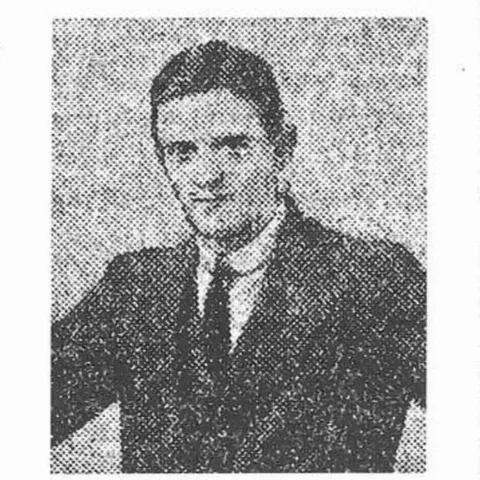
In this, the first of two episodes looking at the Limerick Soviet we follow how one angry postman kicked off a strange and short lived mini socialist state in Limerick.
Support The History of Ireland by donating to their Tip Jar: https://tips.pinecast.com/jar/historyofireland
Transcript
Welcome to the History of Ireland. Okay, so last episode, we left De Valera giving speech after speech in the United States. While he was away, it should come as no surprise, there was a hell of a lot going on back home in Ireland. From here on in, I’m going to try and really focus in on the specific moments throughout the war and hopefully give you a detailed sense of what happened and who was behind it all. So first off, over the next two episodes, I’m going to explore the often overlooked creation of the Limerick Soviet in April 1919. It’s got to be two of the weirder weeks of Limerick history.
For any non-Irish listeners, Limerick is a city pretty much directly across from Dublin. Built around Ireland’s longest river, it was and still is a busy little port city on the Atlantic with a large urban labour force. Now, as we’ve discussed, things were ramping up throughout the country at the beginning of 1919. The formation of the Dáil and the Soloheadbeg ambush had emboldened nationalists. But in Limerick, things manifested themselves a little differently.
Bar a few brief mentions here and there, we haven’t really discussed the Irish labour movement around the time of the War of Independence. But workers’ rights and socialist ideas were spreading around the world in this period and Ireland was no exception. This was in a big part down to the rise of Soviet Russia. The workers had revolted and taken control. And at this point, the Russian Socialist Revolution still kind of had this shiny veneer about it. To put it mildly, the working class was feeling revolutionary and the upper classes were freaking terrified.
And look, they were probably right to be a little bit paranoid. For example, on May 1st, 1918, the Limerick workers had celebrated Labour Day and passed a resolution stating, We, the workers of Limerick and District, in mass meeting assembled, extended fraternal greetings to the workers of all countries, paying particular tribute to our Russian comrades, who have waged a magnificent struggle for their social and political emancipation. Now, despite growing up half an hour from Limerick, I can’t do the accent. But can you imagine how mental that would sound coming from some Limerick lad? Sounds like something out of Monty Python. But it proves how pro-Russian a lot of the workers of Limerick were and how they were interested in shaking off the shackles of that pesky capitalist system.
The Irish in general were not super socialist. Sinn Féin’s rebellion, unlike a lot of others, was not really a class struggle. It was simply about winning independence from Britain. And in fact, Sinn Féin went to great pains to keep it from becoming a class struggle. And so, most of the working class was pretty focused on independence. As we’ve discussed previously, the labour movement had even stepped aside in the 1918 election so as not to get in Sinn Féin’s way. But, that doesn’t mean there was not a labour movement at all. It was in fact quite active in urban centres, like Limerick. It’s just that most socialists were also nationalists and therefore kind of busy with fighting for independence and all that malarkey. And so, the Limerick Soviet is kind of this weird meeting of the two movements.
It all kicked off with Robert J. Byrne, or Bobby, to his mates. Byrne was a member of both Sinn Féin and the Irish Volunteers, but was also fairly well established in the Limerick labour movement. He was a postman by trade and had been branch president of the Post Office Clerks’ Association. That is, right up until he lost his job due to his political activities. Byrne had been passing on information gained from working in the post office to the Irish Volunteers since before 1916. In fact, he was even on an RIC list of, quote, alleged disloyal post office officials. Now how’s that for a list title? And get this, they even noted down that Byrne had made insulting remarks about the Union Jack while at a dance. Shock! Horror! How could he? Isn’t it crazy? This is a prime example of how insidious the RIC were. They were spying on anyone suspected of having Sinn Féin affiliations and making notes of even the smallest transgressions.
So, on January 13th, Byrne was arrested and put in front of a military tribunal. He remained silent the entire time, refusing to recognise the tribunal as he believed they represented an army of occupation. From this, on February 1st, he was charged with 12 months hard labour after a revolver and ammunition was found in his home. Once locked up, Byrne began to lead other Republican prisoners in a campaign of disobedience. His goal was to achieve status as a political prisoner rather than some petty criminal. This was a constant battle for those arrested by the British at the time. They saw themselves not as badly behaved criminals, but rather as men fighting for a cause and wanted to be treated as such.
And so what did these protests look like? Well, they’d smash furniture, block cells and rather endearingly, they would sing Republican rebel songs while crowds gathered outside to listen. But despite all the sing-alongs, the protests failed to get the prisoners anywhere. Drastic measures were taken and they decided to go on a hunger strike. Hunger strikes were a tool used again and again throughout the Irish independence movement. They were a powerful form of protest and were hard for the British to combat. Plus, they always made for good propaganda stories. Stories of prisoners being force-fed, manacled at mealtimes and even deprived of their boots spread all over Limerick.
Bobby lasted three weeks until he was removed to the hospital and put under heavy guard. Though, it should be noted that the hospital staff were not at all happy. They supported the hunger strike and argued that he should only be admitted if he was a free man. But when the cops showed up with guns, well, they did what they were told and treated poor Bobby. Fair enough, I suppose.
This then all brings us to Sunday, April 6th. Byrne was half starved in a Limerick hospital. Around five or six heavily armed RIC men around the bed. Just after lunchtime, 35 to 40 IRA men arrived at the hospital. 15 or so patrolled the grounds while 20 went up to Bobby’s ward. As the men went to the ward, Mary Glynetain, a member of Cumann na mBan, arrived driving the getaway vehicle. She described herself as an undertaker and was driving a hearse. How’s that for an escape plan?
So the IRA men slipped into the ward, pretending to be friends visiting other patients. Once everyone is in place, a whistle was blown and all hell broke loose. There are multiple accounts of what happened next, but everyone confirms that it was chaos. Patients went running, both sides open fired and everyone was trying to grab poor Bobby. By the end of it, one of the RIC men, Constable O’Brien, had been shot and killed. While three others were badly injured and one even shot in the spine.
Bobby Byrne escaped though, but he had also been shot in the confusion. They got him out of the hospital, seemingly forgot about the getaway hearse, and commandeered a horse and carriage instead. From there, in his weakened state, Byrne was rushed, kind of ironically, away from the hospital to a safe house. Later that evening, he died from his wounds.
So it’s all kind of a prime example of how things were heating up post-solo headbang. As the Inspector General of the RIC put it, Ireland is unquestionably in a highly inflammable condition, and in my opinion, at no time was there more necessity for the presence of an overpowering military force. And in this context, Byrne’s death and his funeral took on a whole new meaning. But that’s enough for today. We’ll delve into the funeral next episode, and explore how it kicked off Limerick’s baby Soviet.
Thanks for listening. Subscribe wherever you get your podcasts, and if you’re enjoying it, tell your friends. It’ll really help. You can also get in touch with us through thehistoryofireland.com, or follow us on Facebook. If I made a mistake, let me know. The History of Ireland was written and produced by me, Kevin Dolan. Additional research and fact-checking by Robert Babington, music by Liam Doyle, and production help from Aoife Murphy. This podcast was recorded on the lands of the Wurundjeri people of the Kulin Nation. Sovereignty was never ceded.