Episodes Irish Revolution Season 1 — The Revolution
A Night In The Barracks
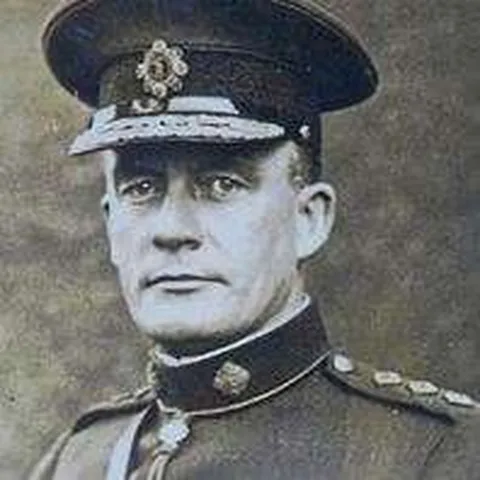
In this episode we introduce the spy Ned Broy and tell the story of how he snuck Michael Collins into the G Divisions headquarters one April night in 1919.
Support The History of Ireland by donating to their Tip Jar: https://tips.pinecast.com/jar/historyofireland
Transcript
Welcome to the History of Ireland. Over the last two episodes, we’ve been exploring the Irish intelligence network. And we’re going to keep trucking along with this, continuing to dive into the murky world of Irish double agents. This week, I said we were going to introduce Ned Roy and David Nelligan. But screw it, they’re both interesting enough guys, I’ve decided to give them each their own episode. I think I’m just going to have to stop promising things. Sorry.
Back in 1918, Cavanagh, the spy we were talking about last week, had given Collins the exact date when the British planned to arrest the Sinn Feiners as part of the German plot. This info was corroborated by another source, Ned Roy, who Collins had also been carefully courting at the time. Neither man knew the other, but the fact they were both providing the same info regarding the German plot proved to Collins he had two good spies on his side. As we know, it allowed Collins to evade capture, though Dev ignored the info and happily let himself get arrested instead.
Roy was furious. He said quote 48 hours before the correct date, I handed on the list. I listened to an account of the arrests that were being made. I was cursing, for none of them seemed to have got out of the ring. They are cods, these Sinn Feiners, I said. They don’t mean anything. They won’t trust a source. But in fairness to Sinn Fein, they were just being very, very careful about who they brought on side. So with this in mind, it took a full year before Collins and Roy met in January 1919.
Eamon Roy, or Edward Roy, or Ned Roy as he was more commonly known, was a detective sergeant from Kildare who, by 1919, had been a policeman for 7 years. He was a socially awkward man with broad shoulders and a stiff back. He’s always described as ill at ease, though can you blame him? A cop turned spy could never have been that comfortable. But it’s his eyes that people comment on most. Hard, cruel, green eyes, intelligent and piercing. He had been sneaking information to the Irish since as early as 1916, but had never been properly put to good use. This would all change after he met Collins.
Roy had this to say on the two men’s first meeting. Quote I was filled with curiosity. Would this Michael Collins be the ideal man I’d been dreaming of for a couple of years? Going to quickly interrupt here. Roy sounds ever so slightly like a teenage girl pining after some kind of Collins boy band. But anyway, he continues.
The moment I saw Michael at the door, before he had time to walk across and to shake hands, I knew he was the man. He was very handsome, obviously full of energy, and with a mind quick as lightning. I had a long talk with Mick from 8 o’clock until midnight. He thanked me for all the documents I had sent and all the information, and said it was of the utmost assistance and importance to them.
At the meeting, Collins was wearing black leggings, green breeches and a trench coat. Roy looked the corkman up and down and told him that he needed to start dressing better if he wanted to avoid the police. Collins took the advice and from then on dressed as quote a company director in a suit and tie. This had the double barrel effect of impressing the lads from the country and causing many police officers to totally overlook Collins. How could such a smartly dressed fella be the infamous terrorist everyone was trying to catch? Yes queen, it’s just Collins, but elevated.
And this was one of Collins’ key tactics. He would just hide in plain sight. I think every Irish student has heard the stories of Collins cycling through Dublin, past police checkpoints, the most wanted criminal in Ireland, stopping for friendly chats with whoever was on duty.
So after this meeting in 1919, Broy worked to slip information to Collins. He quickly realised that Collins quote did not understand the complete background of the detective organisation and he decided to smuggle Collins in to read the record books himself, which at this point were stored at Pearce Police Station, where the G Division was working out of.
Now we have a great first hand account straight from Broy of the night and it’s worth going into a little bit of detail on it. The night in question was April 7th. Just as a little reminder of where this sits in our timeline, the Dáil had met two months previously, the Limerick Soviet would kick off that same week and Dev would leave for America in another two months. It was a Monday. Maybe spring was settling in. A little wet, but not bitterly cold anymore.
Broy had a night shift and had arrived at the big old granite barracks around 10pm. Inside were the lads, men who would have considered him a friend. Then he was lying to, day in and day out, the detectives of the famous G Division. Young men, hanging out and chatting before bed. Usually they’d be asleep by 11, giving Broy ample time to sneak Collins in. But these things never go to plan.
There was a report of shots fired around the city and the barracks became a hub of activity. One of the detectives started chatting with Broy. Do you need a hand? What do you reckon is happening? Are the family alright? God, the guy could talk and by 11.30 he was still going. Collins was due at 12 and Broy had to be ready for him.
He tried to break off the conversation, but the detective offered to help deal with all the calls coming through due to the shooting. Maybe the lad couldn’t sleep. Maybe he liked chatting to Broy. Maybe he just wanted to help. Either way, Broy got more and more irritated and stressed as it got closer to 12 o’clock. Finally an argument broke out and the unwanted helper went to bed at around 11.50.
Ten minutes later Collins, one of the most wanted men in Ireland, called the G Division’s phone. Field here, he said. Is that long? This was the message Broy and Collins had agreed on. Yes, Broy replied. Bring a candle.
Why a candle? Well, because of Daniel Barrett, the next bit of bad luck. Barrett was the guard left on duty that night. Anyone but this guy, Broy thought. He was an ignorant, presumptuous man who would be quite capable of reporting a light on in the office. That meant getting Collins through the barracks without turning on any lights. Plus the files themselves were not just left lying around, no. Everything was kept in what Broy described as the secret small room. A room with no electric light at all. Hence the candle.
Collins and a man named Sean Noonan arrived at the main door. Broy snuck them in and led them to the record room. Using a master key Nelligan had filed himself, he took the men through the barracks to the office that contained the small secret room. He pointed at a door that led to the back streets. That’s your escape route. If things go down badly, run out that door. He then turned to lead them to it.
But then the next bit of bad luck smashed through the window. All the men froze. A rock clattered to the floor. What in the hell was going on? Collins and Noonan dived into the shadows of a dark passage while Broy went to look out the broken window. Out on the street a drunken British soldier of all things was in the custody of a policeman. Broy went outside to ask what was going on. The copper replied, this fellow is drunk and is after throwing a stone through the window. We could guess that.
So Broy, cursing the interruption, helped lock the drunken lout in the station next door. Why a British soldier was drunkenly throwing rocks at the police station is a mystery for the ages. But anyway. All the while Collins and Noonan were crouched hidden in the dark, their hearts in their mouth, waiting to see was this it? Had they been caught?
Once that was sorted Broy continued on with the lads, asking did they bring the candle? No replied Collins. Sure I thought you were having a joke at my expense. Broy must have been livid. No candle? What now? I told you to bring a candle. He rushed off to steal candles from the storeroom. That master key was coming in handy again. Then, candle in hand, he led them to the secret small room.
Finally, everything was going to plan. The barracks were quiet, the candle was flickering, the lads were furiously reading report after report in the small secret room. And Broy was nervously working at his post. But one more interruption. Knock knock. Maybe Mick started. What the hell was the noise? They’d come all this way and now someone was knocking on the door ready to catch them. Broy rushed to the door and found the bloody cop who’d arrested the drunken soldier. How much do you reckon that window was worth? Broy sent him on his way, gave him a figure for the number and told Collins there was nothing to worry about. They continued working while Broy sat down to man the phones.
So Collins and Noonan crammed together into what was little more than a big filing cabinet, spent the entire night sifting through the brain of the British intelligence machine. Everything the British knew about the IRA, Sinn Féin and every other Irish organisation was crammed into that room. As well as reports on de Valera, Griffith and of course Collins himself. Imagine it. Finding out exactly what your enemy thinks of you. Everything in black and white right there. A six footer, a cork man, very intelligent, young and powerful. All they were missing was a photo.
But Collins wasn’t there to read about himself. He wanted to know who was known by the British and more importantly who was not known. He wanted to learn the British methods and copy them. Find out what they knew and thought and use it to improve the IRA. But could you imagine it all? What would you write down? What was important? What could you disregard? How could you force yourself to remember it all? What if you dropped the bloody candle?
The two men worked until 5am, literally burning the candle at both ends. They snuck out the back in the morning, having successfully infiltrated the very brains of the British intelligence system. Broy had done it. He’d snuck one of the most wanted men right into the G Division headquarters, completely unnoticed. And he did it just in time. The books were all taken not long after to be locked up in the much more secure confines of Dublin Castle.
But armed with the knowledge, Collins and the Irish were finally ready to take the fight to the British. One thing Collins learned that night was that the British could replace the detective but he couldn’t step into the dead man’s shoes and his knowledge. And that made it pretty clear what he believed the IRA needed to do next.
But before we get into all that, I’m going to introduce one more spy. I know, I know. I said we’d get to him this week, but you’ll just have to wait. Next week, we meet David Nelligan, the spy in the castle.
Thanks for listening. Subscribe wherever you get your podcasts and if you’re enjoying it, tell your friends. It’ll really help. You can also get in touch with us through thehistoryofireland.com or follow us on Facebook. If I made a mistake, let me know.
The History of Ireland was written and produced by me, Kevin Dolan. Additional research and fact-checking by Robert Babington, music by Liam Doyle, and production help from Aoife Murphy. This podcast was recorded on the lands of the Wurundjeri people of the Kulin Nation. Sovereignty was never ceded.