Episodes Irish Revolution Season 1 — The Revolution
The Spy In The Castle
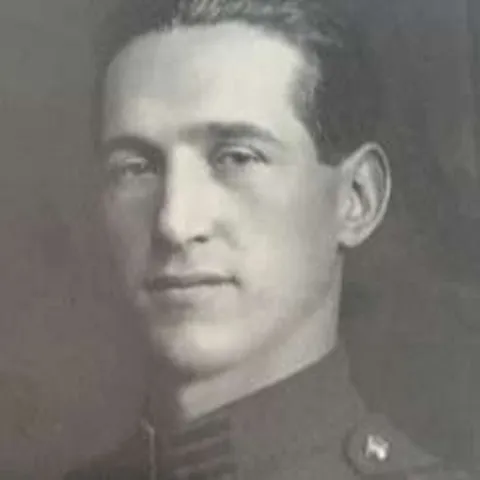
This week we finally introduce David Nelligan, one of the Irish Intelligence networks most successful spies and learn how Michael Collins convinced him to turn double agent.
Support The History of Ireland by donating to their Tip Jar: https://tips.pinecast.com/jar/historyofireland
Transcript
Welcome to the History of Ireland. Before we get into things, in a bid to diversify from Zuckerberg, I’ve gone and joined Twitter. I thought it could be kind of a fun way to chat to all you guys. So if you have any questions or just want to discuss any of the episodes so far, you can find me at thehistoryofire. Yep, at thehistoryofire. Twitter has an annoying name character limitation thing, so go figure. But yeah, that’s at thehistoryofire. Come and find me and let’s tweet each other or something. Anyway, on with the show.
This week, it’s time to meet the amazing David Nelligan. Tim Pat Coogan reckoned that when he interviewed Nelligan years after the war, he was drawing five different pensions. One from the Old Dublin Metropolitan Police, one from MI5, another from the Garda, and one last one from the Irish Civil Service. This feels like one of those times when Coogan slips into storyteller over historian. But the more I learn about Nelligan, the more I kind of start to believe it. Plus, come on, an Irish double agent getting a pension from MI5? Even the dullest stickler of a historian wouldn’t begrudge us that, would they?
From Limerick, Nelligan first became an Irish volunteer at the age of 15. But despite his nationalist tendencies, he then kind of flipped and joined the police in 1917 once he turned 18. The son of two schoolteachers, this was a pretty typical move for an educated lad looking to further his prospects. I wanted to shake the dust of Limerick off my feet and find the streets paved with gold, adding, I’m looking for them still, by the way. I think you’re going to like David Nelligan.
He spent three years working up through the ranks of the police, and in his book paints a fairly sympathetic picture of his fellow policemen, describing them as good men with a very hard job to do. By 1920, he’d become a detective with the G Division. But his nationalistic tendencies got the better of him, and he was persuaded by his older brother to quit the force.
With the boycott of the RIC and the increase of violence, this was happening more and more through 1919. Men were just saying, enough of this, we quit. Especially those like Nelligan who didn’t have to worry about feeding a family. Those with families, well, they were kind of stuck. They needed the money and they would never find work anywhere else. I think it was Nelligan himself who argued that so many of the IRC who fought against the IRA were doing it purely because they had no other choice. It was that or let their children starve. I’ve said it before and I’ll say it again, it’s really hard to judge the RIC solely as the bad guys in this conflict.
But Nelligan was lucky. He was young enough to quit without bothering anyone. In theory. See, Nelligan’s brother was a member of the IRA, and friends with Collins. But when Collins heard that they’d convinced Nelligan to quit, he was furious. A sympathetic G-man? Collins lived for that shit. And there was no way Nelligan was going to quit if Collins had anything to do with it.
Now, there’s a great interview with Nelligan from the 70s that runs through how he was recruited. I’ll share it up on Facebook and Twitter, I guess. It’s all just so good that I’m going to try something a little different here and just give it to you verbatim. So from now, this is all Nelligan speaking.
He brought me down to an old third-rate pub. The he in this story is Joe O’Reilly, Collins’ assistant. Down in the city. And we knocked at the private door. And the publican opened the door and we went up into the old beer room, smelling a stale beer. And this handsome-looking man was sitting there with an old shabby coat and an old dust coat thrown over the chair. This was the famed Michael Collins.
This is Nelligan, up from Limerick, the assistant said. Oh yeah, Dave, said Collins, I know all about you. Your brother and yourself were all right. He meant we were friendly to the revolution. I’ve something to ask you, he said. I want you to go back to the police. I didn’t fancy this road at all. So I said, Mr. Collins, I’ll do anything but go back to that bloody place. Back to Dublin Castle. I’ll join a flying column. I’ll do anything.
Listen, Dave, says he. We’ve plenty of men to join the columns. The British trust you and we trust you. If you want to serve the revolution, go back. He was a very persuasive man and a very magnetic character. So I guess, despite my better judgement, I went back.
So I returned to the hotel and wrote a letter to the Commissioner Colonel Edward Johnson, D.I. Shaw. A very nice man he was. Quick note, remember Shaw? He was the guy Collins spent the evening drinking with on the train. Anyway, Nelligan continues.
A G-man came round to the hotel the next day and said, Shaw wants to see you at 12 o’clock. Now, I was just a poor devil of a recruit and I was issued in before the big shot. Sword champion of the British Army. He could cut a sheep in two with his sword. Very nice old fella. So he said to me, Nelligan, you want to come back? Yes, sir, I do. Now, why would you be coming back? I produced these threatening letters.
The letters Nelligan is referring to here were forgeries made to look like the IRA had told Nelligan to quit or he’d be killed. It seems Shaw bought the ruse. He asked, how are things in the south of Ireland, Nelligan? Very bad, sir, said I. The King’s writ isn’t run there any longer. Interrupting Nelligan there for a second. I have no real idea what this means other than things are a bit crazy down south. He mentions he actually stole it from a headline from the Daily Mail.
Ah, said he, that’s perfectly right. Tell me, Nelligan, he said. Where do you want to go? Do you have any position in the service? I want to go back to the G Division, said I. All right, Nelligan. Bruton was the man in charge of the G Division, a Tipperary man. And somehow I got an idea in the back of my head that Bruton didn’t think everything was lovely in the garden. But he was too decent a man to suspect I was a traitor, or a double dealer, you see. And he was always very nice to me. So that’s how I started my nefarious career as a double agent. End quote.
Doesn’t he just come across as a character? So many fantastic turns of phrase. The video really is worth a watch. So immediately Nelligan proved to be a very valuable asset. One detective inspector, Alan Bell, had been investigating Sinn Féin and the IRA’s funding, trying to catch those donating to the cause. Collins, both as Minister for Finance and Head of Intelligence, was not all that happy about this. Nelligan gave up Bell’s address, movements and security arrangements, and within days the IRA had him shot.
With previous spies, namely Kavanagh and Broy, Collins had kept them at arm’s length intelligence headquarters in Crow Street. They would meet or report to Collins, and he would pass the information on to Liam Tobin for analysis. The compartmentalisation was meant to keep all parties safer, and make sure that any British spies in the Irish camp wouldn’t know of the informers. This proved more and more difficult as the war intensified though, and by the time Nelligan was brought in, he would meet directly with Tobin.
Nelligan described Tobin saying he was, quote, tall, gaunt and cynical, with tragic eyes. He looked like a man who had seen the inside of hell. He walked without moving his arms and seemed emptied of energy. Yet this man was, after Collins, the castle’s most dangerous enemy. What Nelligan fails to mention is that Tobin and Collins would not have been nearly as dangerous without his intel. The man who dubbed himself the spy in the castle was nothing short of amazing.
Once the IRA had reduced the G Division to a shell of its former self, Nelligan managed to get himself promoted to MI5, and thus was able to keep spying on the British. But that’s getting way ahead of ourselves. We’ll come back to Nelligan and how he managed to do that a little bit down the line.
So that’s kind of a broad view of the spy network that Collins, Tobin and the lads had created at the beginning of 1919 and through the war. There were the amazing women like Lily Merrin, as well as Kavanagh, Broy and Nelligan. And though these people were some of the most important sources of information, they were definitely not the only ones. The IRA had intelligence officers in every branch across the country, and each of these were encouraged to find contacts working for the British. This created one hell of an intelligence network. There were prison warders, bartenders, postmen, maids, basically a whole sea of people providing reams and reams of information.
Next week we’re going to explore what Collins did with all that information. Yep, it’s time to introduce the squad.
The History of Ireland was written and produced by me, Kevin Dolan. Additional research and fact-checking by Robert Babington, music by Liam Doyle and production help from Aoife Murphy. This podcast was recorded on the lands of the Wurundjeri people of the Kulin Nation. Sovereignty was never ceded.