Episodes Irish Revolution Season 1 — The Revolution
29 – The Murder of Tomas Mac Curtain
Transcript
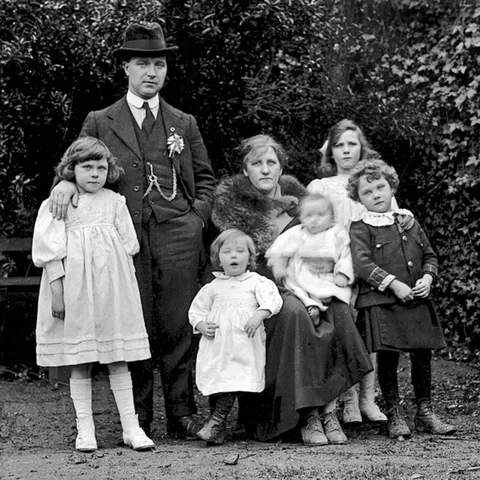
Welcome to the History of Ireland. This week, I want to introduce Thomas McCurtain, a man deeply involved in the Cork IRA. His story is a fascinating one that opens up a whole can of worms regarding the British approach in Ireland. So, who was he?
The youngest of 12, McCurtain was born on March 20th, 1884 in Cork. Like so many others, he first became involved in the Irish Republican movement through the Gaelic League. In 1902, he joined the League, becoming the Cork Division Secretary, as well as a volunteer Irish teacher. Through that, he joined the volunteers in around 1911, as well as the IRB. By 1916, he commanded around 1,000 Irish volunteers in Cork. He was generally seen as more of a moderate, and McCurtain called off the Cork Rising after Owen McNeill ordered the volunteers to stand down. By all accounts, he regretted this decision though. He felt like he had let down the Dublin volunteers by not rising with them. And regardless, he was arrested and sent to Frongirk. Once released, he became even more heavily involved, helping with the failed assassination attempt of Lord French and leading an entire IRA battalion in Cork.
But really, Thomas McCurtain doesn’t enter into our story until January 1920. Remember I mentioned the local elections that occurred at the beginning of the year? Well, McCurtain ran as a Sinn Féin councillor in Cork. And not only was he elected, but he was also made Lord Mayor. Again, this is a prime example of how much of the country was shrugging off British rule, and how effectively Sinn Féin was able to set up a counter-state in its place. He was a full on IRA commander in charge of an entire city. Obviously, the British didn’t really like this all that much.
Which brings us to the night of March 19th, 1920. As well as being Lord Mayor, McCurtain ran a clothes shop on Thomas Davies Street in Cork. He and his family lived above it. The house itself is still there today. It’s nothing too fancy. A typical shop front downstairs and a few rooms above it. I think it’s actually a subway now. I wonder if the lads making the sandwiches know the history of their building.
Anyway, imagine a cold, blustery Friday night in Cork City. McCurtain, turning 36 the next day, would have spent his Friday working at the shop, then probably had a nice meal with his wife and gone off to bed. But just after midnight, suddenly his front door was kicked in. A group of men charged through, each wearing black paint to disguise their faces. They clambered upstairs and at 1.12am they shot McCurtain in front of his wife and son. They then proceeded to ransack the house. McCurtain had been 36 for just over an hour.
The entire city was furious. McCurtain was immensely popular had it only just been elected. Who were these murderous thugs and why had they killed him? Well, this is where things really start getting interesting. A trial and an inquiry was carried out to determine who killed McCurtain and his death is a great way through which to investigate how the British acted throughout the War of Independence.
Now look, this is not how the trial went down, but I’m going to ask you to imagine you’re on that jury as we go through the different arguments for what happened and we’ll see if you reach the same decision the jury did. In this imaginary trial, the British are the defendants and are the first to make their case. They argue that in fact it had nothing to do with them at all. Your honour, they’d say, this was simply an internal feud within the murder gang that is the IRA. It’s just typical of this undisciplined violent gang of criminals. We know McCurtain was a moderate and had been arguing with more aggressive IRA members under his command. He was simply shot by his own men because they didn’t like his leadership.
Objection, the imaginary Irish lawyer would shout. This is nothing but groundless British propaganda she’d say. Yes, like all good propaganda there is a tiny smidge of plausibility to this, maybe. He did often disagree with his more violent men. But why would IRA members murder such a high profile popular Sinn Féin leader? Someone the city loves. A man who is leading the Irish Republic’s administrative and military takeover of Cork. What’s much more likely is that it was disguised members of the Black and Tans who broke into McCurtain’s house. In fact, we know a policeman had been killed earlier that week and we propose that this was retaliation for that attack. An attack made as part of an organised British policy of reprisal. Plus, I’m pretty sure we have eyewitness accounts.
The British lawyer would concede that yes, okay, it was most likely men from the RIC. These people are not particularly good lawyers, you know, on account of being imaginary. But there is not and never has there been an official policy of British reprisal. The British lawyer would continue. That idea is ridiculous. The British forces were just poorly trained and let run amok. Yes, the government has turned a blind eye. But they are simply failing to control their men.
Now, this is the traditional view. The kind of thing most of us were taught in school. The Black and Tans were shell-shocked, ill-trained, aggressive Englishmen left to do what they wanted in Ireland. However, the Irish lawyer would disagree. She stands up in our imaginary courtroom and loudly announces that she has newly discovered evidence that suggests otherwise.
Exhibit A is a quote from a civil servant from Dublin Castle. He reported that his boss Andy Cope, the under-secretary, argued for assassination over arson. Cope is quoted in saying, To shoot a known man is morally much more defensible than this stupid blind work, and that the RSC are not out of hand but are systematically led to reprise by their officers. But that’s one man. It proves nothing, the British lawyer says.
Well, exhibit B is another civil servant, this one further up the chain. He claims that Lloyd George himself, quote, strongly defended the murder reprisals, and that Henry Wilson, Churchill, General Tudor and the PM all sat in on a meeting where planned police assassinations were discussed. Wilson was very much against the idea, describing it as ridiculous, but stated that Lloyd George was, quote, and hugging it to his heart as a remedy for the disgraceful state of Ireland.
Objection, the British lawyer would cry. Do lawyers actually do this? I have no idea, but hey, it’s fun. The British lawyer would argue that this is all hearsay, and that this argument for an official reprisal is nonsense.
Well, our Irish lawyer would reply, that’s just the thing. I have written proof right here in the form of a newly uncovered letter written by Brigadier General Cecil Prescott Dacey. The British lawyer gulps. By the spring of 1920, Brigadier General Cecil Prescott Dacey had recently been put in command of British forces in Northmunster. He’d served in Africa during World War I, and had a, quote, cavalier attitude toward the legal use of lethal force. General MacReady was not a huge fan, and is quoted as saying that Prescott believed, martial law means that he can kill anyone he sees walking along the road whose appearance may be distasteful to him.
Now, the letter in question was written by Prescott to the assistant undersecretary. In it he states, I still am of the opinion that instant retaliation is the only course for this, and until it is stamped out for good and all, the same situation is only likely to recur. There, in black and white, we have proof that a commander of the Black and Tans was aware of a, quote, new policy of secret murder. And that, interestingly, he didn’t even think it would work.
The Irish lawyer would then start into her finishing remarks. Though the British may happily hide behind the idea of unruly, untrained soldiers, there is clearly numerous pieces of evidence that suggest that Lloyd George and his cabinet conceived a policy of secret murder and reprisals, and that this trickled down and was brutally implemented by the Black and Tans. One such example of this was the brutal murder of Thomas McCurtain, Lord Mayor of Cork. Your Honour, I rest my imaginary case.
So, what do we reckon? Who do we think is guilty of Curtain’s murder? If you were on the jury, what kind of findings would you reach? Was it the IRA, engaged in insular squabbling? The Black and Tans unruly and out of control? Or was it the Black and Tans as ordered by Lloyd George?
Well, obviously the jury in Cork in 1920 did not have nearly as much information as we now have. They were in the middle of a complex war that was unfolding around them and didn’t have the beauty of hindsight and historical research. But, amazingly, they went pretty far with their findings. The coroner’s jury investigating McCurtain’s shooting issued a finding of willful murder against, get this, the Prime Minister, David Lloyd George. Yeah, they actually accused Lloyd George and other officials of the murder. It was a ballsy move that caused an uproar.
The Irish Times, who were pro-British, stated that the verdict was, quote, a novel stroke of Celtic fantasy that certain Irish people would accept only because they were blinded by political passion and prejudice and willing to attribute to the RIC the spirit of revenge which would dominate their own furious minds if they walked in hourly peril of the assassin’s pistol. But the Irish Times hadn’t heard about the secret cabinet meetings or read Prescott’s letter. And regardless of what they thought, it became a bit of a PR storm for Lloyd George and further turned the Irish against the PM and his new black and tans.
Whatever the Times thought, I for one believe the jury. With the information we now have, it seems highly likely that the murder of McCurtain as well as many other acts of brutal reprisal were not simply tans out of control, but part of a systematic policy. I’m not saying each one of these attacks was ordered. But the idea of reprisals was sent down to the men and they kind of then just ran amok. It’s a little bit of both.
As I pointed out earlier, this goes against the traditional view of the war and what we were taught in school. But more and more historians agree that there was an actual reprisal policy and that the Prescott-Dacey letter, as it’s known, has become a bit of a smoking gun. In fact, I’ve actually taken a lot of my lawyerly arguments from John Borganovo and Gabriel Daugherty, both history lecturers in University College Cork. They point out that Prescott-Dacey was later disgraced due to his involvement in fascist movements. And they say, quote, History has proved far kinder to the reputations of Winston Churchill and David Lloyd George, who secretly authorised, yet publicly denied, the policy so memorably outlined by Prescott-Dacey in that fateful summer of 1920.
Next episode, we’ll explore why Lloyd George felt pushed to retaliate in the way that he did. We’re going to look at how this war truly was revolutionary and how the flying columns changed the rules of war forever.
Thanks for listening. Subscribe wherever you get your podcasts and if you’re enjoying it, tell your friends. It’ll really help. You can also get in touch with us through thehistoryofireland.com or follow us on Facebook. If I made a mistake, let me know.
The History of Ireland was written and produced by me, Kevin Dolan. Additional research is fact-checked by Robert Babington, music by Liam Doyle, and production help from Aoife Murphy. This podcast was recorded on the lands of the Wurundjeri people of the Kulin Nation. Sovereignty was never ceded.