Episodes Irish Revolution Season 1 — The Revolution
Seventy Four Days
Transcript
Welcome to the History of Ireland. Today’s story starts on the 9th of August, 1920, with the passing of the Restoration of Order in Ireland Act, known as ROIA, to its friends. This was a bill designed to make it easier for the British to arrest men fighting for the IRA, without the need for full-on martial law. The British still clung to this idea that this was not a war they were fighting, but rather a law and order issue. Basically, it replaced trials by jury with court-martials, making it much easier to convict those fighting against the British. It forced even more IRA men on the run and made it easier to further clamp down on republican activity.
It was armed with this bill that the British forces raided a meeting of the IRA Cork Brigade, being held in Cork City Hall on August 12th. They’d been tipped off that, quote, persons holding important positions of command in the Cork Brigade unit of the Republican Army had received official summons to attend a meeting in City Hall. And the tip-off was right. The meeting was being held by Terence McSweeney, Cork’s new mayor and head of the IRA Cork Brigade. I love the brazenness of holding an IRA meeting in the City Hall, but I guess they don’t call it the rebel county for nothing. You’ll remember that Cork’s previous Lord Mayor, Thomas McCurtain, had been shot dead by the Black and Tans. And when this happened, Terence McSweeney replaced him, both as mayor and IRA Brigade leader. McSweeney was meeting with his entire senior staff, and the British captured all of them. As one man put it, it would have been a staggering blow for the Cork IRA. Well, except the British foolishly released all the men except McSweeney, who they ended up charging with the possession of a police cipher.
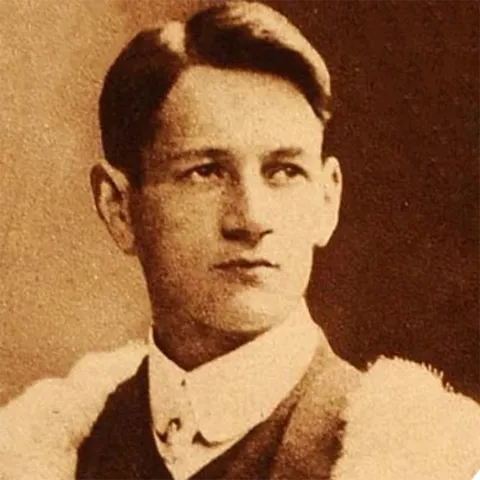
Now, what McSweeney goes on to do next would have a huge influence on public perception of the war. But before that, let’s take a step back and introduce him properly. Terence McSweeney was a 38-year-old Republican, playwright, poet and politician. He’d been involved with the Republican movement for years, having helped found the Celtic Literary Society in 1901 and the Irish Volunteers Cork Brigade in 1913. In 1916, he followed Eoin MacNeill’s orders and stood down his men, meaning that he did not take part in the Rising. It’s said that this decision haunted him for years, that he’d wished he’d joined the other Easter Rising leaders in their martyrdom. Regardless of his lack of involvement, in 1916 he was arrested, and then was arrested again in 1917 for wearing military uniform. After he was arrested for that incident, following the example of Thomas Ash, McSweeney went on a hunger strike, which led to his release three days later. Which is interesting considering what happens next. In 1918, he became a Sinn Fein TD for the Dáil, and as I said, after the death of his friend Thomas McCurtain, McSweeney was elected to replace him as Lord Mayor.
It was at his inaugural address that he laid out one of his key philosophies, and proclaimed a quote he became famous for. As he stood in front of the crowd of Republican Corkonians, he announced that, It is not they who can inflict the most, but they who can suffer the most, who will conquer. Remember this quote, because it goes a long way to explain what McSweeney does next.
So, McSweeney, Lord Mayor of Cork, was arrested, and on the 16th of August, was tried by a British court-martial under the ROIA. He refused to recognise the authority of a military tribunal, and argued that arresting an elected mayor of a city, and a subsequent military trial, was an affront to the dignity of his office, saying, You have got to realise, and will have to realise it before very long, that the Irish Republic is really existing. I want to remind you of the fact that the gravest offence that can be committed by any individual is an offence against the head of the state. The offence is only relatively less great when committed against the head of a city. When the tribunal sentenced him to two years’ imprisonment, he simply refused to accept it, stating, I will put a limit to any term of imprisonment you may impose as a result of the action I will take. I have taken no food since Thursday, therefore I will be free within a month. I have decided the terms of my detention, whatever your government may do. I shall be free, alive or dead, within a month. Which is pretty badass.
You see, as soon as he was arrested, McSweeney stopped eating, and was five days into a hunger strike by the time of the trial. As the historian Jason Perlman puts it, As a prisoner, McSweeney was powerless. It was only by denying the government’s right to hold him, by asserting control over his life, by throwing it at the government, that McSweeney could gain power over his enemies as a soldier of the Irish Republic. McSweeney saw it as a win-win situation. Either the British caved to the pressures of the hunger strike and let him free, or they didn’t, and McSweeney would become a martyr for the cause. As he explained to a friend of his, If I die, I know the fruit will exceed the cost a thousandfold. The thought makes me happy. I thank God for it. Ah, Cahill, the pain of Easter week is properly dead at last.
It’s comments like this that sort of arguably show that McSweeney was more of the old guard of romantic Irish Republicans, in the same mould as Podrick Pierce. He was a poet and a playwright after all. I’ve discussed before how the post-1916 Republicans were more practical and less inclined to needlessly murder themselves. And it’s true that Michael Collins was very much against the hunger strike. He ordered McSweeney to quote, Give up these strikes as you’d be ten times a greater asset to the movement alive than dead. In fact, in later months Collins and Griffith would ban the policy of strikes across the movement. As Collins pointed out, The British cabinet planned to finish this hunger strike weapon of ours and do not intend on releasing you. McSweeney didn’t listen and there really wasn’t anything Collins could do.
But Collins was right about the British view on the strike. This time, unlike other hunger strikes, they refused to cave. Lloyd George insisted that releasing McSweeney would quote, Completely disintegrate and dishearten the police and military in Ireland. And on August 26th, the British cabinet declared that, The release of the Lord Mayor would have disastrous results in Ireland. The thinking was that to let McSweeney free would totally and utterly undermine the ROIA, which had just been brought into law. So McSweeney wouldn’t back down and neither would the British.
As much as it was a battle of wills, the strike became a propaganda battle of huge proportions. Both the British and the Irish sides argued that the other was at fault for letting McSweeney and the ten or so men who joined him suffer. In fact, it became a huge world news story. As one Spanish newspaper had put it, Yesterday he was unknown outside of Ireland, today the whole world is familiar with his name. In New York, 2,000 dock workers laid down their tools in what became known as the Irish Patriotic Strike. And more protests broke out in Boston and New Jersey. One African-American nationalist leader sent a telegram reading, Convey to McSweeney sympathy of 4 million negroes. In Italy, Mussolini described the hunger strikes as a superb piece of Stoicism. While in Paris, there was a theatre that would issue updates about McSweeney’s condition each night. Even James Joyce, who was living there at the time, wrote a poem for McSweeney. It’s very Joyce-y. Of spinach and gammon, bulls full to the cropper, white lice and black famine are the mayor of Cork’s supper.
The British were very much feeling the international pressure, but were determined not to crack. Lloyd George offered McSweeney’s release if Arthur Griffith could guarantee an end to the murder of Black and Tans. Griffith refused, saying, It is amazing that your government, having tortured Irish patriots in your prisons for weeks, when they are at the point of death, offers to release them, if they reclaim themselves murderers and suggests that it will kill them if they do not. This refusal allowed the British to argue that they didn’t want anyone to die and that McSweeney was simply bringing this on himself. They went as far to say McSweeney was basically committing suicide, something which struck a chord and worried Catholic Republicans, suicide being a mortal sin in the Catholic tradition. But the Catholic Church actually ended up supporting McSweeney and priests declared that to die in such a way would not count as suicide.
What increased the media frenzy around McSweeney and the pressure on the British was simply how long he survived. He stopped eating on the 12th of August and was still alive by the middle of October. To give you an idea of how long that is and how chaotic things were in Ireland at the time, I just want to very quickly go through an overview of what was going on. Don’t worry, none of this will be on the test and all these numbers are approximations anyway. But throughout August, September and October there were something like 9 or 10 ambushes and raids on British forces occurring in Donegal, Galway, Dundalk, Dublin, Roscommon, Clare, Sligo, Cork, Tyrone and Fermanagh. Approximately 25 members of British forces were killed or assassinated, 10 IRA members were killed, black and tans burnt down Kilkee, Trim and Tubbercurry and they sacked Balbriggan, an event we might come back to. That’s all to say that despite the ROIA, the country was slipping further and further into chaos and all the while McSweeney was refusing to eat anything at all.
Initially everyone believed that McSweeney would die fairly quickly but he just kept hanging on. Some historians argue that maybe he was being snuck nourishment but even if he was, by October McSweeney was becoming increasingly weak. Once it became clear that McSweeney was, as Perlman put it, suffering irreparable physical harm, the IRA reduced its attempts to actually have him freed and instead worked to get as much propaganda value out of the man’s suffering as possible. Which sounds incredibly callous until you remember that that’s exactly what McSweeney was aiming for. In fact it got to the point where the IRA actually didn’t want McSweeney released. As one IRA man put it, the result was inevitable. We hoped he would not be released when his body was almost used up. You see, if McSweeney was freed towards the end, the IRA would lose their martyr without gaining the intelligent and driven mayor that Collins believed could help the movement so much. Why? Because by October McSweeney was so weak that it was clear he would die. The worst case scenario from a republican point of view was for this to happen after the British had caved. But in the end neither McSweeney nor the British blinked.
And despite British efforts to force feed him, on Monday October 25th Terence McSweeney died. He hadn’t eaten for 74 days. Now, not to be flippant, but 74 days?! As I record this it’s been 3 hours since breakfast and I’m already beginning to suffer. I just, I can’t even comprehend 74 days. Like, wow. It should also be said that two other hunger strikers died along with McSweeney. Joseph Murphy died the same day while Michael Fitzgerald had died a few days previous. These men were just as dedicated as McSweeney and though he was the poster boy their debts had helped increase the pressure on the British. After McSweeney died Griffith ordered the other men to stop their strike. The republicans had their murder and the British had proven they were not going to give in. There was nothing else to be gained.
McSweeney’s emaciated body lay in state in London where a whopping 30,000 mourners came to pay their respects. From there the body was sent straight to Cork to avoid a mass demonstration in Dublin. This failed and a huge funeral was held in both Dublin and Cork. There’s actually recolourised footage online that I’m going to share on our Facebook group and I will do it this week, I promise. At the Cork funeral Arthur Griffith gave a eulogy saying He laid down his life to consolidate the establishment of the Irish Republic. Willed by the vote of the people of Ireland his heroic sacrifice has made him in death the victor over the enemies of his country’s independence. He has won over them because he has gained by his death for Ireland the support and sympathy of all that is humane, noble and generous in the world.
And Griffith was not exaggerating. The news of McSweeney’s death spread all over the world and the response was staggering. The women of Catalonia went into full mourning wearing black. While 500 protesters arrived at the British Consulate in Barcelona waving the Irish flag and chanting Viva Irlanda, Muere Inglaterra. My Spanish is not great, sorry. 40,000 people showed up in New York to hear Eamon de Valera speak about McSweeney. While 40,000 more marched in Manchester. People held mock funerals in Melbourne, Bradford, Boston, Chicago and Philadelphia. WB Yeats even staged McSweeney’s play The Revolutionist at the Abbey Theatre. Saying that though it was not a good play and that McSweeney had lived among harsh political types for too long it certainly increases one’s respect for the Lord Mayor. He had intellect and lived and died for it. And no surprise, good or bad, the play was a huge success.
After his death McSweeney’s writings were published and it’s said that he inspired everyone from the Vietnamese leader Ho Chi Minh to Gandhi. Ho Chi Minh who was working in London as a dishwasher when McSweeney died was said to have announced It seems that that is the message that most people took from McSweeney’s actions. Slowly over the next few months there was a shift in Britain’s approach to Ireland. A shift from, as it’s been described, the hawks to the doves. Public and international opinion would force the British to move from oppression to some form of compromise. And some historians argued that McSweeney’s death was one of the turning points that led to this transition. It shifted both how the public in Ireland and around the world viewed Irish independence. He became a symbol of Irish suffering and broke through Britain’s insistence that they were merely trying to retain law and order in the country.
As Perlman puts it, To me McSweeney seems one of the last of the romantic republicans. Those looking to die for freedom rather than live to see it implemented. He proved that these big gestures could grab the attention of the world and could do just as much for the cause as any more practical endeavour. Whether you agree with his methods or not the hunger strike was effective in its aims. And for better or for worse McSweeney inspired a whole future generation of young Irish men to follow suit. Though it should be said that the British had not abandoned their military approach just yet. And would take a few more months of brutal bloodshed for anything less than full Irish surrender was considered. But as I always say, that’s getting a little ahead of ourselves.
Now just before we go I just want to say we’re up to something like 20,000 listens a month. Which is insane, thank you so much everyone. It’s just simply really exciting. With that in mind I know this year has been mighty tough for pretty much everyone. But especially small businesses. So I was thinking I’d love to start heroing small Irish businesses on the podcast. Maybe we could feature a different one in an episode or even replace the usual advertising. I don’t know, I’m just kind of feeling it out. So if you have a business you reckon the other listeners would be keen to hear about. Or you know someone else who does. Please get in touch at the history of Ireland podcast at gmail.com I don’t know when I’ll bring it in or how we’ll work it out and maybe we won’t. But it’s just an idea I thought I’d float with you all. Keen to hear what you think. Anyway enough of that, see you all in two weeks. Additional research and fact checking by Robert Babington. Music by Liam Doyle. And additional help from assistant producer Aoife Murphy. This podcast was recorded in the lands of the Wurundjeri people of the Kulin Nation. Sovereignty was never ceded.