Episodes Irish Revolution Season 1 — The Revolution
The Kilmichael Ambush
Transcript
Welcome to the history of Ireland We are back, people! Did you miss me? Apologies for the unplanned, elongated Christmas break Through work, the podcast and various other side projects I was feeling rather burnt out towards the end of 2020 And unashamedly took a very lazy, long break But now, we’re here and we’re raring to go
I want to tie up the events of 1920 with two more episodes First, today, we’re going to look at the Hill Michael ambush And then, in the next episode, we’ll look at the burning of Cork Then, we’ll go headfirst into the exciting year that was 1921 So here goes nothing
It’s Sunday, 28th of November, 1920 It’s the middle of the night, or the early hours of the morning You can take your pick The men of the 3rd West Cork Brigade Are marching through the wet, damp, sock-soaking fields of West Cork And they’re being led by a man named Tom Barry
Barry is an interesting guy He was the son of an RIC officer and had fought in World War I As he puts it, quote In June in my 17th year, I decided to see what the Great War was like I cannot plead I went on the advice of John Redmond or any other politician That if we fought for the British, we would secure Home Rule for Ireland Nor can I say I understood what Home Rule meant I was not influenced by the lurid appeal to fight to save Belgium or small nations I knew nothing about nations, large or small I went to the war for no other reason than I wanted to see what war was like To get a gun, to see new countries, and to feel a grown man Two things there
I’m not sure that last sentence came out quite as Barry meant it to And it’s interesting to hear Barry talk about his reasonings for joining the war It’s a reminder of how much the idea of war was romanticised by young men of this generation Though Barry would go on to change his tune as he grew older and witnessed the realities
He fought in present-day Iraq and rose to the rank of sergeant But once World War I was over, he left the British Army and became heavily involved in the IRA Even though he was initially distrusted by the Cork IRA His army training made him an invaluable commodity And he quickly made a name for himself in the movement By 1920, at age 23, he was leading the West Cork Brigade And it was seen as being one of the most efficient and disciplined flying columns in the country
Meanwhile, the auxiliaries in West Cork had gotten lazy The auxiliaries had been tasked with patrolling the narrow wild roads of Cork To disrupt the IRA and search for weapons And, as often was the case across the country They did this in a rather haphazard and violent manner One account describes how They pulled men, women and children from their beds at all hours of the night Another talks of them taking pot shots at men working in fields And forcing people to run ahead of their lorries while being shot at Simply put, they quote, were terrorising the countryside
But the auxiliaries were demoralised And struggling to cope with an unhelpful population and a horrible Irish winter This led to dangerous lapses in discipline As explained by one auxiliary working in the area Winter was now coming on And our patrols were no longer looked forward to Indeed, they were becoming most unpleasant We had only opened cars And as it rained nearly all the time As it knows how to in South West Ireland We finished each patrol soaked to the skin Despite our Macintoshes
This discomfort, I think May have been responsible for our disinclination to deviate from known roads We’d take patrols which we knew would only last so long Then we would be back to the dubious comfort of the castle However, it is certain that each section officer Got into the habit of doing the same patrol each time he was on duty On any particular day, we knew where his patrol was going And all this was not lost on the other side There was always careless talk in the town And it was easy for them to find out which section would be patrolling On any days, some days ahead And make plans they thought fit
And there are no prizes for guessing what Barry and his men saw fit to do The auxiliary patrol, led by a Francis Clark Had gotten into the habit of taking the exact same route from Macroom to Bandon A route that led them through a particularly narrow s-bend Just outside of Kilmichael The area was surrounded by bogland and low rocky hills Barry had scoped it out on horseback a few days earlier And decided it was the perfect spot for an ambush
One of the IRA lads described the location saying The place selected for the ambush was on a road running through marshy land There were no fences, but back a little off the road There were fairly large clumps of rock There was no line of retreat That last point was one of the reasons Barry chose the spot As he described it Quote The position we were about to occupy allowed no retreat The alternative was now to kill or be killed See it that these terrorists die and are broken
It’s interesting to see here that Barry was not planning the usual hit and run attack favoured by the Irish This was something altogether more dangerous Which brings us back to the early morning of Sunday the 28th As Barry and his men slowly settled into position at the Kilmichael junction
The men arrived at around 9 o’clock Sunday morning And then Well Nothing happened They waited And waited And waited Now luckily the west coast of Ireland in the middle of winter Has a famously warm and balmy climate There No it rained for most of the day And the men spent hours sitting there frozen and hungry In fact some reported that their clothes froze to their body
At around 4 o’clock with the sun slowly beginning to set Barry was ready to call off the attack When scouts informed him that they heard a truck speeding along off in the distance This was it Barry told the men who were beginning to pack up to rush back to their positions They put out their cigarettes Shook off the cold Checked the few weapons they had between them And readied themselves
The ambush was meticulously planned And as the trucks drove down the road They passed five hidden groups of men It helps to picture it all in your head So let’s try and lay it out Don’t worry I’ll throw a map online as well The auxiliaries were driving along the road from west to east In two trucks spaced out from each other So as not to get caught in an ambush Let’s see how that works
The IRA were split into section 1, 2, 3 and the command group All hiding at different points of the road As the first truck drove through the area They would have passed the reserves of section 3 Six men hiding about 20 meters north of the road Ready to jump in if anything went wrong
Next, as the truck continued on They passed section 2 Seven men split into two lines hidden behind a rocky outcrop On the northern side of the road Ready to engage the second car Opposite them were the rest of section 3 Six more lads occupying a chain of rocks So the British couldn’t obtain a firing position But these men were under strict orders to remain hidden Until Barry made his move
So the trucks continued on Oblivious to the hidden men About 100 meters up the road Perched on a large rocky hill You had section 1 Ten men ready to take on the first car And then finally, furthest east Was the command post Where Barry himself and three other men were placed
As the trucks drove towards Barry’s position He simply stepped out into the road Soaked to the skin and dressed in his uniform He marched down the center of the small road Towards the oncoming auxiliaries The auxiliaries began to slow down But they didn’t seem to cop what was about to happen Once Barry got close enough He unleashed the pin from a hand grenade And threw the grenade into the lorry
Imagine the sound of the explosion Dampened by the rain As the trucks screeched suddenly to a stop Before anyone could react The driver and another man were dead This had all been planned As Barry described much later to an RTE reporter We had luck The ball hopped our way We had the luck of deciding an officer Would stand in full equipment and that Map, case and a bomb and the rest Volunteer uniform of course Not British uniform as the British tried to say And they’d be bound to slow down So that they’d investigate And they did slow down And they came and a bomb was thrown at them And a gun opened on them And with a lot of luck again The bomb landed 25 yards or 30 away It landed in their front seat That gave us the element of surprise And in guerrilla warfare Surprise and mobility and toughness are main
As the grenade exploded The auxiliaries frantically tried to escape The remains of the blown up truck As they did The IRA’s section 1 opened fire From the rocky hill to the north Down the road The driver of the second truck skidded to a halt As he watched his counterpart explode Section 2 and section 3 opened fire from both sides
Back at the first truck The auxiliaries ran for cover in a laneway And tried to head for high ground But Barry and his men fixed their bayonets to their guns And moved in to stop them This was not your usual hit and run ambush And the fighting was intense Imagine men, wet, miserable and terrified On both sides battling for the upper hand
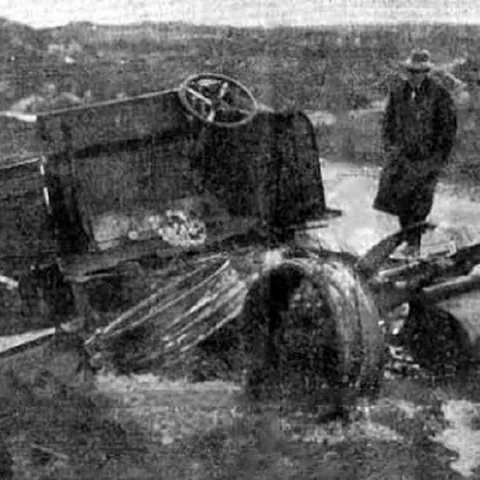
It was up close, personal and bloody They grappled with each other Trying to gain control of bayonets They slipped in the mud And cracked their knees on the rocky ground Revolvers went off at point blank range Men clubbed each other with the bloody butts of their rifle Within minutes The nine men from the first auxiliary truck were dead
Barry and his men pushed west along the road Towards the second truck Where firefight had broken out And what happens next is controversial The auxiliaries in the second truck Realising that they were being flanked by Barry and section 2 Threw down their arms Fell to the ground And shouted surrender
Jack Hennessy, one of the IRA men Described what happens as follows We heard three blasts on Barry’s whistle I heard the three blasts And got up from my position Shouting hands up At the same time One of the auxiliaries about five yards from me Drew his revolver He had thrown down his rifle I pulled at him and shot him dead I got back to cover Where I remained for a few minutes Firing at living and dead auxiliaries on the road Barry sounded his whistle again Nearly all the auxiliaries had been wiped out
This is the full surrender of the Kilmichael ambush And people have been arguing about it Pretty much constantly since it happened I swear to god You should read the snarky comments Between the historians as they discuss it all
The IRA’s version of events Is that the auxiliaries pretended to surrender To draw them out of their position And so were not to be trusted And had to be wiped out It doesn’t seem a great plan From the auxiliaries point of view to be honest But that’s what the IRA said happened
The British and others Later argued that the auxiliaries Really had surrendered And that Barry and his men Had simply shot surrendered soldiers in cold blood Which considering Bloody Sunday occurred the week before And that tensions were at an all time high Is not totally outside the realms of possibility
Others say maybe some of the auxiliaries surrendered And some didn’t And in the confusion everyone was killed This sounds like it could be likely But it’s not a great look for the IRA still
And then finally Other historians tried to come to a middle ground Saying that the British forces did surrender But then saw that Barry and his men Had no intention of letting them leave alive And so continued to fight on
For me though WH Caught riding the atlas of the Irish revolution Puts it well Saying quote Without new evidence there is little chance This controversy will be resolved So yeah We’re not going to try and figure it out There’s just really no way of knowing what actually happened
But false surrender or not The outcome was the same By around 4.30 on Sunday evening Barry and his men had wiped out An entire auxiliary division Now in a purely military sense The ambush was relatively minor At the end of the day But we know that the Irish war of independence Was much more about perception Than anything else
The fact that some rabble of young cork lads Had wiped out what was seen As one of the most elite squads Of British forces Shook the British establishment And on the flip side It provided a huge boost to Irish morale Especially considering the horrors The country had seen the week before
You see the importance of the Kilmichael ambush Was amplified by the fact It occurred a week after Bloody Sunday It further painted a picture Of a country completely out of control It’s just yet another example Of how this point in time Was a real turning point in the war
In the next episode We’ll look at what happened next in the rebel county And see how the situation in Ireland Continued to spiral out of control
The history of Ireland was written and produced By me, Kevin Dolan Additional research and fact checking by Robert Babington Music by Liam Doyle And additional help from assistant producer Aoife Murphy This podcast was recorded in the lands of the Wurundjeri people Of the Kulin Nation Sovereignty was never ceded