Episodes Irish Revolution Season 1 — The Revolution
Is There Anything To Be Said For Saying Another Mass?
Transcript
Welcome to the History of Ireland. As we reach the end of 1920 and move into 1921, we enter a fascinating time in the Irish War of Independence, where we kind of have to tell two contrasting stories simultaneously. The last six months of the war were some of the most brutal and deadly. But while the conflict escalated, talk of peace slowly began to develop.
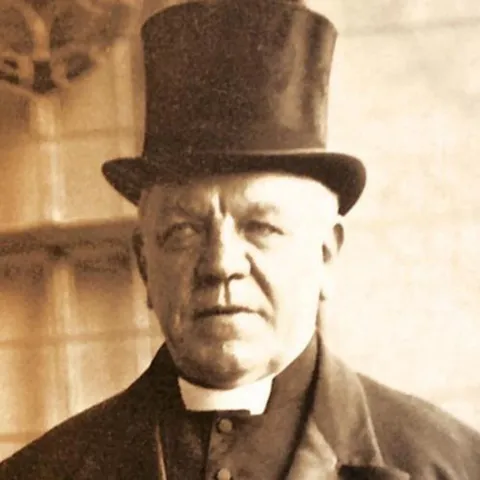
To explore these first stumbling steps towards peace, we actually have to go back to a week or two before the burning of Cork and introduce Patrick Clune, the Archbishop of Perth. I apologise for the chronological skipping around, but thematically it made more sense to wait to investigate this bit of tentative negotiation. I promise it will all make sense eventually.
So Clune had been visiting his home in Clare, and in November 1920 was readying to leave Ireland and return to Australia. He knew first hand the violence going on in the country and was actually the uncle of poor Connor Clune, who was murdered in Dublin Castle alongside Dick McGee and Padder Clancy on Bloody Sunday. On Tuesday the 30th of November, Archbishop Clune was at a farewell lunch in London. A priest by the name of John McMahon, who travelled with Clune, described how the Archbishop, quote, expressed himself freely on the reign of terror that he had just left. And listening intently to his eyewitness account of what was happening across the Irish Sea, one of the parties suggested that His Grace should postpone his departure for the continent until he had told his story to the Prime Minister, Mr Lloyd George. Everyone thought this was a great idea, and Clune agreed to meet the PM.
Now this is a good excuse as any to take a slight tangent and discuss how the Catholic Church had been carrying itself throughout the war. It’s something we’ve not really touched on, but it is important. To zoom out quite a bit for a moment, the beginning of the 20th century was a time of huge upheaval. As more and more nation states were created and revolutions occurred, the power of the Church began to waver. Russia and the Bolsheviks was a prime example of this.
However, Ireland was in a fairly unique situation, because as we know, Irish nationalists and unionist political identities were firmly intertwined with that of Catholic and Protestant religions. But as historian Brian Heffernan puts it, it was not a foregone conclusion that the bond between national and religious identity would emerge stronger from the upheavals. Heffernan goes on to argue that the Catholic Church had to negotiate wisely if they wished to further their own goals of strengthening the Catholic identity of the faithful and defining the Irish nation as Catholic.
Basically, as Ireland changed and this new independent Irish state developed, the Catholic Church wanted to ensure that it was a Catholic state and a deeply religious one at that. It became clear then that the Church had to align itself with Sinn Féin and the Republican movement. There were a few reasons for this. Firstly, popular opinion was hugely in favour of Sinn Féin. Secondly, the Dublin administration in 1919 began trying to reform the Irish educational system, limiting Church control over schools, something that the Church definitely didn’t want. And finally, like the rest of the country, there were many individual priests who were vehemently pro-Republican. So it kind of made sense for the organisation as a whole to follow suit.
However, though the Church generally supported the idea of Irish independence, no official pronouncement regarding sovereignty was made before it was settled officially. And unsurprisingly, the Church as a whole was very anti-violence. As Heffernan puts it, Few churchmen were prepared to go on record as condoning the killing of policemen and the burning of police barracks. And practically the only way the clergy responded publicly to the IRA violence was by denouncing it.
He goes on to say, Are you with me? Because it is a little complicated. As an organisation, the Church was anti-violence but vaguely pro-independence. As individuals, priests were more likely to be pro-Republic and some were even pro-IRA. There are many stories of priests administering to the IRA men on the run, and a few even joined Flying Columns. And this simple act of administering to IRA soldiers was a huge benefit to the Irish movement, even if the priests didn’t officially ever condone the actions.
Again to quote Heffernan, And as the British increased their reprisals, priests and the Church as an organisation began to denounce the British heavily and increasingly supported the Irish movement. This was in no small part down to the fact that British forces from the summer of 1920 had begun raiding churches, seminaries and the like. In fact, from September 1920 on the British forces arrested 43 Catholic clerics.
And to top it all off, in October a Father Michael Griffin from Galway was shot dead by the Black and Tans. This sent shockwaves through the religious establishment and bishops began openly condemning the British, though they never went as far as supporting the IRA. Priests were more likely to be radicalised in areas like Clare and Galway. Which brings us back to Archbishop Clune who, as I mentioned, had been travelling through the area in November 1920.
So back to our main story. On Wednesday 1st of December 1920, Clune and Lloyd George sat down in an office at the House of Commons. He told a story of how, as a reprisal for an ambush in Lehinche County Clare, Black and Tans quote, Lloyd George’s response is an interesting one. He expressed horror and asked the Archbishop if he could go back to Dublin to meet with the leaders of Sinn Féin. Lloyd George wanted to use the Archbishop as an intermediary to organise a truce with the Irish.
You see Clune was kind of the perfect intermediary at this point in the war. As a senior member of the church, living abroad, he could be trusted by the British. He could also play the card that he was against violence and simply wanted some kind of peace. But the fact that the church was becoming increasingly critical of the British, as well as the fact that Clune was from Clare and had seen the damage the British had done first hand, put him in good favour with the Republicans. Remember his nephew had been murdered by the British.
So on the 4th of December Clune snuck back into Ireland and stayed at a house in Killiney. The next day Michael Collins wrote him a letter and had a young IRA man named Joseph O’Reilly deliver it. O’Reilly describes it like this. I rang the bell. A maid answered. Without revealing who I was I succeeded in securing admission. I was ushered into a large room and was there about 15 minutes when a clergyman entered the room. I ventured to ask him if he were Dr. Clune, for I noticed that his stock was black and that he was not wearing a ring. He admitted with a smile that he was Dr. Clune. He was most anxious to meet Michael Collins as soon as possible. I asked his grace to be very careful when setting out to keep any such appointment, as the cat might be shadowed and this might lead Michael Collins into the eager hands of Dublin Castle.
And so Clune and Collins organised to meet in a very secretive fashion. And on the 7th of December Clune arrived at Dublin’s leading gynecologist, where it had been arranged he would meet Collins. The gynecologist’s office was chosen as the doctor in question was trusted by the auxiliaries, as he worked with their wives. And I think everyone just also assumed no one would think to search the place for an archbishop and a royal leader devising up a truce.
Fr. J.T. McMahon tells of how Clune and the Bishop of Killoo met with Collins. We sat down in a large room when, out of the darkness, there emerged the smiling boyish figure of Mick Collins. Dr. Clune showed Mick Collins the letter and the three of them discussed the proposed truce. Mick never allowed the bishops to remain serious for long. He always had a joke on top.
Having met Collins, the next day Clune continued on to Mountjoy Prison, where Arthur Griffith, the doll’s acting president, was locked up. Griffith, always anti-violence, welcomed the proposed truce with enthusiasm. In the end, Collins, Griffith and the rest of the Sinn Féin leadership agreed in theory to a truce, as long as they didn’t have to surrender any arms.
And Clune returned to London feeling rather successful. He met with Lord George and told him about his meetings with Griffith and Collins. Apparently, Lord George, quote, expressed many a wish to meet this amazing Collins fellow, and, quote, chuckled at the military head’s outburst of anger that they could not get Mick or Dr. Clune could see him any time.
So over the next few days, Clune bounces back and forth between London and Dublin, discussing terms in secret. Lord George, meanwhile, raised the potential of a truce with the military heads in his administration, i.e. MacReady, Truder and a few others. But they were very much against it and believed there was no need for a truce. In fact, they stated, quote, there would be a definitive and decisive result in four months’ time. For whatever reason, Lord George decided to believe them, and he stipulated to Clune that any truce would have to involve the IRA giving back their arms, a concession he kind of knew the Dáil was not willing to make. And so the whole thing fell apart. And that ends the first failed attempt at bringing around a truce between the British and the Irish.
That promise by the Hawks of a decisive result in four months became important and explains why the beginning of 1921 was so violent. Part of it comes down to our old friend the Government of Ireland Act. Remember the Government of Ireland Act? It was passed to give Ireland a home rule government in both Dublin and Belfast. Arriving about four or five years too late, it came into law towards the end of 1920.
Now, ignoring the fact that the entire country had previously voted for Sinn Féin, who were totally against home rule, the Government of Ireland Act demanded that there be an election for this new government. Yeah, isn’t that crazy? The country’s at war, the IRA are ambushing anything that moves, the Dáil courts are running independently of any British rule, Sinn Féin and the Dáil are illegal entities, and the Black and Tans are burning down towns left, right and centre. But the good old Government of Ireland Act firmly with its fingers in its ears demands an election.
And the question Lloyd George and the rest of the British were left with was when these elections should be held. The way the British thought, no elections could be held while the country was in the state that it was in. Sinn Féin and the IRA would simply intimidate the population and win the election. Intimidate or, you know, just have the popular support to win again. Plus, how the hell could you hold an election anyway when the IRA were in full on attack mode?
Lloyd George was then left to figure out the best approach forward. And with the assertion by the Hawks that they had the country under control in four months, the elections were set for May 1921. The British military had basically set themselves a deadline. They would now have to begin working even harder to meet it and take back control of the country.
And so Lloyd George changed his position and poor Archbishop Clune was left in the lurch. Martial law was implemented and instead of a truce developing, the war raged on for another half a year.
Or you can follow us on Facebook or Twitter. It’s always great hearing from you guys. And if I’ve made a mistake, please do let me know. The History of Ireland was written and produced by me, Kevin Dole. Additional research and fact-checking by Robert Babington, music by Liam Doyle and additional help from assistant producer Aoife Murphy. This podcast was recorded in the lands of the Wurundjeri people of the Kulin Nation. Sovereignty was never ceded.