Transcript
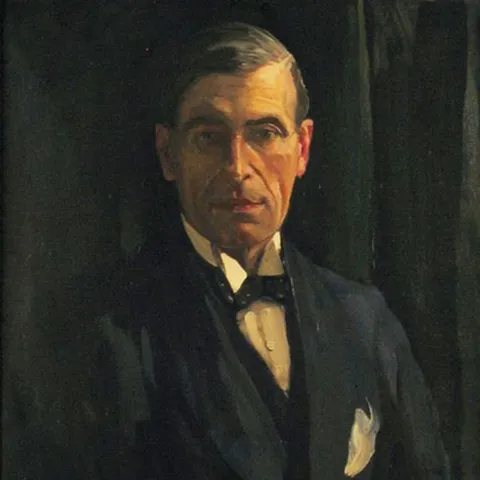
Welcome to the history of Ireland. We are willing to acknowledge that we are defeated. There is nothing else for us to do but to draft 400,000 men and exterminate the whole population of the country. And we are not willing to do that. On May 30th, 1921, Alfred Cope spoke these words. Cope was the leading British civil servant in Ireland. So yeah, it was one hell of an admission.
Cope had always been considered one of the Doves. Those against aggressive military tactics in Ireland. Finally, by late May, early June, the Doves were winning the argument of what to do with Ireland. Cope was speaking to Patrick Moylet. Moylet is another backroom dealer who had been working in London since around October 1920 as Arthur Griffith’s envoy. Over this time he had built quite a good relationship with the likes of Cope and was slowly but surely building a bridge towards peace talks. This admission by Cope to Moylet was one of the first major steps towards an end to the hostilities. This is it people, we’re nearing the end.
The next step was a speech given by none other than King George V on June 22nd when he came to Northern Ireland to open the new Northern Irish Parliament. In the speech he called for peace. The most important section goes like this. I speak from a full heart when I pray that my coming to Ireland today may prove to be the first step towards an end of strife among her people, whatever their race or creed. In that I hope I appeal to all Irishmen to pause, to stretch out the hand of forbearance and conciliation, to forgive and to forget, and to join in making for the land which they love a new era of peace, contentment and goodwill. He then finished off the speech saying, May this historic gathering be the prelude of a day in which the Irish people, north and south, under one parliament or two, as those parliaments may themselves decide, shall work together in common love for Ireland upon the sure foundations of mutual trust and respect.
This is pretty big stuff coming from the head of the British Empire and as close to intervening as a monarch like King George would have felt comfortable with. Interestingly, the original speech mentioned nothing about peace, but this had irked the King. He felt, quote, shoehorned into being a mouthpiece of Ulster rather than that of the Empire. And so King George ended up getting the help of the South African Premier, Jan Smuts. Smuts was a former rebel guerrilla leader in the Boer War and would have had a strong understanding of the Irish situation and quite a lot of sympathy for it I would imagine. It’s actually kind of amazing that he was the one helping the King. Together Smuts and King George crafted this much more conciliatory speech. And it’s hard to say how much of an effect it had, but it definitely did alter the politics of the moment.
You see, previously, Lord George was wedged between the Coalition Liberals who wanted a truce and then the Conservatives, people like Balfour, Bonar Law and Winston Churchill who wanted to keep fighting. Initially, it seemed like Lord George was leaning towards continuing the fight and martial law was set to be brought in across the entire 26 counties on July 14th. But those on the ground, they weren’t so sure. As General MacReady put it, there are of course one or two wild people who still hold the absurd idea that if you go on killing long enough, peace will ensue. I do not believe it for one moment. But I do believe that the more people are killed, the more difficult a final solution becomes. This reluctance from his senior most military man in Ireland, combined with the King’s speech, seemed to change Lord George’s mind. Or at least it gave him the wiggle room he needed to handle the hawks in his administration.
Meanwhile, on the same day as the King’s speech, Éamon de Valera was arrested in Dublin. The house he had been staying in in Blackrock was raided by British forces and he was locked up. It kind of just goes to show the lack of organisation amongst the British at this point. Apparently, Alfred Cope arrived in full evening dress and angrily organised for Dev to spend the night in one of the officers’ rooms at Portobello Barracks. Cope then had Dev immediately released the next day. The whole mad affair left Dev’s head spinning and he wrote in his diary that he did not know what to make of it. Dev was worried that the British had captured him to quote make him suspect among his own followers. And in his biography of Dev, historian Ronan Fadding writes that the immediate release quote Dev believed he was now useless as a political figure and told his housekeeper a quote There is nothing for me to do now except go out with the boys on the hills. With that in mind, he went off that night to visit his family for the first time since June 1920. Apparently, he had stayed away to avoid being arrested. But now he kind of had no excuse to see the kids.
This spiral into paranoia and depression was very, very soon lifted. The next day, Deviler received a letter from Lloyd George. It proposed a peace conference to be held between the Chosen Leader of the Great Majority in Southern Ireland I.E. Dev and the Premier of Northern Ireland Sir James Craig a unionist you’ll remember from way back. Dev was excited to be invited to the negotiation table. But he didn’t really like that he was being invited along with James Craig and being referred to as the Chosen Leader of Southern Ireland. As he put it, it denied Ireland’s essential unity.
So what followed next was a busy few days of meetings. First, Dev met with Jan Smuts the South African Premier who’d so recently helped King George. On July 5th, the two men sat down and Smuts warned Dev to avoid any language that would reflect on or belittle the position of Northern Ireland. Smuts continued saying I see no objection to your stating that the dispute is now between the Irish Majority and the British Government and the conference for settlement should be between the two. Basically, you can happily call yourself the leader of the Irish Majority maybe just selectively choose not to mention Ulster. Reminds me a little bit of Boris Johnson’s approach to Brexit. Let’s just ignore Northern Ireland until it becomes a problem. It was a plan that worked as well then as it did now. But it was enough for Dev to feel comfortable entering into talks. It was a way around the whole Southern Majority Northern Premier thing.
And after meeting with Southern Unionists to ensure the language was correct he telegraphed Lord George on July 8th. He asked for a truce and told Lord George he was ready to quote discuss on what basis such a conference as that proposed can reasonably hope to achieve the object desired. Painful language isn’t it? But I guess that’s statecraft. He then met with Cope, General McReady and Lord Middleton the leader of the Southern Unionists on July 9th to discuss terms for a truce. It was agreed that the British forces were to cease pursuit of Irish officers and men or war materials or material stores while the IRA were to stop attacks on crown forces and civilians and British governments and private property. There was no mention of having to give up arms which had scuppered the truce negotiations at the end of 1920. And so everything was agreed and like that the truce was set to come into effect in two days.
It almost feels a little too easy but it’s really important to acknowledge how big a deal this was. The Irish had brought the British to the negotiation table. A small ragtag group of guerrilla fighters and a government that had kind of just willed itself into existence had reached a stalemate with the largest empire in the world. One of the largest militaries in the world. There would be a lot of disagreements to come on what they would be negotiating but this was further than really anyone had gotten in 700 years. This was a big deal.
Talk of a truce led to a flurry of last minute activity. Basically members of the IRA trying to get one last punch in before the bell rang. On July 10th in Cavan some IRA men who had done very little previously attacked an RIC barracks. They didn’t want to feel left out I think. The same day in Cork the IRA ambushed two military parties killing two policemen and an informer. They also shot four off-duty soldiers who were found dead in a field the day of the truce. And even on the morning of July 11th in Kerry four British soldiers and five IRA men died in a fight outside Castle Island. Typical Kerrymen getting every last drop out of any situation.
Some IRA men only found out about the truce the day it happened. Ernie O’Malley who controlled five brigades in and around Tipperary received a note from Richard Mulcahy saying In view of the conversations now being entered into by our government with the government of Great Britain and pursuance of mutual conversations active operations by our forces will be suspended as from noon Monday 11th July. As O’Malley put it he was bewildered by the order and stated this was the first time he had heard any talk of a truce. Another IRA man from Monaghan also spoke of bewilderment stating To say that we were jubilant would be untrue. It was more bewilderment. Through the years of struggle the hangings and executions and sufferings had generated in us something unchristian. Our lust to kill had not been satisfied.
But despite their bewilderment or their bloodlust the truce came into effect at 12 o’clock on the afternoon of Monday July 11th. As you can imagine the majority of the country was over the moon to see the end of hostilities. Remember over 700 civilians had been killed between January and July of 1921 alone. There’s talk of celebrations throughout the country with fireworks internally, IRA men who were on the run returning to their family and bands playing Ronde Vienne as quote the populace cheered loudly. It’s also said that the number of IRA men skyrocketed in the truce period which annoyed those who’d been fighting the entire time. Which is understandable it’s a lot easier and a lot less risky to be part of an army that isn’t at war. As Michael Brennan an IRA leader in Clare put it there was nothing worse than flag waggers who kept under the bed while the war was on.
There’s one story from the day of the truce that I just absolutely love. In Dun Laoghaire which was still known as Kingston one man hoisted a tricolour on his yacht. Suddenly some British soldiers who’d noticed rode out to rip it down but after they did they were promptly ordered by their commanding officer to put it back up. So they rode back out while crowds cheered on from the pier and they slowly raised the tricolour once again. That Irish flag dancing up and down the flagpole is kind of a nice little metaphor for how precarious the situation was.
The population may have been celebrating but many people did not expect the truce to last. The British forces were very much on alert ready to take up arms as soon as any negotiations might fail and deployments of extra soldiers didn’t stop during the truce period. Meanwhile a lot of the IRA on the ground were dubious as to whether or not a truce was even needed. As we mentioned their bloodlust was up and they felt like they’d been winning the war. Whether or not that’s true is a whole other story.
The Irish war of independence may have come to an end but no one knew that just yet. As our bewildered Monaghan IRA man who was quoted earlier said during the period of the truce the politicians and respectables took over. It was they who interpreted our dream, the dream we fought for. It was they who decided the terms to which we must agree. In the mind of every soldier was a little republic in which he was the hero but his dream was shattered. This quote is a worrying foreshadowing of what’s to come and it proves that if there’s one thing more complicated than war it’s peace. Next episode the respectable men take over and we take a step into the negotiation room.
Thanks for listening. Subscribe wherever you get your podcasts and if you’re enjoying it give us a review on Apple Podcasts or tell your friends. It really helps. You can also support the show, buy merch and get in touch all through our website thehistoryofireland.com or you can follow us on Facebook or Twitter. It’s always great hearing from you guys and if I’ve made a mistake please do let me know.
The History of Ireland was written and produced by me Kevin Doe. Additional research and fact-checking by Robert Babington, music by Liam Doyle and additional help from assistant producer Aoife Murphy. This podcast was recorded in the lands of the Wurundjeri people of the Kulin Nation. Sovereignty was never ceded.