Episodes Irish Revolution Season 1 — The Revolution
The Long Fellow
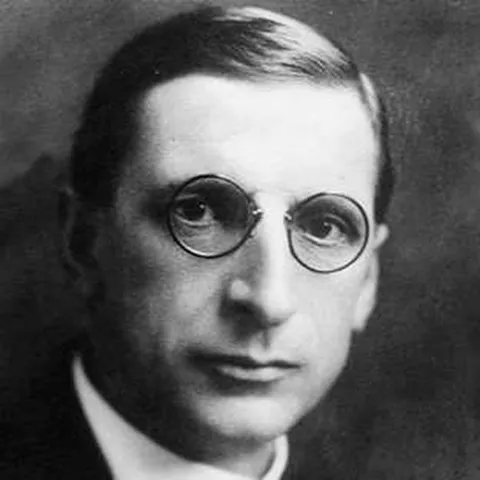
In this episode explore the formative years of Eamon de Valera – one of the most influential men in modern Irish history.
From prayer boy to politician, we examine how a teacher from Limerick turned himself into the figurehead of the post-Rising rebel movement.
Support The History of Ireland by donating to their Tip Jar: https://tips.pinecast.com/jar/historyofireland
Transcript
Welcome to the History of Ireland. So far, we’ve been keeping a pretty macro look at the goings-on and groups involved in the Irish history of the early 20th century. But for the next two episodes, I want to zoom the camera in on arguably two of the most influential figures of the time, Éamon de Valera and Michael Collins. These guys are instrumental in what’s to come and really in the shape of the Irish Republic full stop. So we’re going to take a break from our narrative and delve into de Valera and Collins’ background. Hopefully to give you a sense of the two men, who they were, the forces that shaped them and what drove them. So without further ado, let’s introduce the Longfellow, Éamon de Valera.
Éamon de Valera was born in 1882 in New York and was initially registered under the name George. Though he was always called Edward. His second name has always fascinated me. It’s definitely not Irish. But it was kind of glossed over in school. It becomes so synonymous with the Irish Republic that we never really bat an eyelid at de Valera. Or at least I don’t remember anyone mentioning why the hell it was a de Valera and not an O’Brien or something leading Champagne.
Like a lot of Irish stories, it all comes down to emigration. Catherine Cole, like so many before her, had emigrated to New York in 1879. There she worked as a maid in numerous rather upscale fancy homes. It was in one of these houses that she met Vivian de Valero, a Spanish sculptor. A little while after this meeting, on October 14th, 1882, George de Valero was born. Yep, that’s our Dev. There doesn’t seem to be any information on where the George came from. Throughout his early life, he was called Edward or Eddie. His mother even updated his birth cert in 1910, registering him as Edward de Valera. De Valero? De Valera? Who knows.
As for Dev’s dad, well, Dev didn’t know a lot about his dad and neither do we. Vivian left when Dev was just two years old and was never seen again. There’s some debate over whether Dev’s mother and father ever married. It’s the kind of thing that seems totally inconsequential now. At the time, it was a bit of a big deal. Dev always argued that they’d been married. But no one has ever been able to find any wedding registrations or any records of it. The rumours of his illegitimacy, as it was known back in the day, were often used against him by political opponents. But frankly, who cares?
What’s more important is that Dev’s mother shipped him back to Ireland when he was only two years old. It’s fair to say he hadn’t the happiest of childhood experiences. He was pretty much estranged from her for much of his life from then on and instead was brought up by his grandmother in a one-bedroom pre-famine home in Limerick. He could very easily have stayed there, working on the farm his entire life, if it hadn’t been for a lot of hard work and a little bit of luck.
By the age of 16, he’d managed to get a scholarship to Blackrock College. This was pretty much as far as you could expect to get from Limerick while staying in Ireland, both socially and physically. Blackrock was, and still is, a private school full of upper echelon types. Though a bit of an outsider due to his foreign name and country upbringing, Dev loved it there. He was even going as far as to pull a Harry Potter, spending Christmases at school rather than returning home.
It’s said that in Blackrock, Dev got a rigorous appreciation for rules and religion, two things that would define him for much of his life. In school he was the prayer boy, kind of like an assistant at mass, and before being nicknamed Dev was often called Deliver Us, an exceedingly clever pun on his name and the Deliver Us from evil line from our father. Kids can be so cruel. But in fairness, he does come across as a bit of a painfully religious kid.
For example, in a letter to his stepbrother, he warned against a most terrible sin. Guide yourself against daydreaming, he said. It has been the chief method Satan has employed to disturb my peace of soul and make me waver. You know how it is, Satan does love a daydreamer. On top of this, he was a bit of a stickler for the rules. He became secretary of the library, which gave him power to enter other students’ rooms and search for contraband like magazines. Apparently a job he carried out with enough zeal to make old Deliver Us a bit unpopular. So yeah, no wonder the less than kind nickname.
But the young Edward De Valero wasn’t completely dry. As he got older he could often be found sneaking off to the pub with the lads. One night they even went as far as sneaking into a Blackrock party with, I shit you not, fake mustaches. The idea was that the mustaches would make him look older. And apparently it worked, they got in. But then, disaster. The heat in the room was too much and the mustache glue melted, revealing the poor lads and getting them promptly kicked out. This story has no bearing on anything, it’s kind of just too fun to leave out.
As he got to the end of his schooling, his aim was to join the priesthood. But he was turned down repeatedly thanks to his parents’ relationship. The priests demanded a marriage cert, and Dev still had no proof that his folks had ever tied the knot. Imagine how different Irish history would be if Eamon De Valera had gone into a monastery or something, rather than going on to leave the country. Unfortunately for Dev at the time, it wasn’t to be.
Instead, he became a teacher. He wanted to become a university lecturer, but initially his grades hampered any further study, which would be needed for most universities in Ireland. Luckily, with the help of a priest friend of his, Dev managed to get a job at St Patrick’s College, Maynooth. This was both a seminary and a university, further cementing his ties to the church and his relationships with those who would go on to lead it. So no priesthood, no postgrad, and instead he landed somewhere in the middle.
So, looking at all this, what’s interesting about Dev’s early life is the complete absence of any nationalist leanings. His family were poor but political, though Dev himself didn’t seem to have any strong nationalist views. Plus, he played rugby, seen as an English sport, and unlike his contemporaries, hadn’t learned Irish. In papers he’d written in school, he’d argued for a dual monarchy, but that’s as much as we can glean from the young Dev. And, as we know, this is an idea he would later oppose. So yeah, he was still very much Edward de Valera at this point in his life.
That all changed though when it became mandatory for teachers to learn Irish. Dev, knowing his career prospects would be hurt otherwise, then decided that he’d have to brush up on the language. So he joined the Irish League, an association that would suck him into nationalism and forever change both his life and the course of the country.
In fairness to Dev, he jumped into the life of an Irish speaker feet first. He attended a beginners class, began speaking Irish at home, and changed his name to Eamon. And, just like Carl Brewer, Dev met his future wife at one of these classes. In fact, she was the teacher. Good on you Dev. Sinéad de Valera was very political and her strong, intelligent support was said to really help him throughout his career. After they met, the couple married six months later in 1910. Two years after that, they had two kids and Dev’s teaching career had continued to improve as he became an established academic. He was by all accounts a great teacher. Charming, personable, but also strict and stern.
During this time, he also dove into the Irish League. It was those same qualities that would help him rise through the ranks of the Irish League. From there, like so many others, he joined the Irish Volunteers in 1913. And at the age of 31, his political career started in earnest. It’s said that Bulmer Hobson, the nationalist who was kidnapped by the Rising leaders, saw a great deal of potential in Dev. Which is how he found himself leading a battalion in the Rising come 1916.
There are mixed accounts of how well Dev carried himself throughout the rebellion. Some say he was a complete mess. Others, that he was an astute, disciplined and well-organised leader. Look, my guess is he was probably somewhere in the middle. The whole Rising itself was a bit of a mess, and it seems like Dev did well under the circumstances. Though, he did refuse help of the common man, as he didn’t believe women should have anything to do with the fighting. Tell that to Countess Markovits.
Importantly, he held out longer than any other group, having not received the orders to surrender until 24 hours after everyone else had. This was a particularly lucky piece of miscommunication, as it meant that he wasn’t executed straight away with the other leaders. Instead, he was locked up, and while in jail, he was able to write to his mother, who was able to find a birth cert and prove he was an American citizen. British didn’t want to offend the Americans at this point, so they decided not to shoot Dev. How nice of them.
Instead, he was simply locked up until June 1917, wherein he was released into a very different Irish landscape. A landscape which he soon came to dominate. As the most senior surviving Rising leader, he was able to gather the Irish volunteers around him, and with their backing and the churches, he won a by-election in East Clare.
Though new to electioneering, Dev was a striking figure. Skinny, tall, long-limbed and well-educated, with just a touch of the exotic about him. He cultivated an undying loyalty in East Clare. There’s an anecdote that tells of Dev walking down the road in Clare, when he came across an old farmer who said, I suppose you’d be one of the political fellows from Dublin. To which Dev answered, I suppose I am. The farmer replied, well don’t bother, we’re all for Devalera down here. And they were. Dev would keep his East Clare seat for 40 years.
The by-election was a huge upset for the Irish political party, and further bolstered the idea that republicanism and Sinn Féin were on the rise. From there, as we’ve already discussed, Dev went on to take over leadership of Sinn Féin from Arthur Griffith.
The next bit of the story is kind of fascinating. As we’ve mentioned, after the conscription crisis of 1917, Dev was arrested. By all accounts, Sinn Féin’s spies knew the arrests were coming, and knew that Dev would be picked up at the train station on his commute home. This didn’t bother him though, and as one man at the time put it, it seems like the wanted men wanted to be caught. So it came to be, on one evening in May 1918, Dev announced he was getting the train home, and was promptly arrested by the police.
The arrest was a bit of a masterstroke. Dev knew that there was nothing he could do while World War I was raging on, but he also knew that if he did nothing, his growing reputation would suffer. If he was arrested, he could play up the part of political leader locked up, both at home and abroad, to great effect, while not actually having to do much leading. It was genius, and worked a treat. The arrest granted him legendary status. Not since Parnell had the Irish movement had such a popular and striking figure at its head.
But the imprisonment did have its downsides, you know, as imprisonments are wont to have. Though it worked in his favour in terms of popular opinion, he did suffer from a lack of political control. He had very little say in the 1918 election campaign, missed the first Dáil, and had to watch as the more radical military men took over Sinn Féin. At this point Dev was very much a moderate, though that’ll change.
So once imprisonment had done its job, Dev wanted to get back in the game. It was time for a breakout, one that would be led by Michael Collins, who we’ll be finally introducing next time. This podcast was recorded on the lands of the Wurundjeri people of the Kulin Nation. Sovereignty was never ceded.