Episodes Irish Revolution Season 2 — The Civil War
The History of Halloween
In this episode we celebrate 1,000,000 downloads by going down the supernatural rabbit hole that is the history of Halloween.
From druids to evil spirts, from Christianity to capitalism, Halloween is a fascinating mix of ancient folk traditions, religion and more.
Transcript
Welcome to the History of Ireland So in the last week or two the show hit over one million downloads It’s frankly astonishing and I cannot thank you all enough for listening It means so much to think so many of you find value And enjoy this weird little deep dive into the birth of the Irish state But I think sometimes we focus on the numbers too much And though, yes, the big number means a lot It means a lot less to me than, you know, the emails I’ve had from listeners The chats I’ve had in pubs, the fascinating historians I’ve interviewed And, well, everything I’ve learned doing this show None of that would be possible without you, the listeners So just thank you so, so, so very much Thank you for listening, thank you for telling your friends Thank you for writing in, thanks for the reviews Thanks to my Patreon supporters for keeping the show going And, well, just thanks for everything You truly are amazing
To celebrate, I thought we’d take a little break from our usual programming And instead, considering today is October 31st We’d have a little bit of fun and dive into the history of Halloween A holiday with thousands of years of Celtic history A civil war can wait There’s enough violence in the news at the moment anyway So here goes nothing Halloween is a weird little holiday That has existed in some way, shape or form for thousands of years It started as a druidic celebration It was hijacked by the church, exported to America And now, like a lot of things, co-opted by capitalism So let’s go right back to the beginning Before I go into any of this, I’ll say a lot of it is conjecture And it’s very difficult to definitively trace back the origins of such an old folk tradition But hey, that won’t stop us trying
In Ireland and Ás Gaeilge, the 31st of October is known as Ías Sáin And that gives us our first clue to its origin Ías Sáin means the Night of Sáin And what is Sáin you ask? Well, to answer that question, we have to go all the way back to Iron Age Ireland Which was about 1000-500 BC Now I’m going to use the term Celts here, but it’s a bit of a messy one And I do have dreams of coming back to this period and really diving into it at a later date I don’t know, maybe let me know if you’d be interested But just know, the term Celts isn’t necessarily accurate And describes a whole swath of people from a whole bunch of areas across Europe But for our purposes, we’re going to go with that simplified term
In fact, though many say that Sáin was a Celtic holiday We know that this period of the year was marked by early Irish settlers from as far back as 5000 BC With the mound of the hostages on the hill of Tara Aligning perfectly with the rising sun around Sáin Much like its more famous neighbour Newgrange does at the winter equinox So we’ll say Sáin was a Celtic festival And that’s what we need to go to start for Halloween But it actually goes even further back than that maybe
Anyway, what we do know is that there was a festival called Sáin Celebrated by the Celts Or at least whatever you want to call the people who lived in Ireland from about 1000 BC onwards The Celts had a view of the year as being split into two halves Basically summer and winter And Sáin was the end of the year With Sáin roughly translating into end of summer It marked the end of the harvest season and the onset of winter
We know Sáin existed because we have writings from the Romans that mention the festival Though they were quite biased because the Romans never loved the Celts And we have mention of Sáin in some of the old Irish epics that were preserved by Christian monks much later on For example in the Boyhood Deeds of Fionn we have this passage It is to be known that on the night of the feast of Sáin The doors separating this world and the next one are opened And the inhabitants of either world can leave their respective spheres and appear in the world of the other beings
It was said that at this time between the dying year and the birth of the new year The side or the fairy people of Ireland were free to roam And the link between the supernatural and natural world was its strongest Druids would make sacrifices, predictions and they would light fires The whole thing was a big fire festival As historian John Gilroy explains The perceptible and apparent decline in the strength of the sun at this time of year Was a source of anxiety for early man And the lighting of the winter fires here symbolized man’s attempt to assist the sun on its journey across the skies
As Luke Eastwood writes in his book Sáin It marked the time of the return to darkness The forces of light being absorbed into the earth or into the other world And a state of death or hibernation occurring until spring returned at Inverloch It was at Sáin that final harvests were collected And any excess livestock were ritually slaughtered for feasting as offerings And also food was preserved for the winter
And finally we have Nicholas Rogers writing That the Feast of Sáin was the occasion of stocktaking and ingathering Of reorganizing communities for the winter months Including the preparation of quarters for itinerant warriors and shamans It was also a period of supernatural intensity When the forces of darkness and decay were said to be abroad Filling out from the Sáin the ancient mounds or barrows of the countryside To ward off these spirits the Irish built huge symbolically regenerative bonfires And invoked the help of the gods through animal and even human sacrifices
Now were they actually partook in human sacrifices? Well we have no way of knowing But fans of the movie The Wicker Man might be interested in Julius Caesar’s description of the Celtic festival Though it should be said Caesar never had any direct point of contact with the Irish Caesar described how the Celts believed That unless a man’s life be paid The majesty of the immortal gods may not be appeased And in public as in private life They observe an ordinance of sacrifices of the same kind Others use figures of immense size Whose limbs woven out of twigs They fill with living men and set on fire And the men perish in a sheet of flame
Whether that ever happened or not we’ll never know But Sáin was seen as a supernatural time A chance to appease the gods and divine the future And that still kind of travels through in the Irish traditions to this day Irish listeners will know this but anyone else might not But barmbrach is a traditional fruitcake enjoyed at Halloween And it’s filled with things like rings, coins and clots of paper Whichever one you get in your slice will tell you the future for the rest of the year A much nicer tradition than burning people alive in giant wicker men it has to be said Tastier too
Even as the Celts disappeared and Christianity entered into Ireland The pagan traditions were kept alive With people dressing up as demons and sides So that they themselves wouldn’t be targeted by the supernatural beings out and about on the night Some historians even theorise that people played tricks Pretending to be the evil spirits themselves Sound familiar?
So we can start to see a lot of the similarities We still eat cake that tells the future We dress up as scary things, we light bonfires All traditions still alive today That can be roughly linked back to a festival over 2000 years old But how did we get from something called Samhain to the name Halloween? Well that’s when we bring in the church
If there’s one thing the early church was great at It was propaganda and the co-opting of tradition It’s no coincidence that Christmas, Easter and Halloween All line up with ancient pagan celebrations On May 13th, 1609 AD Pope Boniface IV created a celebration called All Saints Day Also known as All Hallows It was designed to honour Christian martyrs and saints Then in the mid 8th century AD Pope Gregory III shifted that date to November 1st The idea was that a celebration of old saints and martyrs Was close enough to Samhain where the ghosts of the dead were appeased This allowed pagans to continue doing what they had done for centuries But now pretend they were doing it for Christian reasons It was a great way to bring the festival into Christianity
So over the centuries Samhain became All Hallows Eve Or Halloween Reflecting a complex interplay between pagan and Christian traditions Process nuanced even further by regional and historical factors over the centuries Father Augustine Thompson, a professor of history At the Dominican School of Theology in California Writes that It seems Irish Catholic peasants wondered about the unfortunate souls in hell After all, if the souls in hell are left out when we celebrate those in heaven and purgatory They might be unhappy enough to cause trouble So it became customary to bang pots and pans on All Hallows Eve To let the damned know they were not forgotten
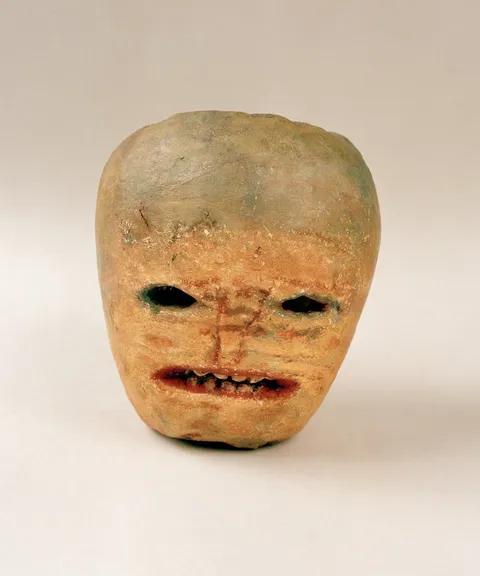
With its shift to Christianity Samhain or All Hallows Eve survived for centuries And new traditions emerged And one of those traditions led directly to one of the most recognisable symbols of Halloween The pumpkin or jack-o-lantern So how did that tradition develop? Well, Samhain or Hallows Eve or Halloween, whatever you want to call it Over the years kept its association as a night where spirits walked the earth Jessica Treanor of the Irish Times explains it well From this atmosphere of anticipation and unease come traditions Which are both celebratory and defensive Masks were worn to frighten away demons Turnips and other root vegetables were carved with terrifying faces In order to scare unwelcome guests, both living and dead And tricks were played on the unsuspecting So that’s why we started carving vegetables To scare away spirits And I can tell you, a carved turnip is a lot scarier than a carved pumpkin
But there was one creature or spirit people wanted to ward off more than others And that was Stingy Jack The earliest mention I could find of the story comes from an edition of the Dublin Penny Journal Which you can actually read online, I’ll post it for Patreon listeners In the journal, the writer speaks of being out for a walk with his uncle one night in October When the two of them saw a will-o’-the-wisp A gaseous fire seen by travellers late at night The writer, named Eamon, tries to explain the science behind the wisp in good 19th century style But his uncle is having none of it and starts to tell the story The intro is written phonetically and I kind of love it, so let me give it a go
His uncle said this Eamon, a car Eamon, if you knew the sufferings of that forsaken creature Since the time the poor soul was doomed to wander With a lantern in his hand on this cold earth Without rest for his foot or shelter for his head Until the day of judgement, only a one Oh, it would soften the heart of stone to see him as I once did The poor old thanon, his feet blistered and bleeding His planines all flying about him And the rains of heaven beating on his owl’s white head Apologies for everyone for that
The uncle then dives into the story of Stingy Jack Here’s a quick rundown Jack was a grumpy, unfriendly man coming home from a fair one night When he heard someone moaning by a river He stopped to see if he could help and found an old man with a white beard The man said, for the love of heaven, take me to some human habitation For I am no tortured soul but a poor homeless wanderer Who have lost my way on the wild moor and have lain down here to die Jack took pity on the man and raised him up onto his horse Bringing him home and laying him to rest
The next morning, Jack was awakened by a bright blaze of light That shone through the whole of his cabin Turns out the man was an angel The angel offered Jack three wishes Jack wished that anyone who sat in his chair Plucks a bow from his sycamore tree Or attempted to borrow his cobbling tools Would be stuck to the spot The angel reckoned that these were pretty shitty wishes And so granted them but said Jack can never get into heaven for being so cruel
Then the devil, hearing about Jack’s plight, sent three messengers One got stuck to the tree, one got stuck to his chair And one got stuck to his cobbling toolbox And so poor Jack couldn’t even get into hell Instead he wandered the earth alone forever Carrying a lantern Now it’s a little confusing whether the lanterns people carved were to scare off Jack Or to represent him or maybe a little bit of both Either way, as Irish immigrants moved to America They started to use pumpkins instead And started to refer to the pumpkins as jack-o’-lanterns
The first reference of this comes from a Canadian news report in 1886 Which said The old time custom of keeping up Halloween was not forgotten last night by the youngsters of the city It was a great sacrifice of pumpkins from which to make transparent heads and faces Lit up by the unfailing two inches of tallow candle
So we’ve covered the idea of evil spirits We’ve covered dressing up, pumpkins, playing tricks But what about knocking on doors and looking for sweets? Where the hell did that come from? Well, this is where we work in a whole other tradition That got folded up into this complex little holiday And that’s the idea of souling From about the 16th century, the poor of the city will go around on All Souls Night Or Hallows Eve, Halloween, Samhain, whatever you want to call it Knocking on doors, asking for soul cakes You would give them food and they would pray for your eternal soul Pretty sweet deal
As Irish and other European immigrants settled in America This tradition got mixed up with the rest of it all And slowly converted to something kids did for sweets Over time, these Samhain and All Hallows Eve customs melded with local beliefs and practices Evolving into what’s really a uniquely American version of Halloween The 19th century then saw a rising fascination with the occult Repelling Halloween into an even bigger popular social event
And by the 20th century, well it started to be codified I won’t go into the full story But for example, you had people like Elizabeth Krebs From a small town in Kansas Who’s described as the mother of Halloween After repeated years of kids in costumes wrecking her flowers She decided to organise a proper Halloween festival in 1914 And it caught on By the 1920s, you even had instructional booklets explaining how to decorate For example, this one from Boston in the 20s stated Decorations for Halloween may vary greatly But black cats, bats, jack-o-lanterns, ghosts and witches predominate Autumn leaves, corn stalks, fruits and vegetables carry the idea of harvest celebration Orange and black crepe paper are indispensable in decorating
Throughout the 20th century, the holiday went from strength to strength in America And by the 50s, sweet companies or candy companies as they imagined their known stateside Realised it was a great way to sell some product In fact, it became a great way to sell all kinds of things From costumes to food, movies to ridiculous decorations Much like the church had done Capitalism was happy to hop on the Halloween bandwagon Transforming a tapestry of folk traditions into a hallmark of American pop culture
So there you have it That is a very quick, rough history of a weird little pagan holiday That has managed to survive for thousands and thousands of years From the ancient hills of Ireland to the bustling streets of modern day America The spirit of Halloween continues to enchant and spook And I for one love how it’s kept on to those pagan roots So as you welcome a cute little trick-or-treater to your door Or if you get invited to a costume party Know you’re taking pride in a festival that has existed for millennia And know that Celtic Druid, Evil Fairy, Stingy Jack or Souling Peasant Are all great and historically accurate Halloween costumes Enjoyed! Happy Halloween people and thanks again for a million lessons
If you want to go further, you can support the show Get ad-free listening and bonus content on our Patreon page Simply follow the Patreon link in the show notes Or visit our website, thehistoryofireland.com You can also get in touch through the website or on Facebook and Twitter It’s always great hearing from you guys And if I’ve made a mistake, please do let me know
The History of Ireland was written and produced by me, Kevin Doyle With music by Liam Doyle and additional help from assistant producer Aoife Murphy This podcast was recorded in the lands of the Wurundjeri people of the Kulin Nation Sovereignty was never ceded